
Yes. Hobby photos increase meaningful conversations, but only when they're authentic action shots placed after an honest headshot. Audit your lead photo right now, pick two hobby shots that show you genuinely doing something, and cut any picture with sunglasses, group crops, or heavy filtering. Those three moves take under half an hour and change how strangers read your profile before they've read a word.
TL;DR:
- Using two to three authentic hobby photos that show you engaged in recent activities can significantly increase meaningful conversations by around 40 percent.
- Hobby photos should depict approachable activities like cooking, pet care, outdoor sports, music, or arts, avoiding aspirational, obscure, or heavily filtered images.
- Shooting in burst mode, using natural light, framing your face clearly, and maintaining simple composition ensure your hobby shots appear genuine and recognizable.
- Place your headshot in the first profile slot and limit hobby photos to two or three, with four to six total images, to maximize warmth and recognizability without appearing as a highlight reel.
- Regularly update hobby photos seasonally and verify their authenticity using AI analysis tools to maintain profile relevance, trustworthiness, and attractiveness.
Table of Contents
- Why hobby photos help: the psychology and platform evidence
- Which hobbies photograph best (and which to avoid)
- How to shoot authentic hobby photos: step by step
- Photo order and how many hobby photos to include
- Common mistakes and how hobby photos backfire
- Quick checklist and captions that invite messages
- Evidence from practitioners and a role for AI in testing hobby photos
- Rotate your hobby photos seasonally to stay current
- How to pick hobbies that attract the matches you actually want
- Privacy and safety when sharing hobby photos
- Cultural sensitivities across different dating app communities
- A short perspective from the Team @ DoubleMyMatches
- Try a privacy-first AI check before you commit to a final set
- Sources
Why hobby photos help: the psychology and platform evidence
You have roughly a tenth of a second before someone forms an opinion of your photo. In that window, the brain isn't cataloguing your jawline or your holiday tan. It's scanning for warmth and working out, almost instantly, whether it recognises a "real" person versus a staged one. Hobby photos win here because they give the brain something specific to latch onto instead of a generic pose.
That specificity does two jobs at once. It signals warmth (you look relaxed, engaged, mid laugh) and it gives the viewer a mental hook for a message. "You climb?" is a far easier opener than anything a studio headshot invites.
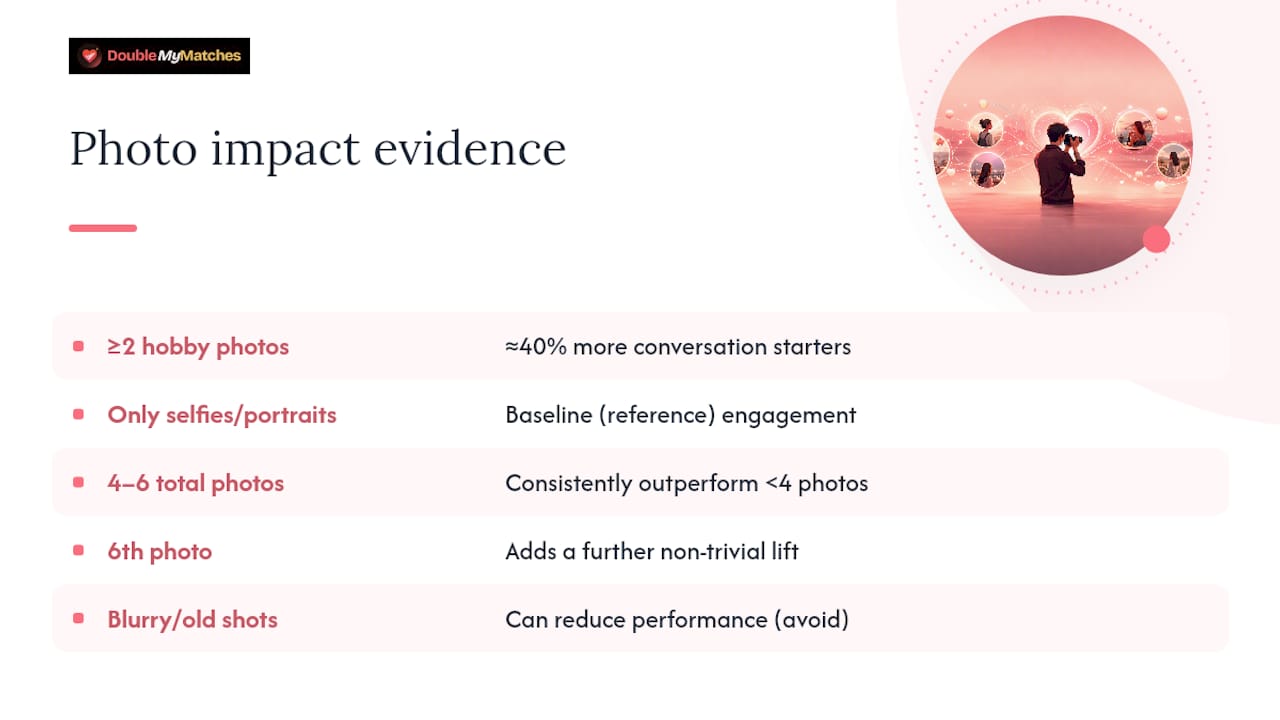
The numbers back this up. Profiles with at least two hobby-based photos get roughly 40% more meaningful conversation starters than profiles that rely only on selfies or standard portraits. That's not a marginal bump. It's the difference between a profile that gets polite swipes and one that gets actual questions.
Platform-aggregated research also shows that profiles using four to six photos consistently outperform those with fewer, and the sixth photo tends to add a genuine, non-trivial lift rather than diminishing returns. Fewer than four photos, and you're giving the algorithm and the human viewer too little to work with.
Photographers who shoot dating profiles professionally describe the goal slightly differently. One frequently cited piece of guidance is to pick activity photos where the viewer could plausibly picture themselves doing the activity with you, rather than photos that simply show off an achievement. A photo of you triumphantly holding a marathon medal says "look what I did." A photo of you mid stride, laughing at a running buddy just out of frame, says "you could be here too." The second version invites a message. The first invites a like, at best.
This is the core mechanic behind why hobby photos on dating apps outperform posed portraits: they don't just show interests, they simulate a shared moment. And shared moments, even imagined ones, are what make someone stop scrolling long enough to type a question.
None of this means every hobby photo works. A blurry gym selfie or a five-year-old ski trip photo does the opposite. The evidence is specifically about authentic, recent, engagement-showing shots, which is the distinction the rest of this article is built around.
Which hobbies photograph best (and which to avoid)
Not every hobby translates well to a six-photo grid. Some invite conversation instantly. Others confuse the viewer, hide your face, or read as try-hard. The test isn't "is this hobby impressive?" It's "can a stranger understand what's happening in under a second, and does it make them warm to me?"
Hobbies that tend to photograph well and read as approachable:
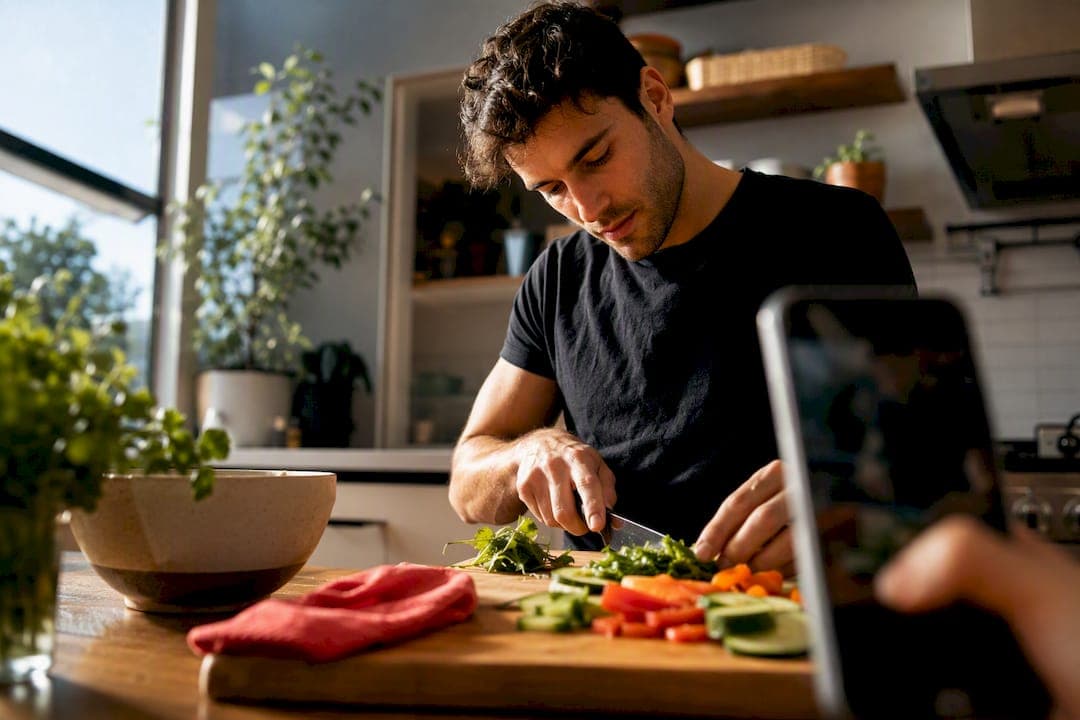
- Cooking or baking — shows domestic warmth, works indoors in any weather, and almost always keeps your face visible while you're mid task.
- Pets — near-universal appeal, low risk of misreading, and a built in conversation hook ("what's your dog's name?").
- Accessible outdoor sports — hiking, cycling, bouldering, tennis. Active but not so niche that half your matches won't know what they're looking at.
- Music performance — playing guitar, singing, DJing. Shows skill and personality without requiring the viewer to share the hobby to appreciate it.
- Creative arts — painting, pottery, photography itself. Visually distinctive and easy to caption.
Two categories consistently underperform. The first is the one-off aspirational shot: skydiving on your one holiday abroad, or a borrowed motorbike you sat on for five minutes. Viewers are surprisingly good at sensing when something is a genuine practice versus a prop for the camera. The second is anything that obscures your face or feels polarising as a lead choice, such as extreme political activities, hunting trophies, or activities that only make sense to a narrow subculture.
Practitioner guidance is blunt about the fix: only feature hobbies you actually practise regularly. A good working rule is three to six months of genuine, ongoing involvement. If a match asks you about it over drinks and you can't say much beyond "yeah I tried it once," that mismatch damages trust faster than a mediocre photo ever would.
How to shoot authentic hobby photos: step by step
You don't need a professional photographer to get this right. You need a phone, a friend willing to snap a burst of shots while you actually do the activity, and a willingness to ditch anything posed.
1. Choose action over arrangement. Dating photographers are consistent on this point: candid shots of you visibly engaged in an activity beat posed shots of you holding props that suggest a hobby without showing it. Holding a paintbrush next to a blank canvas isn't the same as being caught mid stroke with paint on your hands.
2. Shoot in burst mode, always. Ask whoever's holding the camera to fire off ten to fifteen frames while you're actually doing the thing, not to pause you for a single "smile now" shot. Practitioners note that burst-mode capture is far more reliable than a single staged frame for catching a genuine micro-expression, the kind of half laugh or focused look that reads as real because it is real.
3. Use natural light, and time it deliberately. Outdoor hobby shots look best in the hour or two after sunrise or before sunset, when light is soft and directional rather than flat overhead glare. Indoors, position yourself facing a window rather than under a single overhead bulb, which tends to create harsh shadows under the eyes. Avoid flash entirely; it flattens texture and often makes skin look artificial. If your hobby happens mainly indoors under poor lighting (a dim climbing gym, a dark studio), consider whether a similar outdoor version of the activity exists that you could shoot instead.
4. Frame for face clarity first. Whatever else is happening in the shot, your face needs to be clearly visible and reasonably close to camera. A wide shot of you as a tiny figure on a distant hillside might look cinematic, but it fails the basic recognisability test. Get closer than feels natural, or crop tighter afterwards.
5. Watch what's obscuring you. Helmets, sunglasses, thick winter kit pulled up over your chin. Some of these are unavoidable depending on the sport, but if your hobby photos consistently hide your face, balance them with at least one shot from before or after the activity where you're clearly recognisable.
6. Keep composition simple. One person, one clear focal point, minimal clutter in the background. If you're playing music, make sure the instrument doesn't block your face. If you're cooking, keep the framing tight enough that the food and your expression are both visible, rather than a wide kitchen shot where you're barely legible.
A useful shot list for a single hobby session: two or three wide action shots showing movement, two or three closer shots showing expression and engagement, and one "just finished" shot where you're relaxed and smiling, often the most naturally warm frame of the whole session.
Pro Tip: Review the burst immediately after shooting, not days later. You'll spot the one frame where your expression looks genuinely happy rather than mid blink or mid grimace, and you can reshoot on the spot if nothing works.
Photo order and how many hobby photos to include
Order matters more than most people assume. Research into first impressions suggests the opening photo carries roughly two thirds of the weight of someone's overall judgement of your profile. Get that one wrong, and no amount of brilliant hobby content further down the grid will fully recover it.
The recommended sequence looks like this:
- Slot 1: an honest, close, well-lit headshot. No sunglasses, no group crop, no filter. This is where recognisability gets established.
- Slot 2: your strongest activity shot. This is where a hobby photo does the most work, because the viewer already trusts what you look like from slot 1 and is now learning what you do.
- Slot 3: a social photo. With friends, at an event, clearly enjoying company. This signals you have a life and other people like being around you.
- Slots 4 to 6: a mix of a second hobby shot, a casual everyday photo, and one more social or travel shot.
Four to six photos is the sweet spot, with the sixth photo often adding a measurable lift rather than diluting the set. Within that range, two to three hobby photos maximum is the right ratio. More than that and your profile can start to read as a highlight reel of activities rather than a picture of a person, which undercuts the warmth signal you're trying to build.
When deciding which hobby goes where, put your most photogenic, most clearly engaged shot in slot two, and save a quieter or more intimate hobby moment (reading on a sofa with a dog, say) for later in the sequence, where it adds texture rather than competing for attention.
Common mistakes and how hobby photos backfire
Hobby photos fail for a small, predictable set of reasons, and most of them are fixable in minutes once you know what to look for.
- The one-off aspirational shot. A single skydiving photo from three years ago reads as a highlight, not a hobby, and viewers are better than you'd think at sensing the difference.
- A face you can't see. Ski goggles, a helmet, or a wide shot where you're a speck on a mountain all defeat the purpose of a photo meant to build recognition and warmth.
- Sunglasses as the default. Experts consistently flag sunglasses as one of the most common profile killers, because eye contact is a huge part of how warmth gets read from a still image.
- A group shot as your lead photo. Even if you're the best looking person in the frame, viewers waste precious seconds working out which person is you, and some won't bother.
- Heavy filters or obvious AI smoothing. Viewers increasingly detect over-processed images and rate them lower on authenticity; slight imperfections and natural texture now read as more trustworthy than a hyper-polished finish.
- Leading with your most extreme or polarising hobby. Save niche or intense activities for later slots. Opening with them can filter out compatible matches before they've had a chance to see the rest of you.
The pattern across all of these is the same: anything that makes the viewer work harder to trust what they're seeing costs you messages, regardless of how genuinely interesting the hobby is underneath.
Quick checklist and captions that invite messages
Before you publish anything, run each photo through three questions drawn from research on profile perception:
- Recognisability — can a stranger tell it's clearly you within a second?
- Warmth — does your expression look relaxed, open, or genuinely happy?
- Specificity — does the photo tell them something concrete about your actual life?
A strong six-photo set should answer yes to question one on every single frame, and yes to questions two and three on at least three of the six.
For captions, skip generic labels like "me hiking" and write something that invites a reply:
- "Learning to lead climb this year. Terrified. Loving it."
- "My cooking has a 60% success rate. Ask me about the other 40%."
- "This dog thinks he's helping me paint. He is not."
Each of these does double duty: it confirms the hobby shown in the photo and hands the reader an easy, specific line to reply to.
Evidence from practitioners and a role for AI in testing hobby photos
The advice in this article isn't guesswork. It's a synthesis of what professional dating photographers actually shoot, and what platform-level research shows about which photos generate replies. Photographers consistently push clients toward candid action over posed prop-holding, and the three to six month authenticity rule comes from the same practitioner world, not a marketing checklist.
Academic and platform research on impression formation adds the "why" behind the "what." Order matters because the first photo anchors most of the judgement that follows, which is why an honest headshot has to come first even when your best hobby shot is more visually striking.
Where does AI fit into this without undermining authenticity? Objectively, not creatively. AI photo analysis tools are most useful for confirming a human decision rather than replacing one, scoring your existing photos on lighting, composition, and expression, then ranking them from strongest to weakest. That's valuable precisely because you're too close to your own photos to judge them coldly. You know the story behind each one; a stranger swiping past your profile doesn't.
The practical workflow: shoot your hobby photos following the guidance above, run the resulting shortlist through an analysis tool, implement the top two suggested swaps, and re-test after a week or two of matches. This isn't about faking anything. It's about removing guesswork from a decision you were always going to have to make anyway: which six photos actually go live.
Rotate your hobby photos seasonally to stay current
Static profiles go stale faster than most people realise. If your lead activity shot is from a summer holiday two years ago, sharp-eyed matches will notice the mismatch between your "current" profile and your actual, present-day life, especially once conversation moves past the app and into specifics.
Aim to refresh at least one hobby photo every season. Summer hiking shots can rotate out for autumn photos of the same trail in different light, or swap entirely for an indoor hobby once the weather turns. This does two useful things. It keeps your profile looking active rather than abandoned, which some apps subtly reward through visibility. It also gives you fresh material for opening lines and later conversation, since a recent photo is easier to talk about with specific, current detail than a shot from three years back.
A simple approach: set a recurring reminder every three months to review your six photos. Ask whether each one still reflects what you're currently doing, not what you did once. If a hobby has faded (you stopped running six months ago), swap that photo out immediately rather than leaving a photo up that no longer represents you honestly. This matters beyond aesthetics. A match who bonds with you over a hobby shown in a photo, only to discover you haven't done it in over a year, will reasonably wonder what else in your profile is outdated.
Seasonal rotation also solves a subtler problem: photo fatigue among repeat viewers on apps that resurface profiles. A refreshed hobby photo, even of the same general activity, reads as new content rather than a static image someone may have already swiped past weeks earlier.
How to pick hobbies that attract the matches you actually want
The hobbies you feature aren't just about looking interesting. They're a filtering mechanism, whether you intend it or not. Someone who wants a partner for quiet weekends will read a rock climbing photo differently to someone who wants an adventure partner, and both readings are valid.
Start by being honest about what you're actually looking for. If you want a relationship built around shared activity, feature the hobbies you'd genuinely want a partner to either join or tolerate regularly. If your hobbies are more solitary or low key, don't manufacture adventurous ones just because they photograph more dramatically. A mismatch here tends to surface within a few dates anyway, so the filtering happens eventually. The only question is whether it happens before the swipe or after three dinners.
A useful exercise: list your hobbies by how much they matter to your ideal relationship. Photograph and lead with the two or three that would genuinely disappoint you if a partner had zero interest in. Treat the rest as texture further down your photo set, worth showing but not worth leading with.
This also helps with compatibility signalling on a practical level. A photo of you deep in a book collection attracts a different response than a photo of you at a music festival, and neither is better. The goal isn't maximum appeal to everyone. It's clear, honest appeal to the specific person who'd genuinely enjoy doing that hobby, or watching you do it, for years.
Privacy and safety when sharing hobby photos
Hobby photos often reveal more location and routine detail than a standard headshot, and that's worth thinking through before you post.
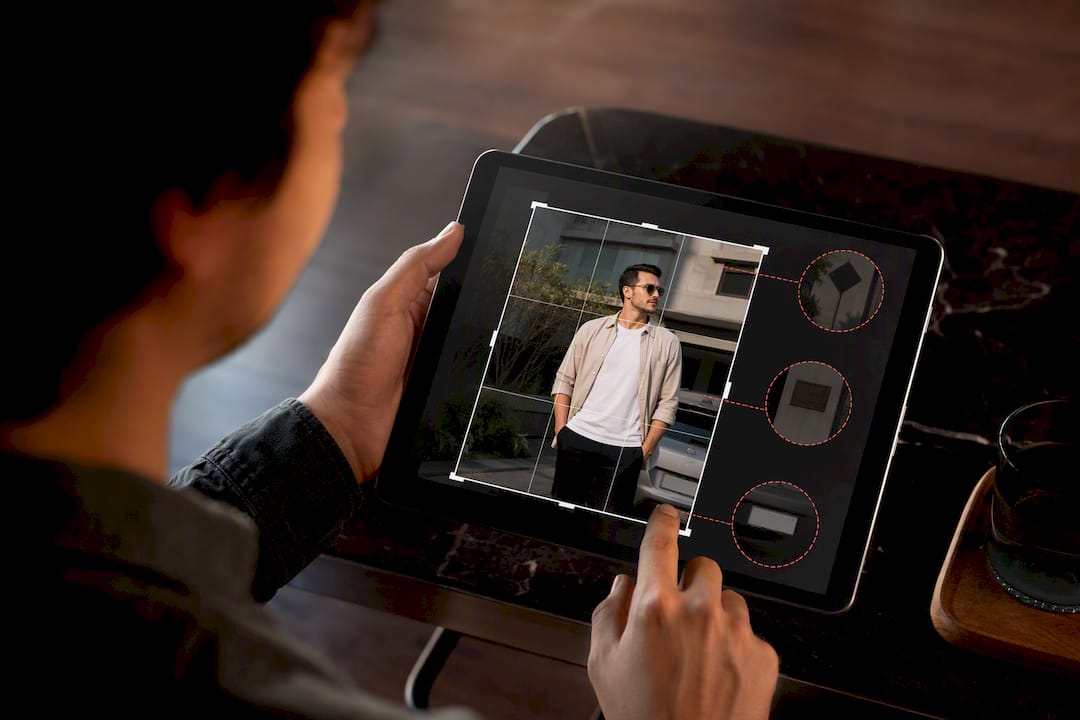
A photo taken at your regular climbing gym, running route, or local café can inadvertently signal exactly where to find you at predictable times, especially if you post several similar shots across different profiles or social platforms. Consider cropping out identifiable signage, house numbers, or car number plates that might appear in the background of an otherwise harmless activity shot.
Be similarly cautious about tagging exact locations in captions early on. "My favourite Saturday morning spot" invites curiosity in a way that naming the specific café or park doesn't need to. You can share enough detail to spark conversation without publishing your weekly schedule to strangers.
If your hobby involves children, other people's homes, or workplaces, check that anyone else visible in the frame is comfortable being on a dating profile, and blur or crop faces where you can't get consent. This matters for their privacy as much as yours.
Finally, resist the urge to include photos that reveal your workplace, home exterior, or daily commute route under the guise of a hobby shot (a "coffee before work" photo that clearly shows your office signage, for instance). None of this means hiding your interests. It means applying the same basic judgement to hobby photos that you'd apply to anything else you post publicly with your face attached to it.
Cultural sensitivities across different dating app communities
What reads as a great hobby photo on one app or in one community can land very differently in another, and it's worth checking your assumptions before you upload.
Alcohol-centred hobby photos (wine tasting, brewery visits, pub quiz nights) are common and largely uncontroversial on many mainstream apps, but they can read poorly to matches from communities where drinking carries more cultural or religious weight. If you're using an app with a broader, more international user base, a photo showing a hobby unrelated to alcohol tends to travel better across audiences.
Modesty norms also vary. Swimwear from a beach holiday or gym mirror shots that show a lot of skin are standard on some apps and off-putting or simply irrelevant to your target match on others. If you're not sure how your intended audience will read a photo, err toward the version of the hobby shot that shows engagement and skill rather than body, which tends to travel well regardless of cultural background.
Religious or politically coded hobbies (certain martial arts, hunting, specific team sports with strong regional rivalries) can act as a strong filter, attracting some viewers and alienating others instantly. That's not inherently a problem, since filtering is part of what a profile does. But be deliberate about it rather than accidental. Know that a photo like this is doing filtering work, and decide consciously whether that's the filter you want running in slot two of your profile.
A short perspective from the Team @ DoubleMyMatches
Analysing thousands of dating photos teaches you something the guides rarely say outright: authenticity isn't a nice idea, it's measurable. When a photo doesn't match how someone describes themselves in their bio, or when a hobby shot looks staged rather than lived, it shows up in lower engagement almost every time. Viewers pick up on the mismatch faster than they could articulate why.
What surprises people most is how small the fix usually is. It's rarely a full reshoot. It's swapping a posed prop shot for a candid one, or moving a hobby photo from slot four to slot two because it happens to show more warmth. We've seen profiles shift meaningfully after changing just two photos, which is why we always suggest starting there rather than starting over.
If you want a genuinely useful experiment, try this: audit your current six photos against the recognisability, warmth, and specificity test, swap the two weakest performers, and give the new set ten days before judging results. Ten days is enough to see a real shift in reply rate without overreacting to a single slow weekend.
— The Team @ DoubleMyMatches
Try a privacy-first AI check before you commit to a final set
DoubleMyMatches gives you the one thing a friend's opinion can't: an objective score. Rather than guessing which of your six hobby shots actually reads as warm and recognisable versus which one you just personally like, AI-powered photo analysis scores each image on lighting, composition, and expression, then ranks your full set from strongest to weakest.
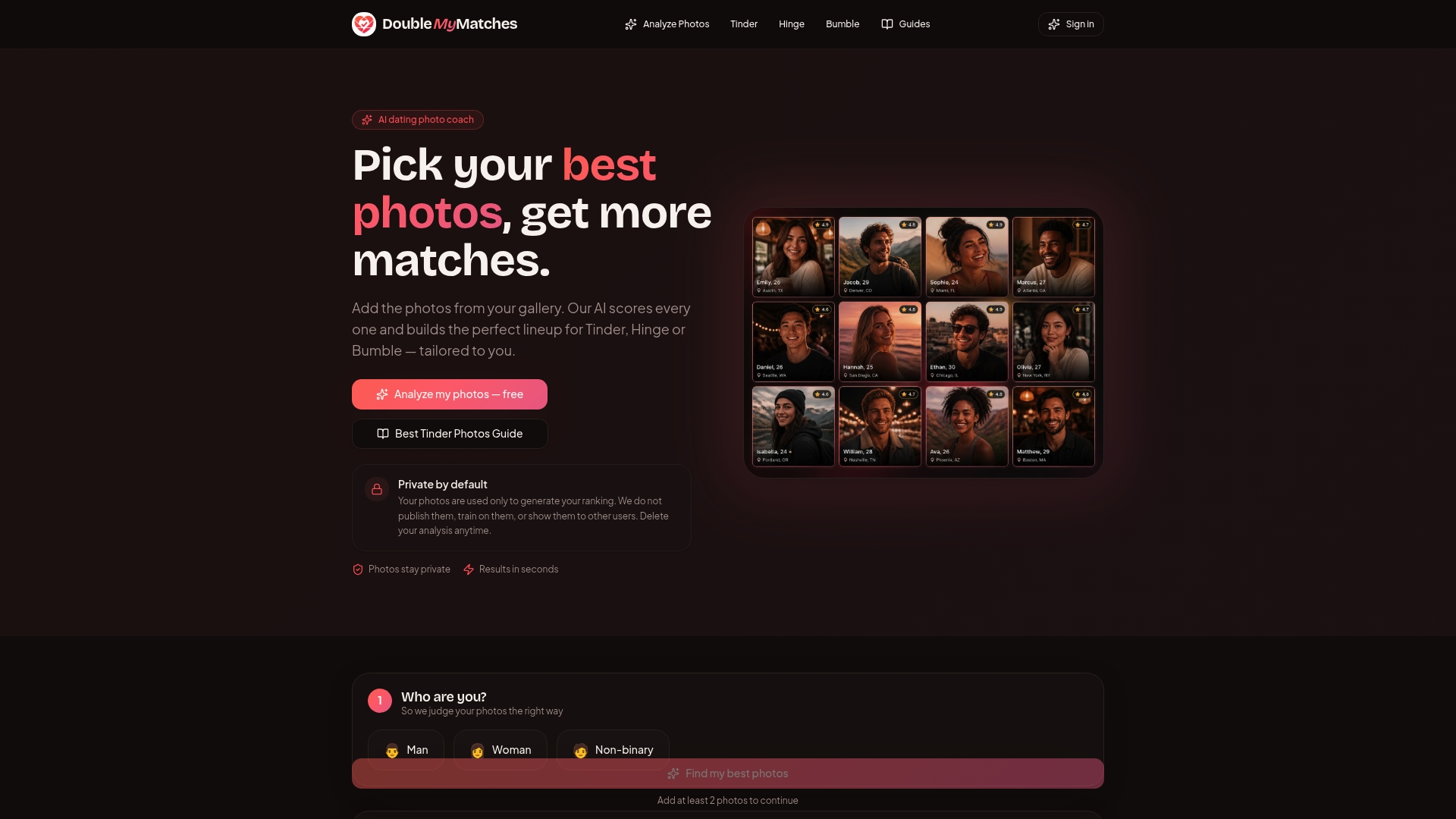
Photos uploaded are analysed once and then discarded. Nothing is published, stored for training, or shared, so you can test genuinely candid hobby shots without worrying where they end up. The report typically flags one or two swaps worth making, whether that's reordering your grid or dropping a photo that's quietly working against you.
Once you've made the top two suggested changes, give the new set a couple of weeks on your apps of choice, then revisit as you rotate your hobby photos seasonally. If you just want a fast gut check on a single new shot before deciding whether it earns a spot, the profile picture tester is built for exactly that.
Sources
- Show hobbies in dating photos: expert guide 2025
- Dating Photographer’s Guide to the Best Dating App Photos for Tinder, Bumble & Hinge
- Dating app photos that get replies: the 2026 research
- How to take a good dating app photo, according to dating app experts