
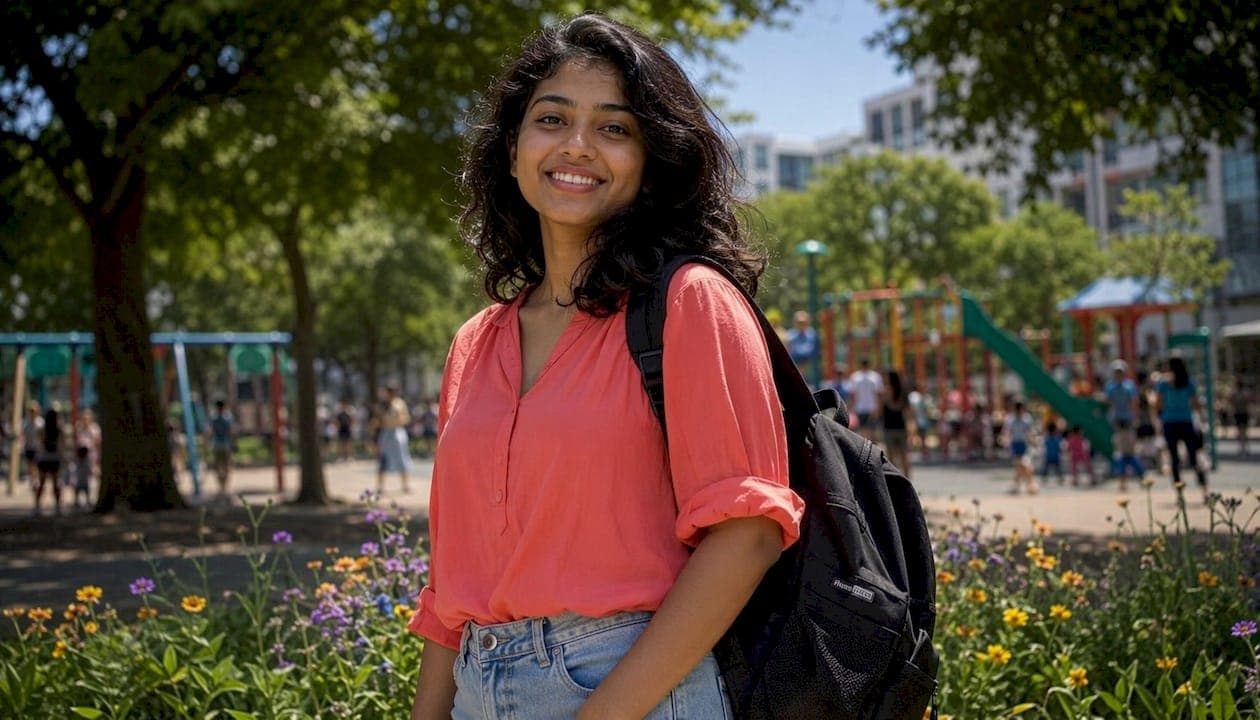
Your photos are doing the heavy lifting. Before anyone reads your bio, before they see your prompts, before they know a single thing about you, they have already decided based on your primary photo. Eye-tracking research shows that users spend less than one second on a main profile photo before swiping. That is not much time to make an impression, but it is enough if your photos are right.
The good news? Getting your photos right is learnable. Here is what actually works:
- Lead with a clear, well-lit face shot. Your face should be the focal point, no sunglasses, no hats casting shadows, no group shots where you are hard to spot.
- Show a genuine smile. A real Duchenne smile, the kind that crinkles your eyes, improves match rates significantly compared to a serious expression.
- Include a full-body photo. Removing the guesswork about your appearance builds trust and increases matches.
- Use a variety of photo types. Activity shots, social photos, and lifestyle images tell a fuller story than five near-identical face shots.
- Sequence your photos deliberately. Your first photo gets far more attention than your last, so order matters as much as quality.
- Avoid heavy filters and over-editing. Natural lighting and authentic expressions outperform polished, artificial looks.
- Aim for six photos total. Using six photos outperforms profiles with fewer images, while going beyond seven yields diminishing returns.
Get these fundamentals right and you will notice the difference quickly.
What types of photos should you include in your dating profile?
The strongest dating profiles do not just show your face. They answer the question: "Who is this person, and would spending time with them be interesting?" Each photo should add new information rather than repeat what the previous one already showed.
A well-rounded profile follows a clear structure. Here is the sequence that data consistently supports:
- Face shot. Your primary photo. Clear, well-lit, genuine smile, looking directly at the camera. No obstructions. This is the photo that either earns the tap or loses it.
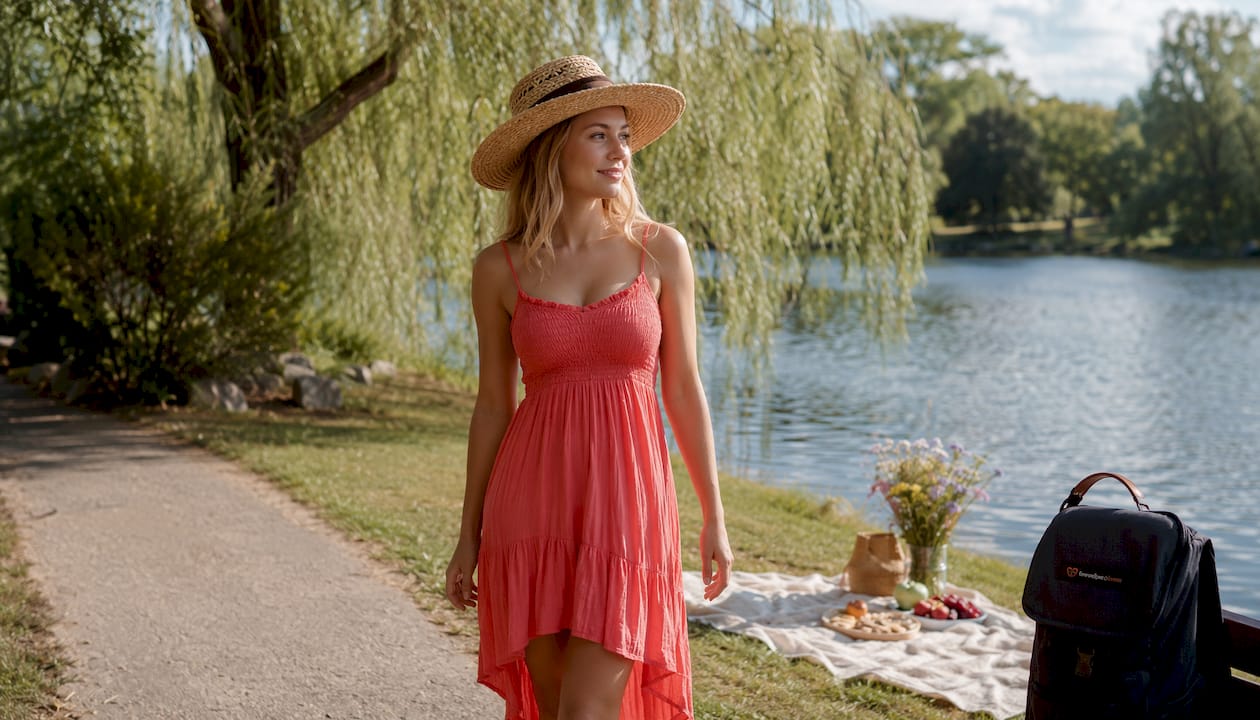
- Full-body photo. Show yourself in a real context, walking through a park, standing on a trail, at a social event. Avoid the blank-wall-at-home version.
- Activity photo. You doing something you actually enjoy. Playing an instrument, cooking, at a gig, on a hike. Activity photos increase matches noticeably and generate far more comments than static poses.
- Pet photo (if applicable). If you have a dog or another pet, use it. The uplift in engagement is real and well-documented.
- Group or social photo. One is enough. It shows you have friends and a social life. Make sure you are clearly identifiable and not the least flattering person in the frame.
- Date-preview or lifestyle shot. You at a café, browsing a gallery, at a restaurant with good lighting. This creates a mental image of what dating you might actually look like.
Avoid filler photos. If a photo does not make you look good or add new context, it is actively working against you. Every slot in your profile should earn its place.
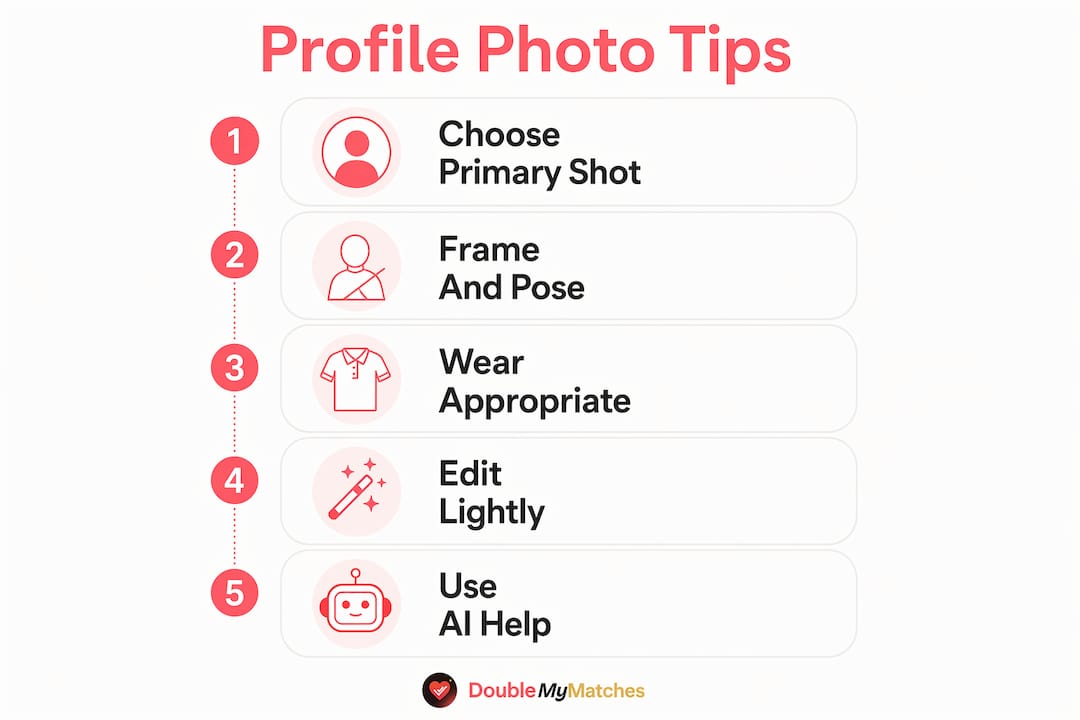
How should you frame and pose for natural, confident photos?
Confidence in photos is not about looking perfect. It is about looking comfortable. The most effective photos communicate that you are relaxed in your own skin, and that quality shows up in specific, practical ways.
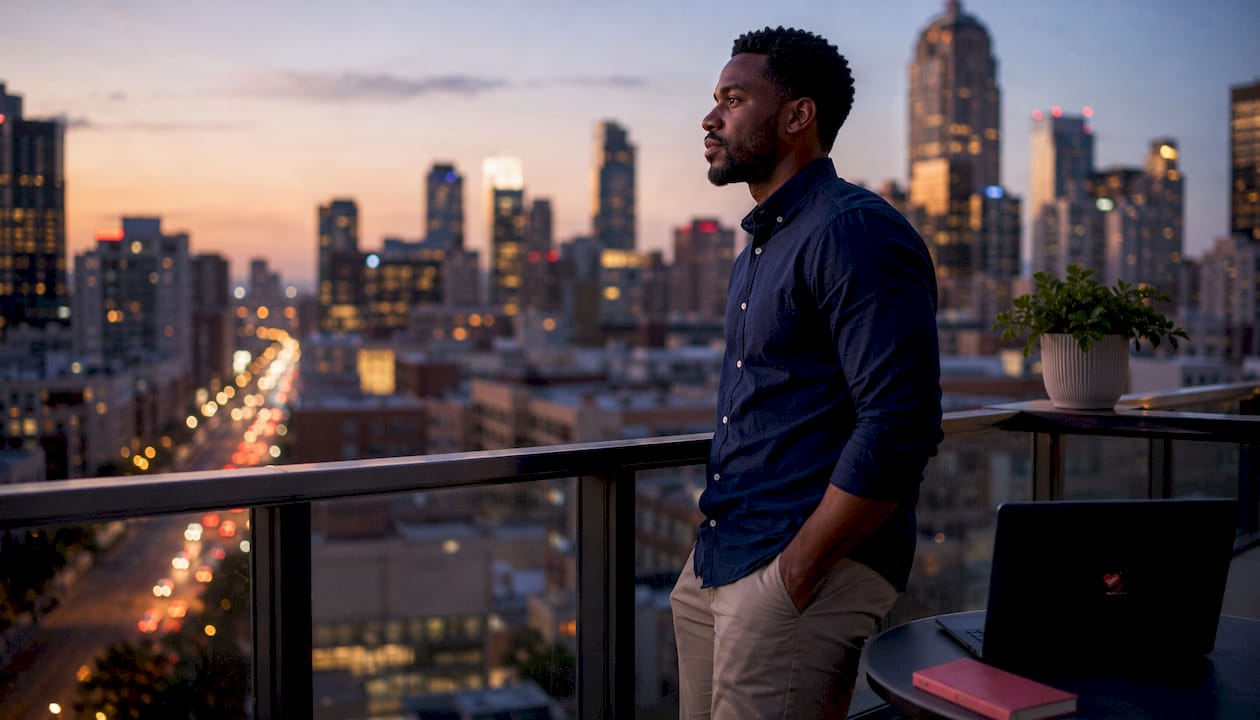
Camera position matters more than most people realise. Keep the camera at eye level or very slightly above. Shooting from below is unflattering for almost everyone. Shooting from too far above can make you look smaller than you are. Eye level is the default that works.
Posture and expression go together. Stiff, posed shots read as nervous or try-hard. Candid moments where you are mid-laugh, mid-movement, or genuinely engaged in something tend to photograph far better. Have a friend follow you around for twenty minutes while you do normal things, walk, chat, look at something. The photos where you forgot the camera existed will almost always be your strongest.
Gaze direction affects connection. Forward-facing photos get significantly more engagement than photos where you are looking away. Direct eye contact in a photo creates a sense of connection with the viewer. For your primary photo especially, look at the camera.
Pro Tip: Try the scrunch-and-open technique before a shot. Close your eyes, scrunch your face briefly, then open naturally. It resets your facial muscles and gives you a genuine expression rather than the frozen "trying to look natural" face.
Avoid mirror selfies as your primary photo. They signal low effort and the bathroom background rarely helps. Hats that cast your face in shadow are equally problematic. Face visibility is a primary driver of swipe decisions, and anything that obscures it works against you.
What should you wear and where should you take your dating photos?
Your clothing and location choices do more than set the scene. They communicate personality, effort, and lifestyle without a single word.
Wardrobe tips:
- Wear clothes that fit well and feel like you. Current, clean, and personality-appropriate beats trendy-but-uncomfortable every time.
- Avoid busy patterns or loud logos that pull attention away from your face.
- Vary your outfits across photos. Five shots in the same outfit at the same location tell people you took all your photos in one session. Mix it up.
- Dress slightly better than your everyday default for at least one photo. A smarter look in one slot and a casual look in another shows range.
Location tips:
- Outdoor settings increase match rates noticeably compared to indoor photos. Natural environments add context and energy.
- Golden hour, the hour after sunrise and before sunset, is the most flattering natural light available. It softens skin tones and adds warmth that no ring light can replicate.
- Choose backgrounds that add interest without clutter. A street, a park, a café terrace, a beach. Avoid cluttered bathrooms, blank walls, and car interiors.
- Activity settings work particularly well because they show you in context. A photo at a climbing wall, a farmers' market, or a live music venue tells a story instantly.
Well-composed photos in natural settings signal higher status implicitly. You do not need a professional photographer, though a friend with a decent phone and good light gets you most of the way there.
How much editing is too much for dating profile photos?
Light editing helps. Heavy editing hurts. The line between the two is clearer than most people think.
Adjusting brightness, contrast, and colour balance to reflect how you actually look in good light is completely fine. If a photo is slightly underexposed or has a cool, unflattering tone, correcting it is not deceptive. It is just making the photo accurate. Genuine expressions and natural lighting outweigh makeup or editing in terms of attractiveness impact, which means your effort is better spent on the conditions than on post-processing.
Where editing goes wrong is when it starts to change your appearance rather than represent it. Heavy smoothing filters, dramatic skin retouching, or face-reshaping tools create a version of you that does not show up on a first date. That mismatch is a trust problem, and it tends to surface at the worst possible moment.
Pro Tip: Apps like Lightroom Mobile or Snapseed are well-suited for subtle adjustments to brightness, warmth, and contrast without touching facial features. Use them to correct the photo, not to redesign yourself.
Keep your photos recent. A photo from three years ago, even a great one, is working against you if your appearance has changed. Your profile should look like you look right now. Refresh your photos after any meaningful change in appearance, or simply when your match rate drops and stays low for a couple of weeks.
Final expert tips for a winning photo lineup
Getting the individual photos right is half the job. The other half is how you put them together.
- Aim for six photos. Fewer than four can feel like you are hiding something. More than seven and you start giving people reasons to find flaws rather than reasons to swipe right.
- Lock your primary photo manually. Do not let automated photo-ordering tools pick your lead image. Algorithmic reordering works from sparse swipe data and often surfaces the wrong photo as your first impression. Choose it yourself.
- Launch with your best photos. New profiles get a visibility boost for 24–48 hours after creation. Wasting that window on weak photos means losing ranking before you have had a chance to build momentum.
- Test and refresh. Change one photo at a time and track your match rate over a week. Over four to six weeks of testing, you will have real data on what works for you specifically.
- No group photos in your first three slots. Solo shots only for positions one through three. Social proof belongs in slots four through six.
- Use candid photos to create connection. Candid shots, where you look genuinely engaged rather than posed, read as more approachable and more attractive than staged alternatives.
- Every photo must earn its slot. A weak photo does not just fail to help. It actively makes your profile look worse by diluting the impact of your stronger images.
The photo selection process is worth treating as a proper project rather than a quick upload. Take fifty shots, use five or six. The difference between a good photo and a great one is often just having enough options to choose from.
How AI analysis can help you pick better dating photos
Choosing your own best photos is harder than it sounds. You are too close to the subject. You favour photos where you remember feeling good, or where a friend said you looked nice, rather than photos that actually perform well with strangers. That self-bias in photo selection is one of the most consistent reasons profiles underperform despite genuine effort.
AI photo analysis tools address this directly. They assess lighting, composition, facial expression, and other attractiveness signals without any of the personal attachment that clouds your own judgement. The result is an objective ranking of your photos based on factors that actually drive engagement, not factors that feel meaningful to you.
DoubleMyMatches uses AI to score and rank your dating photos across exactly these dimensions. Upload your photos, and the tool analyses each one for lighting quality, expression, composition, and overall appeal, then ranks them from strongest to weakest. You get clear, immediate feedback on which photos to lead with and which to drop, without having to guess or rely on friends who are too polite to be honest.
"I went from barely getting any matches to having a full inbox within a week of switching my photos based on the DoubleMyMatches ranking. I had no idea my third photo was actually my strongest opener."
The pattern is consistent across DoubleMyMatches users: the photo you think is your best is often not the one that performs best with strangers. AI removes that blind spot.
Privacy is built into the process. Photos are analysed and then discarded. They are not published, stored, or used to train the AI. You get the feedback without any of the exposure.
The one caution worth noting: AI analysis is a powerful starting point, not a replacement for your own judgement about personality and authenticity. Use it to identify your strongest photos objectively, then apply the context from this guide to make sure your final lineup tells a coherent, genuine story about who you are.
Key takeaways
Your primary photo acts as a veto filter: if it does not pass the one-second test, the rest of your profile will not be seen.
| Point | Details |
|---|---|
| Primary photo is everything | A clear, well-lit face shot with a genuine smile is the single most important element of your profile. |
| Genuine smiles drive matches | A Duchenne smile increases match rates by 76% compared to a serious expression. |
| Six photos is the sweet spot | Six varied, high-quality photos outperform both fewer images and bloated galleries of seven or more. |
| Lock your lead photo manually | Automated reordering uses sparse data and often surfaces the wrong primary; choose it yourself. |
| AI removes self-selection bias | Objective photo scoring identifies your strongest images without the blind spots of personal attachment. |
Ready to see which of your photos actually performs best?
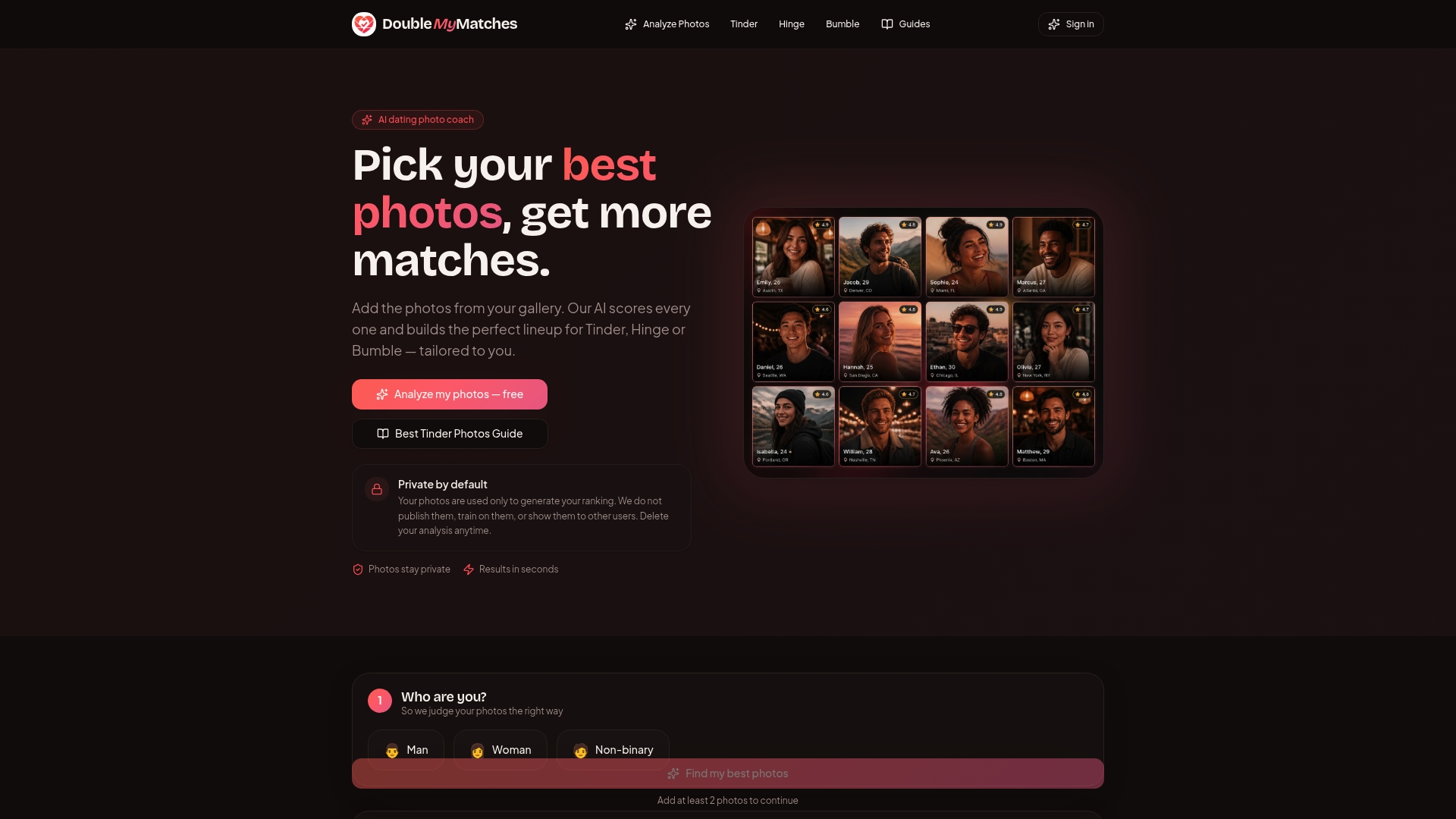
Stop guessing which photo to lead with. DoubleMyMatches analyses your photos for lighting, expression, and composition, then ranks them so you know exactly which one to put first. Upload your photos now and get your ranking in minutes. Your photos are analysed privately and never stored or shared.