
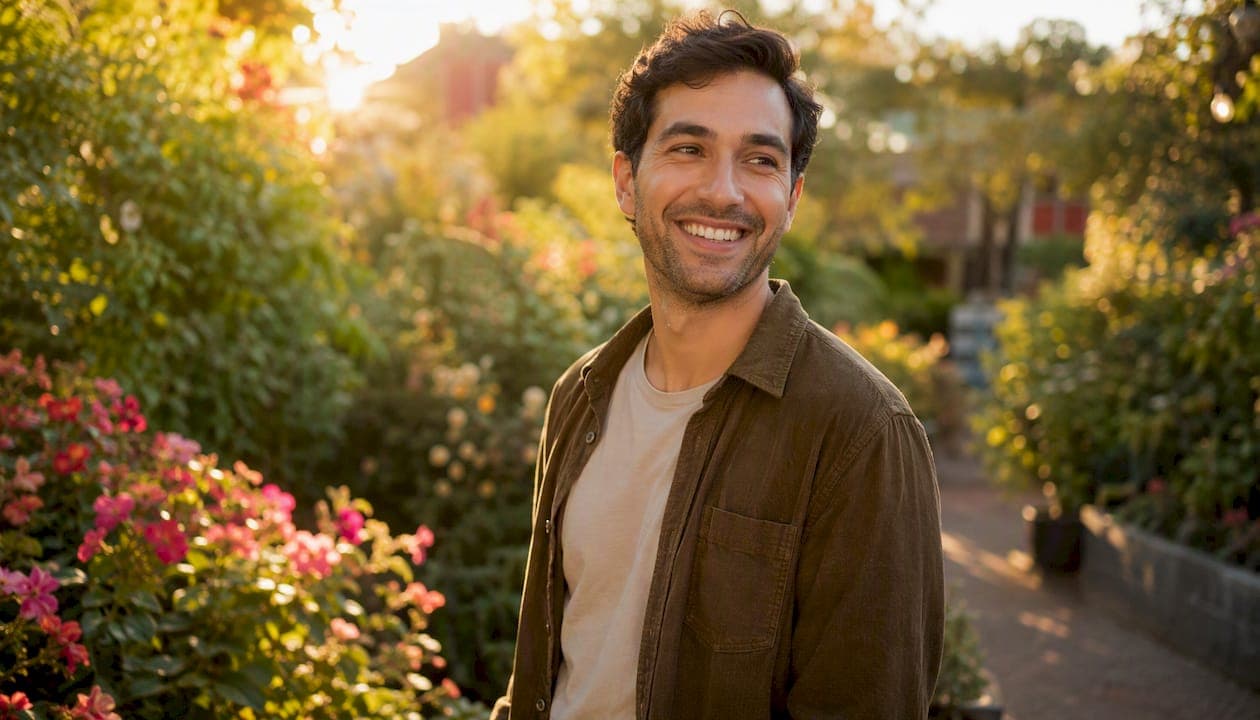
Outdoor hero photos generally outperform indoor hero photos on Tinder, Hinge, and Bumble. Natural light, an activity signal, and clear facial recognition combine to make outdoor shots the stronger first impression. That said, indoor photos are not optional extras — they are essential for showing personality deeper in your lineup.
- Outdoor photos tend to win the hero slot because natural light is more flattering, backgrounds signal an active life, and your face reads more clearly at a glance.
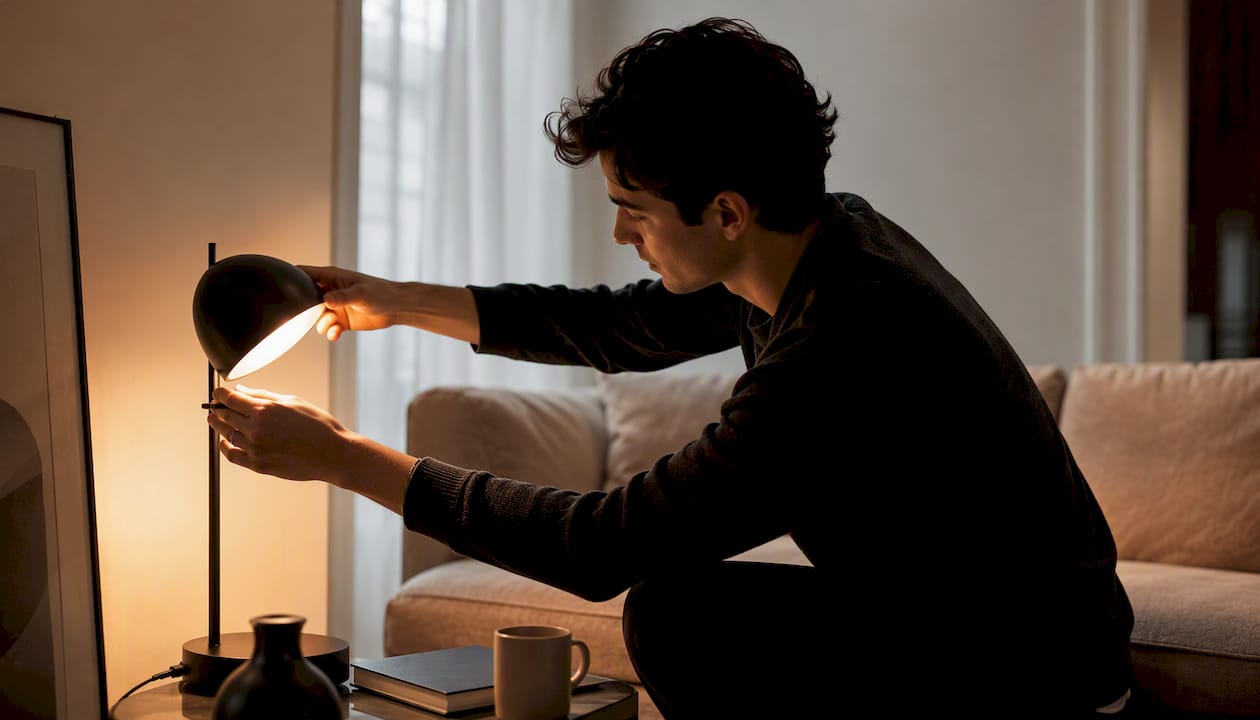
- Indoor photos earn their place in slots two through six by revealing interests, creating conversational hooks, and adding warmth that pure outdoor shots can miss.
- The goal is a deliberate mix, not a binary choice.
Key takeaways
Outdoor hero photos consistently outperform indoor hero photos for match rates, but a strong lineup needs both — with each photo type doing a distinct job.
| Point | Details |
|---|---|
| Outdoor hero wins the first slot | Natural light and activity signalling make outdoor shots the stronger hero image on Tinder, Hinge, and Bumble. |
| Indoor photos drive conversations | Personality and interest shots taken indoors supply the conversational hooks that turn matches into messages. |
| Profile richness beats single photos | Peer-reviewed research confirms that multi-photo lineups increase perceived positive traits and dating intentions. |
| Rotate photos seasonally | Keep images current — a summer outdoor shot used in winter signals a stale, inactive profile to UK viewers. |
| AI scoring pre-filters weak shots | Use AI analysis before going live to identify lighting, framing, or expression issues rather than discovering them through lost matches. |
Table of Contents
- What the research actually says about outdoor vs indoor dating photos
- When should you use an outdoor hero photo versus an indoor one?
- How to compose better indoor and outdoor dating photos
- How to build a multi-photo lineup and A/B test it
- Platform-specific tweaks for Tinder, Hinge, and Bumble
- What to expect from AI photo analysis and privacy
- Your action plan for this weekend
- Why the outdoor/indoor mix matters more than either alone
- Get objective feedback on your photos with DoubleMyMatches
- Sources
What the research actually says about outdoor vs indoor dating photos
Peer-reviewed experimental research published in Frontiers in Communication found that richer profiles — multiple photos or a short video loop — increased perceived positive traits and dating intentions. Beautified selfies amplified those gains, with female-beautified images showing the largest assessment uplift. The takeaway for your lineup: a single photo, however good, leaves matches with too little to go on.
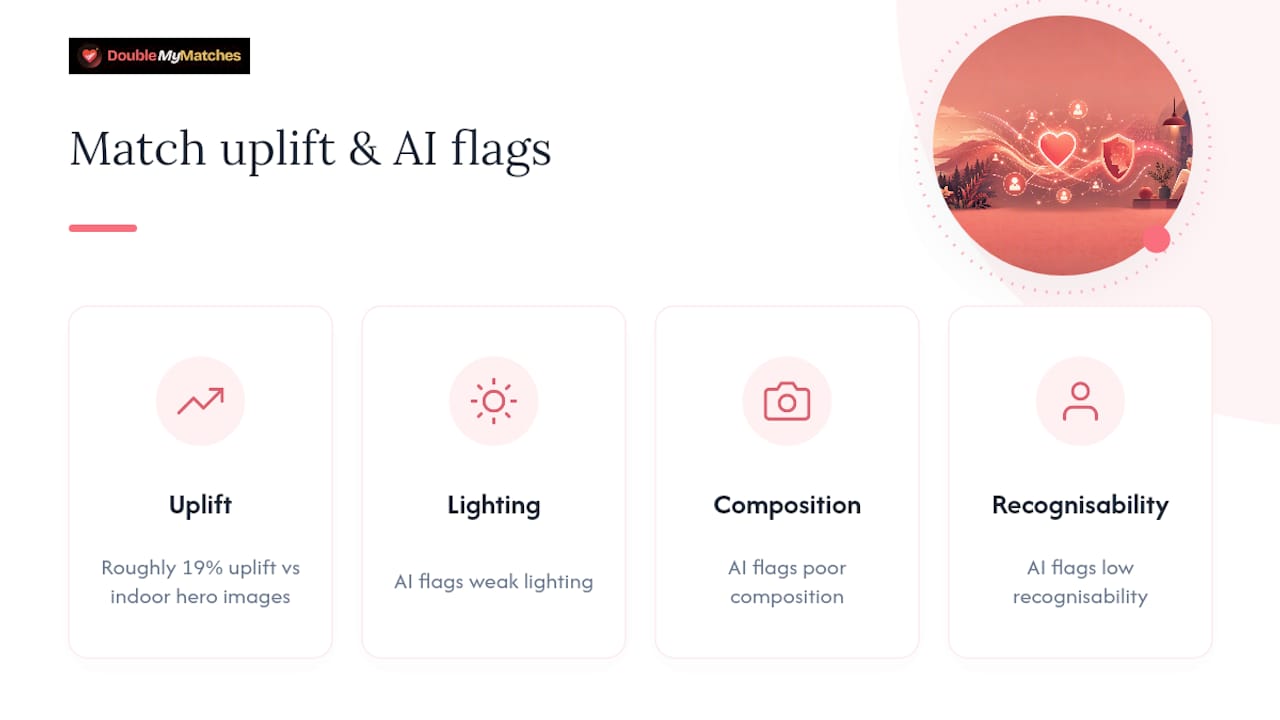
Data summaries from Magnt report that outdoor shots in natural settings produce roughly a 19% uplift in match metrics compared with indoor equivalents as hero images. Natural environments signal activity and approachability — qualities that read in under a second on a swipe screen.
Hinge-referenced data cited by LoveCertain suggests outdoor shots receive substantially more likes than comparable indoor shots, and activity-based photos drive higher right-swipe rates across platforms. A Newsweek analysis of popular Tinder profiles found the most common portrait style was a half-length indoor shot — which means most profiles are leaving match-rate gains on the table by not leading with an outdoor hero.
DoubleMyMatches' AI scoring approach aligns directly with these findings: it flags weak lighting, poor composition, and low recognisability — the exact variables that separate a high-performing outdoor hero from a mediocre one.
When should you use an outdoor hero photo versus an indoor one?
The right choice depends on what you want your first image to communicate.
Use an outdoor hero photo when you want to:
- Signal an active, social lifestyle (parks, coastlines, city streets, markets)
- Maximise facial recognisability in natural, even light
- Attract casual right-swipes on Tinder, where decisions happen in under two seconds
- Show seasonal relevance — a summer shot in June reads as current; the same shot in January does not
Use an indoor photo as your hero only when:
- You have genuinely exceptional window light and a clean, uncluttered background
- The setting itself tells a strong story (a recording studio, a climbing wall, a kitchen mid-cook)
- Outdoor shooting is genuinely impractical due to weather or location
Practical constraints for UK singles:
- Golden hour in the UK runs roughly 30–45 minutes after sunrise and before sunset — short windows, so plan ahead
- Overcast British skies are actually useful: soft, diffused cloud cover eliminates harsh shadows and flatters most skin tones
- Avoid harsh midday sun, which creates unflattering shadows under the eyes and nose
Pro Tip: Rotate your hero photo with the seasons. A sun-drenched beach shot looks great in July but signals a stale profile by November. British GQ's dating experts recommend keeping images seasonally current so your profile reads as active and present.
How to compose better indoor and outdoor dating photos
Good composition matters more than camera quality. These rules apply whether you are shooting on a flagship smartphone or a mid-range handset.
Lighting:
- Outdoors: shoot during golden hour or under open shade. Avoid direct overhead sun.
- Indoors: position yourself facing a large window. Warm ambient lighting (lamps, candles) works for personality shots but rarely for a hero.
- Never shoot under overhead fluorescent or bathroom lighting — it flattens faces and adds an unflattering green cast.
Framing and distance:
- Hero shot: half-length or close-up portrait. Your face should fill at least 40% of the frame so it reads clearly at thumbnail size.
- Activity shot: full-body or three-quarter length, showing what you are doing.
- Interest shot: medium close-up that includes the relevant prop or setting (instrument, bookcase, kitchen counter).
Background control:
- Outdoors: use depth of field (portrait mode) to separate yourself from a busy background.
- Indoors: choose a clean wall, a tidy bookshelf, or a single strong visual element. Cluttered rooms pull attention away from your face.
Colour and clothing:
- Bold, solid colours (red, blue, green) photograph better than busy patterns.
- Avoid sunglasses in your hero shot — they hide your eyes and reduce perceived trustworthiness.
- Skip gym selfies and bathroom mirror shots as your first image; dating app experts at British GQ are explicit that these underperform.
Pre-upload checklist:
- Face clearly visible? ✓
- Eyes in focus? ✓
- Background uncluttered? ✓
- No sunglasses? ✓
- Lighting flattering (no harsh shadows)? ✓
- Expression natural, not forced? ✓
Pro Tip: Expression matters as much as location. A genuine, relaxed smile in a mediocre setting will outperform a forced grin in a perfect one.
How to build a multi-photo lineup and A/B test it
A strong six-photo set has a clear job for each slot. Here is a structure that works across Tinder, Hinge, and Bumble:
- Hero (outdoor): best-lit, clearest face, strongest first impression
- Personality (indoor): reveals an interest or skill with a conversational hook
- Activity: shows you doing something physical or social
- Social proof: a natural group shot where you are clearly identifiable
- Travel or interest: a location or hobby that adds depth
- Candid: a relaxed, unposed moment that shows warmth
Photo variety across these slots is what the Frontiers research identifies as "profile richness" — and richness consistently outperforms single-photo profiles on every measured metric.
A/B test plan:
- Run your current lineup for two weeks. Record your match rate, likes per view, and message rate.
- Swap only the hero photo (outdoor for indoor, or vice versa). Keep everything else identical.
- Run the new lineup for two weeks.
- Compare the metrics below.
Use AI scoring from DoubleMyMatches before you go live to pre-filter weak photos and confirm your outdoor hero is genuinely the strongest candidate — this saves you running a test on a photo that AI scoring would have flagged immediately.
Pro Tip: Two weeks per variant is the minimum for a meaningful signal in the UK market. Fewer than 50 profile views per period makes the data too thin to act on — keep swiping actively during the test window.
Platform-specific tweaks for Tinder, Hinge, and Bumble
Each platform displays photos differently, and that changes which shot to prioritise.
Tinder (UK):
- Decisions happen fast. Your hero photo carries almost all the weight.
- Prioritise a recognisable outdoor shot with a clear face and strong lighting.
- Tinder crops to a portrait ratio — check your hero is not cutting off your face at the edges.
- Short video loops (up to 15 seconds) can replace the hero; golden hour footage performs well.
Hinge (UK):
- Hinge's prompt-and-photo format rewards storytelling. Indoor photos that reveal a specific interest perform strongly here because they give matches something to comment on.
- Use the activity and personality slots deliberately — photo ranking on Hinge rewards variety and context.
Bumble (UK):
- Women message first, so personality and approachability matter more than raw attractiveness.
- A polished indoor shot that signals warmth and a specific interest can outperform a generic outdoor shot in the personality slots.
- Outdoor hero shots still win the first impression, but indoor photos that reveal character drive response rates once a match is made.
What to expect from AI photo analysis and privacy
AI photo analysis scores your images on lighting, expression, composition, and facial recognisability. It does not assess your attractiveness subjectively — it measures the technical and compositional factors that correlate with higher match rates.
What DoubleMyMatches' AI does:
- Ranks your photos from strongest to weakest
- Flags specific issues (poor lighting, obscured face, cluttered background)
- Recommends which photo to use as your hero and which to move or remove
- Provides per-photo feedback you can act on immediately
Privacy assurances for UK users:
- Photos are analysed once and then discarded — they are never stored, published, or used to train the AI
- No account creation is required to run a single-photo evaluation
- The process is fully private: your images do not appear anywhere outside the analysis session
This matters for UK users who are rightly cautious about where their images end up. The one-time discard policy means you get objective, AI-powered feedback without any of the data-retention concerns that come with uploading photos to social platforms.
Your action plan for this weekend
Three steps to test an outdoor hero photo before Monday:
- Tonight: Identify your best existing outdoor photo. Run it through DoubleMyMatches' AI scorer to check lighting, framing, and expression. If it scores poorly, note the specific issue.
- This weekend: Shoot a new outdoor hero during golden hour (check your local sunrise/sunset time). Use the pre-upload checklist from the composition section above.
- Next week: Swap your hero photo on Tinder, Hinge, or Bumble. Record your baseline metrics now so you have something to compare against after two weeks.
If your match rate rises by the end of the test period, keep the outdoor hero. If it stays flat or drops, try a strong indoor alternative with window light — or run the new shot through AI scoring first to diagnose the issue before going live again.
Why the outdoor/indoor mix matters more than either alone
The question of outdoor vs indoor dating photos is usually framed as a binary, and that framing is the problem. The profiles that consistently perform best use both — deliberately, with each photo doing a specific job.
An outdoor hero builds the first impression: light, face, energy. Indoor personality shots build the conversation: interests, warmth, specificity. Strip out either type and you lose something real. A profile that is all outdoor shots can read as shallow. A profile that is all indoor shots often looks low-effort, regardless of how good the individual images are.
The research backs this up. The Frontiers study's core finding is about richness — the more coherent information a profile communicates, the stronger the dating intention it generates. Outdoor and indoor photos are not competing; they are complementary signals that together tell a fuller story.
What the team at DoubleMyMatches consistently observes is that the biggest gains come not from swapping outdoor for indoor or vice versa, but from identifying the one weak photo that is dragging the whole lineup down — and that is exactly what AI scoring is built to find.
Get objective feedback on your photos with DoubleMyMatches
Most people guess which photo is their strongest. DoubleMyMatches removes the guesswork with an AI Dating Photo Coach that scores your images for lighting, expression, composition, and app-specific appeal — then ranks them from best to worst so you know exactly which shot to lead with.
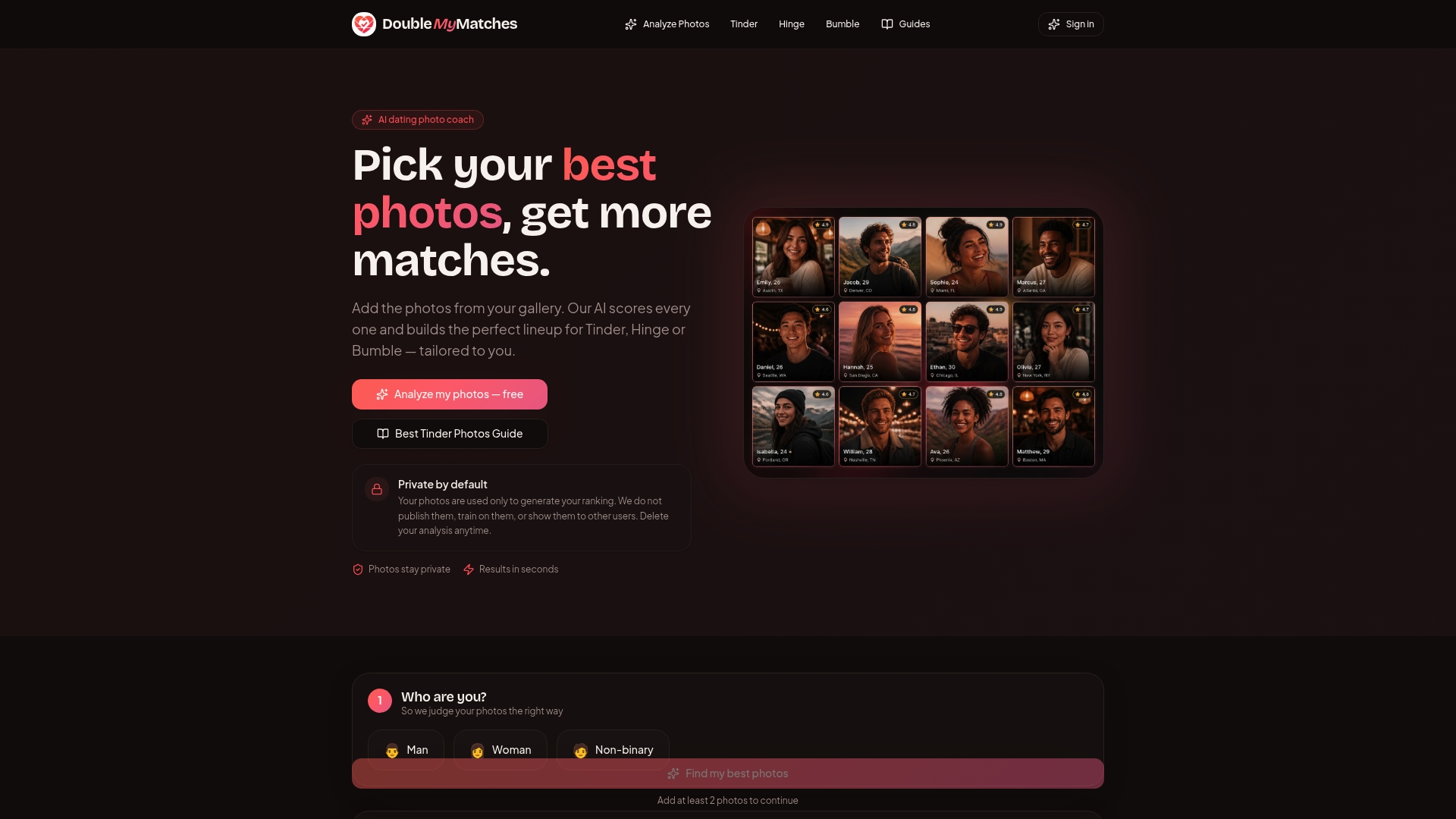
Your photos are analysed once and immediately discarded. No storage, no training use, no data concerns. You get a clear, per-photo report you can act on today — whether that means swapping your hero, removing a weak shot, or finally confirming that your outdoor photo is as strong as you think it is.
Run your photos through the AI analyser and find out which one is actually your best opener.
Sources
The recommendations in this article draw on the following sources. Where a study covers a specific population or platform, that scope is noted — the findings are directional rather than universal.
- Effects of profile richness, beautification and blurriness on online dating outcomes (Frontiers)
- Science of Dating Photos: What Gets the Most Matches | Magnt
- Bumble Photos That Actually Get Matches: Outdoors vs Indoors Guide (2026)
- Scientists analysed most popular Tinder profiles and found one thing | Newsweek
- How to take a good dating app photo, according to dating app experts | British GQ