
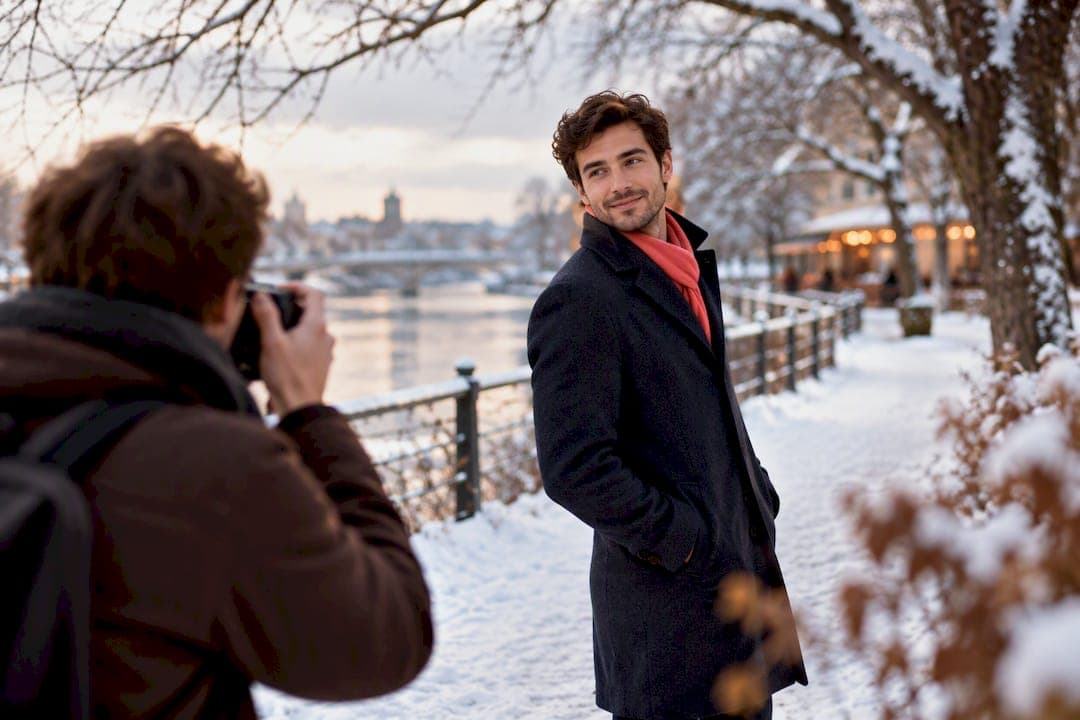
Choose flattering winter light, keep your eyes visible, and build a 4 to 6 photo lineup with one full-body shot in the mix. That combination beats any single "perfect" picture. Skip anything that hides your face behind sunglasses or a scarf pulled too high, and put your best, warmest-looking photo first. If you want the exact shot list, jump to the A ready-made 6-photo winter lineup you can copy below.
TL;DR:
- Bright, overcast winter days create the most flattering lighting, as they diffuse snow glare and prevent face underexposure in photos.
- Incorporating a variety of shots, including full-body outdoor images and genuine activity photos, outperforms repetitive selfies for showcasing personality.
- Clear, well-lit face photos with direct eye contact and minimal obstructions are essential for authenticity and successful Tinder verification.
- Outfits should contrast with the background and avoid heavy bundling that hides facial features, favoring layered, simple-seeming clothing that appears approachable.
- Using AI photo analysis tools can help select the most effective images by assessing lighting, expression, and composition before uploading.
Table of Contents
- Winter Tinder photo styles that actually work
- Lighting and camera tips for winter Tinder photos
- What to wear (and what to avoid) in winter Tinder photos
- Posing and expression tips that read well in winter
- Where to shoot winter Tinder photos, and what props help
- Editing and cropping winter Tinder photos without overdoing it
- Authenticity and Tinder's Photo Verification: what actually matters
- A ready-made 6-photo winter lineup you can copy
- How private AI photo analysis helps finalise your winter lineup
- Showing your personality through winter photos
- Common winter Tinder photo mistakes to avoid
- Seasonal colour palettes and background contrast for winter photos
- Using winter activities and hobbies as photo themes
- The winter photo priorities that actually move the needle
- Want a second opinion before you upload your winter lineup?
- Sources
- FAQ
Winter Tinder photo styles that actually work
You don't need five versions of the same coat-and-coffee shot. Different winter styles signal different things about you, and a smart lineup mixes them so matches get a fuller picture before they've even read your bio.
- Cosy café or bar — sitting with a hot drink, soft indoor light, relaxed smile. Signals sociable and easy to talk to. Staging tip: sit near a window for natural light rather than under overhead bulbs, which cast unflattering shadows under the eyes.
- Snowy action shot — walking, throwing a snowball, mid laugh on a frosty path. Signals adventurous and active. Camera tip: use burst mode on your phone so you catch a natural expression instead of a stiff pose.
- City-warmth shot — collar up, hands in pockets, walking past lit shopfronts or fairy lights at dusk. Signals put-together and confident. Staging tip: shoot at golden hour or just after dark when street lights are on but the sky still has colour.
- Indoor hygge shot — jumper, book or board game, warm lamp light. Signals relaxed and grounded. Camera tip: turn off flash and use a lamp or window as your main light source to avoid a flat, washed-out look.
- Full-body outdoor shot — standing in a park or on a bridge, whole outfit visible. Signals what you actually look like, which matters more than people admit.
Each style earns one slot in your lineup rather than three near-duplicates. A balanced six-photo lineup that mixes activity, warmth, and a clear full-body shot consistently outperforms a set of near-identical selfies, according to dating photography guidance.
Lighting and camera tips for winter Tinder photos
Winter light is trickier than summer light, not because there's less of it, but because snow and low sun combine to wreck your exposure. Bright snow bounces light straight into the camera's metering system, which often makes your face come out too dark while the background blows out to pure white.
Overcast days are usually your friend here. Soft, even cloud cover diffuses the light and flatters skin tone far more reliably than harsh midday sun, which is why photographers shooting snowy scenes routinely favour overcast light over direct sunlight. If you do shoot on a sunny day, position yourself so the sun is behind or beside you, not directly overhead, and let the snow act as a gentle reflector rather than a glare source.
On your phone:
- Tap your face on screen to lock focus and exposure before the app auto-adjusts for the bright snow.
- Nudge the exposure slider down slightly if the snow is washing out your skin tone.
- Use portrait mode sparingly outdoors. It can misjudge edges against a bright white background and blur bits of your jacket or hair.
- If your photos look blue or cold, switch white balance to "cloudy" or adjust it manually rather than trusting full auto.
On a DSLR or mirrorless camera:
- Shoot at a wider aperture (around f/2.8 to f/4) to separate you from a busy or bright background.
- Bracket your exposures in tricky light. Take one shot at the metered setting, one slightly brighter, one slightly darker, and pick the best afterwards, a habit recommended for managing high-contrast winter scenes.
- A small reflector or even a friend holding a white coat can bounce soft fill light onto your face on grey days.
Pro Tip: Shoot a test shot, check it at full screen (not just the thumbnail), and look specifically at your eyes and forehead. If they're in shadow or blown out, move a few steps and try again before you commit to a full sequence.
What to wear (and what to avoid) in winter Tinder photos
Your outfit does two jobs in a winter photo: it keeps you warm, and it tells a stranger something about you in half a second. Get the second part wrong and it doesn't matter how good the lighting is.
The biggest mistake is anything that obscures your face in your primary photo. Sunglasses, a hat pulled low, and a scarf wrapped up past your chin are all fine in a secondary shot, but they have no place in the photo someone sees first. Textured layers, like a wool jumper or a corduroy jacket, tend to photograph better than flat synthetic fabrics, and a colour that contrasts with a likely snowy or grey background (navy, burgundy, forest green) will make you stand out rather than blend in. Menswear guides covering winter wardrobe essentials point to the same combination: layer for warmth, but keep the outer layer simple enough that it doesn't fight with the shot.
Three outfit templates worth copying:
- Coffee-date look: smart-casual jumper or shirt, no coat indoors, sleeves visible so the photo doesn't read as bundled up.
- Evening urban look: a well-fitted coat, collar down, scarf loosely draped rather than wound tight, letting your neck and jawline stay visible.
- Outdoor adventure look: a proper winter coat with the hood down, gloves off for at least one shot so your hands aren't hidden, hat optional but pushed back off the forehead.
If you wear a scarf, drape it rather than wrap it. The goal is warmth that still reads as approachable, not a photo where a match has to guess what your face looks like underneath.
Posing and expression tips that read well in winter
A cold face reads as a closed-off face, even when you're not actually miserable. The fix is mostly about eye contact and jaw tension, not about forcing a huge grin.
- Look at the lens, not past it. Direct eye contact with the camera, paired with a relaxed half-smile, consistently reads warmer than a laughing-into-the-distance shot in your primary photo.
- Keep your face unobscured. No sunglasses, no scarf over the mouth, no hood shadowing your eyes in the shots you want ranked highest.
- Include one full-body shot. It answers the question every match is silently asking, and skipping it is one of the most common reasons profiles underperform.
- Vary your pose between shots. A close crop works for your primary photo; a three-quarter turn or walking shot works better for full-body and action images, since a repeated identical pose across every photo looks staged.
- Check headroom and background before you shoot. Leave a little space above your head, use the rule of thirds rather than dead-centring your face, and pick a background simple enough that it doesn't compete with you (a plain wall, a quiet street, a snowy field rather than a cluttered market stall).
Small adjustments to posture matter more than people expect. Dropping your shoulders slightly and turning your body at a slight angle to the camera, rather than squaring up straight on, softens the whole image and avoids the stiff, passport-photo look that kills approachability.
Where to shoot winter Tinder photos, and what props help
Location does a lot of the work for you in winter. Parks with bare trees or a light dusting of snow give you texture without clutter. Café windows give you warm indoor light plus a hint of the outside world. Riverside paths and quiet urban streets with a bit of architecture in the background both photograph well and don't require you to travel anywhere unusual.
Avoid busy shopping streets at peak times (too much background noise, too many strangers in frame) and avoid anything genuinely risky, like frozen lakes, steep icy slopes, or roadside verges just for the sake of a dramatic backdrop.
Props work when they add a detail worth asking about and fail when they dominate the shot:
- A takeaway coffee cup or thermos gives your hands something natural to do.
- Fairy lights in the background (on a café terrace or a market stall) add warmth without needing to be the focus.
- A dog, a bike, or a book gives a genuine conversation starter.
- Avoid props that are clearly staged just for the photo, like a borrowed guitar you don't play or skis you've never used.
Pro Tip: Bring a spare set of gloves and a flask of something hot if you're shooting outdoors for more than 20 minutes. Cold hands and a stiff jaw show up on camera as a tense, unnatural expression, even if you're smiling.
Basic logistics matter too: charge your phone or camera battery fully, since cold weather drains batteries faster, take warm-up breaks between locations, and if you're shooting somewhere with other people around, a quick nod of acknowledgement goes a long way if you're using a tripod or asking a friend to shoot several angles.
Editing and cropping winter Tinder photos without overdoing it
A little editing fixes what winter light gets wrong. Too much editing creates a different problem: it makes you look like a stranger to your own matches when you turn up in person.
Safe adjustments to make:
- Nudge exposure up slightly if snow glare left your face underexposed.
- Warm up the white balance a touch if the shot looks blue or clinical.
- Crop to remove distracting background elements, but don't crop so tight that context (the park, the café, the outfit) disappears entirely.
Mistakes to avoid:
- Heavy skin smoothing filters that erase texture and make your face look plastic on a small screen.
- Background replacement or heavy AI retouching that changes your actual appearance.
- Over-saturating snow scenes until they look artificial rather than crisp.
Before uploading, check every photo as a thumbnail, not just full screen. Tinder crops and shrinks images for the swipe deck, and a photo that looks great full-size can lose your face entirely once it's compressed to a small square. If you're editing on a phone, a quick pass with the native photo editor's exposure and warmth sliders is usually enough. On desktop, a lightweight tool like Lightroom's mobile-to-desktop sync lets you bracket-check exposure across several shots before picking a final set, an approach that mirrors the six-photo balance dating photographers recommend.
Authenticity and Tinder's Photo Verification: what actually matters
Winter photos, more than any other season, tempt people towards over-editing or AI shortcuts, mostly because bad light makes people self-conscious. Resist that. Platforms are actively checking, and matches notice the difference in person anyway.
Tinder's Photo Verification works through a short video selfie. The system builds a facial map from that video and compares it against your profile photos to confirm they show the same live person, and a successful match earns you a verified badge. Related to this, Photo Check retains a small number of audit images and facial geometry data specifically to catch impersonation or unusual account activity, and it can prompt an additional video selfie if something looks off.
Practical rules that follow from this:
- Keep at least one clear, well-lit, unedited solo face photo in your lineup. It should look like you look right now, not five years or one filter ago.
- Skip AI-generated or heavily AI-altered images that change your actual features. Beyond the ethical issue, they can complicate or fail a verification check.
- Complete Photo Verification where it's available. A verified badge is a quick, free trust signal that costs you nothing beyond a 30 second selfie video.
- Avoid anything that would trip a liveness check, including photos taken from a screen or heavily stylised filters over your whole face.
Authenticity isn't just a policy box to tick. It's the difference between a first date going well and someone feeling misled the moment you say hello.
A ready-made 6-photo winter lineup you can copy
This order works because it leads with warmth and clarity, then builds out variety before closing on something relaxed and personal.
- Primary photo: solo face shot in warm natural light. Café window or golden hour outdoors. Plain jumper or shirt, direct eye contact, gentle smile. Camera tip: lock exposure on your face before shooting.
- Full-body outdoor shot. Standing in a park or on a quiet street, coat on, hands out of pockets. Camera tip: shoot from slightly below eye level to avoid a shortened, awkward stance.
- Hobby or action shot. Walking a dog, skating, hiking, whatever's genuinely yours. Camera tip: use burst mode to catch a natural mid-motion expression rather than a posed one.
- Coffee-date candid. Sitting with a hot drink, slightly off-centre framing, relaxed posture. Camera tip: window light beats overhead bulbs every time indoors.
- Evening urban shot. Walking past lit shopfronts or fairy lights, collar down, scarf loose. Camera tip: shoot just after sunset while the sky still has some colour left.
- Relaxed indoor hygge shot. Jumper, lamp light, a book or board game. Camera tip: turn off flash and let a warm lamp do the work.
Before you upload anything, preview each shot as a thumbnail and double check your face is still clearly visible at that size. If you're torn between two similar photos for the primary slot, that's exactly the kind of close call private AI scoring is built to settle.
How private AI photo analysis helps finalise your winter lineup
Picking your own best photo is genuinely hard. Most of us either default to the shot we personally feel best in (which isn't always the one that photographs best) or ask a friend, who tends to pick the flattering one rather than the one that actually performs.
An AI-based review sidesteps both problems by scoring what actually drives swipes: lighting quality, expression, composition, and how each photo is likely to land on a platform like Tinder, Hinge, or Bumble. An AI service can rank uploaded photos from strongest to weakest and flag issues like shadow across eyes or a busy background pulling focus from the face.
Privacy is worth checking before you upload anything to a photo tool, and it's a fair question to ask of any service. Some AI photo analysis tools analyse photos and then discard them without publishing or using them for additional training.
A few reasons to run your winter lineup through a check like this before going live:
- You're unsure which of two similar shots should be your primary photo.
- You want to know if a photo you love is quietly underperforming on lighting or expression.
- You want a second opinion that isn't influenced by flattery.
Showing your personality through winter photos
The photos that get replies aren't the technically perfect ones. They're the ones that give someone a reason to say something other than "hey."
A mug of something you actually drink, a book you're actually reading, a dog that's actually yours: these small, specific details work harder than a generic posed shot ever will. If you play a winter sport, even badly, a shot of you mid-attempt says more about your personality than a static portrait ever could. If your idea of winter fun is staying in with a film and a blanket, that's a legitimate photo too, and it tends to read as self-aware rather than boring.
Contrast matters here as much as content. A lineup that's five variations of "handsome but generic" tells a match nothing. A lineup with one cosy indoor shot, one outdoor activity shot, and one candid social moment tells them you have an actual life across the season, not just a wardrobe.
Try to include at least one photo that would prompt a specific question rather than a generic compliment. "Where was that taken?" or "Is that your dog?" opens a conversation far more easily than a match simply swiping because you looked fine in good lighting. Personality, in a photo, usually comes down to specificity rather than polish.
Common winter Tinder photo mistakes to avoid
The single biggest winter pitfall is looking cold rather than cosy. A hunched posture, a tight jaw, and hands jammed deep in pockets all read as uncomfortable, even if the photo is otherwise well composed. If you're shivering, it will show, so keep outdoor sessions short and take breaks to warm up between shots.
The second mistake is over-bundling. A huge puffer coat zipped to the chin, a hat pulled down to your eyebrows, and a scarf covering half your face might be the practical choice for actually staying warm, but it hides exactly the features a match is trying to picture. Save the maximum-insulation outfit for real life and dress one notch lighter than you'd normally choose whenever you're specifically shooting photos.
A third, less obvious pitfall is flat grey monotony. Grey sky, grey coat, grey pavement, grey mood; nothing in the frame gives the eye anywhere to land. A single contrasting element, whether that's a coloured scarf, a red door in the background, or golden café lighting, breaks the flatness without requiring any real effort.
Finally, watch for glare-induced squinting. Bright snow on a sunny day makes people squint hard, and a squinting face rarely looks approachable. If you notice yourself squinting mid-shoot, turn slightly so the light isn't hitting you directly, or move somewhere shadier and let the reflected light do the work instead.
Seasonal colour palettes and background contrast for winter photos
Winter backgrounds tend towards grey, white, and muted brown, which makes colour choice in your outfit one of the easiest wins available to you. Deep, warm tones like burgundy, forest green, mustard, and navy all photograph well against snow or overcast sky, because they create genuine separation between you and the background instead of blending into it.
Avoid all-white or very pale grey outfits against snow. You'll disappear into the background, and the camera's exposure will struggle to expose your face correctly while trying to handle a nearly all-white frame. Similarly, avoid pure black in bright snow scenes, since the contrast can be so extreme that your face ends up either overexposed or lost in shadow depending on how the camera meters the scene.
Warm-toned backgrounds (café interiors, string lights, golden hour streets) pair well with slightly cooler outfit tones, like navy or grey, for a pleasant contrast rather than everything blending into one orange wash. Cool-toned backgrounds (snowy fields, overcast skies, blue hour city shots) pair well with warmer outfit colours for the same reason, in reverse.
The simplest rule: look at the dominant colour of wherever you're shooting, then choose an outfit colour that sits opposite it, or at least clearly apart from it, on the colour wheel.
Using winter activities and hobbies as photo themes
If you've got a genuine winter hobby, whether that's skiing, ice skating, winter hiking, or even just a Sunday market habit involving mulled wine, it's one of the strongest photo themes available to you. Activity shots do double duty: they give you a natural, unposed expression, and they hand your matches an easy opening line.

You don't need to be good at the activity for the photo to work. A slightly wobbly first attempt at skating often reads as more charming and honest than a perfectly posed shot, because it looks like a real moment rather than a staged one. What matters is that the activity is genuinely yours, not a one-off staged for the camera, since that authenticity tends to come through even in a still image.
If you don't have an obvious winter hobby, everyday winter routines work almost as well. A regular coffee order, a weekend market visit, a walk you actually take: these don't need to be dramatic to be effective. The goal is showing a slice of your actual winter life, not manufacturing an adventure you don't normally have. One well-chosen activity shot, placed correctly in your lineup, tends to generate more opening messages than three static portraits combined.
The winter photo priorities that actually move the needle
If there's one thing worth taking from all of this, it's that winter photos fail for boring, fixable reasons far more often than they fail from bad luck. Lighting is the biggest lever: get that right and half your other problems disappear. Face visibility is the second, because no amount of clever composition rescues a photo where your eyes are lost in shadow or hidden behind a scarf. Variety is the third, because a lineup of five near-identical shots tells a match almost nothing about you.
We'd also push back gently on the instinct to shoot once and be done. Photos date faster than people expect, and a lineup from two winters ago quietly signals that you haven't updated your profile in a while. Treat your winter set as something to revisit each season, not a one-time task.
Test more than one version of your primary photo if you can. What you think is your strongest shot isn't always the one that performs best, and a second, objective opinion, whether from a friend with no stake in flattering you or a private scoring tool, tends to catch what your own eye misses.
— The Team @ DoubleMyMatches
Want a second opinion before you upload your winter lineup?
Picking between two decent winter shots is one of the hardest calls in this whole process, and it's exactly where DoubleMyMatches earns its keep. Instead of guessing which café photo or full-body shot deserves the primary slot, you get instant, objective scoring on lighting, expression, and composition, plus a best-to-worst ranking of the photos you're actually considering.

The Full Report is offered as a paid one-off service that analyses your photos and deletes them afterward. Pricing and details are available on the provider's site. If you've already run a report and want to check whether a reshoot actually improved things, Retest & Lock In is $17 one-off. For anyone updating their photos every season, the 12-Month Pass covers unlimited use across the year, with pricing available on the site.
If you're only unsure about one photo rather than a full lineup, the Profile Picture Tester for Dating gives you a faster, lower-commitment starting point. Either way, run your shortlist through before you upload. It takes the guesswork out of a decision that otherwise comes down to gut feeling.
Sources
- How Does Photo Verification Work? – Tinder
- 11 snow photography tips for shooting winter scenes – CottonCarrier
- How to shoot winter snow portrait photography – ExpertPhotography
- Dating Photographer’s Guide to the Best Dating App Photos for Tinder, Bumble & Hinge in London
FAQ
Is it true that 75% of Tinder users are men?
Tinder doesn't publish a precise, current gender breakdown, and figures circulating online vary by source and date, so treat any exact percentage with caution. What's consistently true is that men significantly outnumber women on the platform, which makes photo quality and a varied lineup more important for standing out among heavier competition.
What are good winter photography ideas for a dating profile?
Strong winter ideas include a cosy café shot, an outdoor full-body shot in a coat, a hobby or activity shot, and an evening city shot with warm lights in the background. Mixing these styles, rather than repeating one, gives matches a fuller sense of who you are, as dating photography guidance consistently recommends.
Can Tinder detect AI-generated photos?
Tinder's Photo Verification uses a video selfie and facial geometry matching to confirm your photos show a live, real person, which makes heavily AI-altered images risky to rely on. It's safer and more effective long term to use honest, current photos and complete verification rather than risk a failed check.
What are some good ideas for Tinder photos generally?
A strong lineup includes one clear solo face shot in good light, one full-body shot, one hobby or activity shot, and one social or candid moment, adjusted seasonally. Running your shortlist through a private AI photo analysis tool before uploading helps confirm which shots are genuinely your strongest before you commit.
How much does a private photo analysis cost?
DoubleMyMatches offers a Full Report for $7 as a one-off, with a Retest & Lock In option at $17 for checking improvements after a reshoot. A 12-Month Pass is also available for unlimited use across the year, with current pricing listed on the site.