
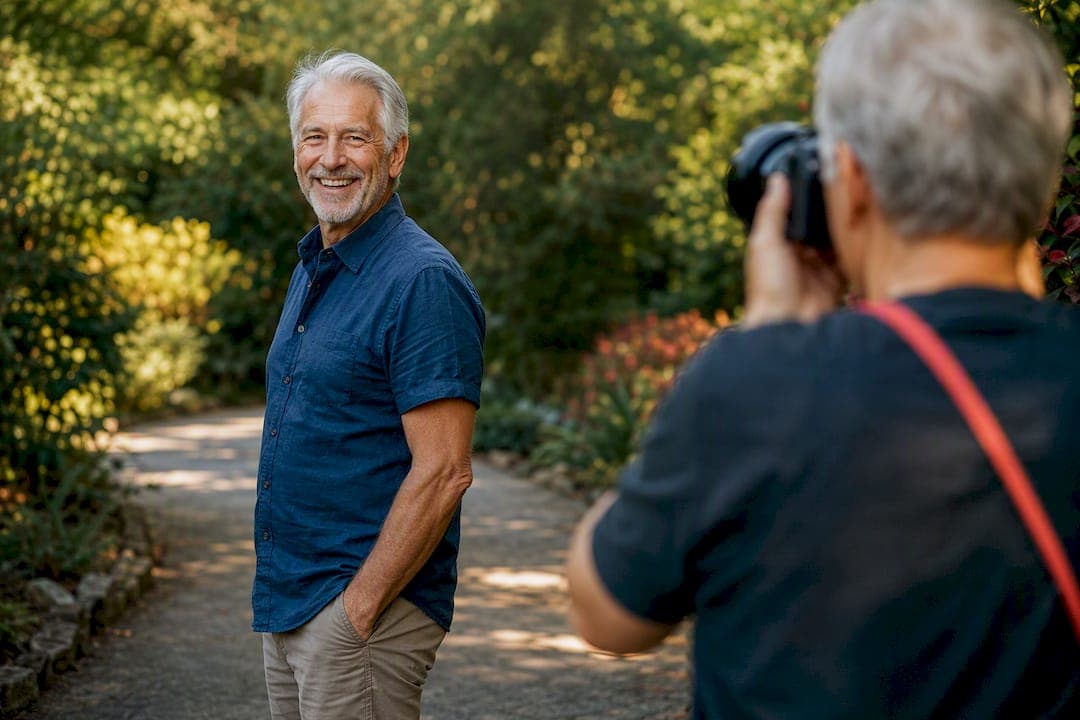
The single biggest change you can make is swapping your current profile photo for a recent, natural-light headshot with a relaxed, genuine smile. That one swap does more for your match rate than any bio rewrite. Ahead, you'll find the exact checklist, real photo examples, the mistakes quietly costing you swipes, and a step-by-step lineup you can build this weekend.
TL;DR:
- Using a recent, natural-light headshot with a genuine smile and slight shoulder turn significantly increases match rates for older men.
- Including a variety of photos—full-body, activity, and lifestyle images—without heavy filters or accessories like sunglasses or caps improves profile authenticity.
- Photos from over a year ago, group pictures, and car or trophy shots diminish trust and should be replaced with current, solo, day-to-day images.
- Taking multiple photos in the same setting and selecting the most candid, expressive image boosts engagement more than posed shots.
- An AI photo review tool can help objectively rank images and optimize your lineup, leading to more matches over time.
Table of Contents
- Older men's Tinder photos: the checklist that actually works
- Real photo examples and why each one works
- Photos to avoid and why they hurt your chances
- How to build your six-photo Tinder lineup step by step
- How an AI photo review takes the guesswork out of choosing
- A short perspective from the team on older men's photo mistakes
- Get an honest second opinion before you update your profile
- Sources
- FAQ
Older men's Tinder photos: the checklist that actually works
Forget the myths about needing a designer wardrobe or a professional studio session. What works for older men on Tinder is simpler, and more forgiving, than most profiles suggest.
Your primary headshot needs six things:
- A tight crop from the chest up, not a distant full-body shot squinting into the sun
- Direct eye contact with the camera, not a phone screen or a dog three feet away
- A relaxed, closed or slightly open smile, not a forced grin or a serious stare
- Natural daylight, ideally outdoors or near a window, never a dim pub or a car interior
- A photo taken recently, matching how you look right now
- A slight turn of the shoulders rather than facing the camera dead on, which softens the pose
That last point matters more than people think. A photographer's guide to dating apps for the over 50s notes that natural, relatable photos consistently outperform polished, posed ones, and a small shoulder turn is part of what makes a shot read as candid rather than staged.
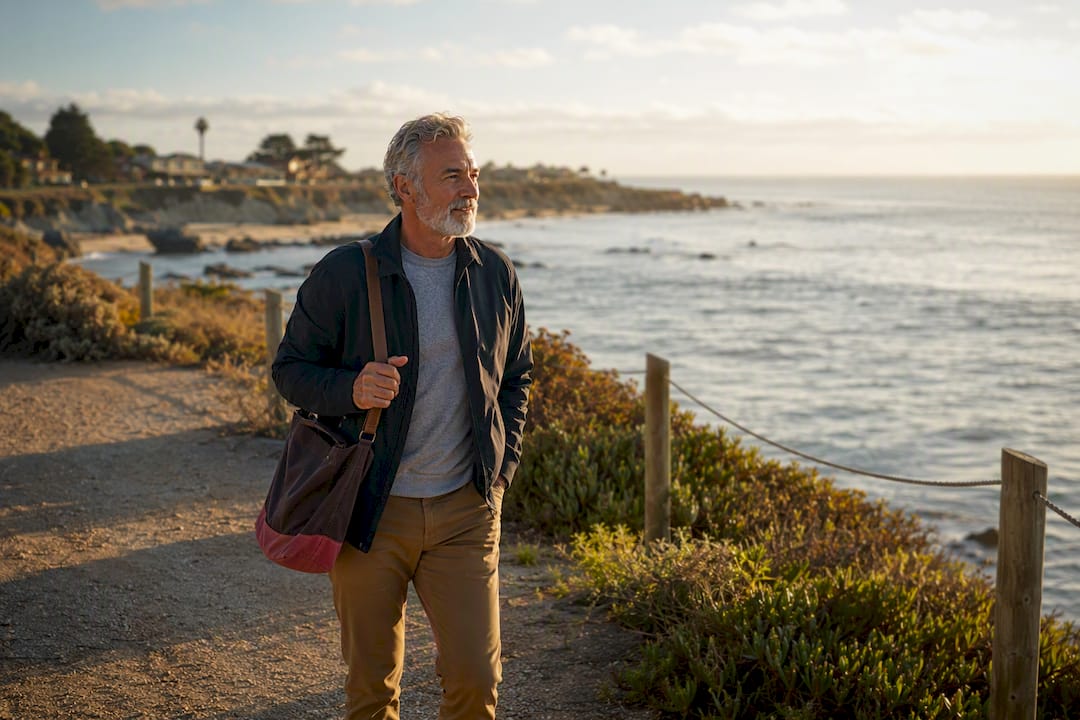
Your secondary photos need variety, not repetition. Include one full-body shot so matches can see how you carry yourself, one activity photo (walking, cycling, cooking, whatever you actually do), and one lifestyle or context image that shows a setting, a café table, a garden, a coastal path. Vary the locations and the outfits across these three. Five photos of you in the same grey jumper against the same wall tells a match nothing new.
Certain choices quietly sink otherwise decent profiles. Sunglasses and caps hide the two things a match is scanning for: your eyes and your hairline. A single photo with sunglasses is fine as a fourth or fifth slot; three in a row and you look like you're avoiding something. Car selfies read as low effort almost universally, and heavy filters or beauty-mode smoothing tend to raise suspicion rather than admiration once someone meets you in person.
On grooming and clothing, keep it simple. A collared shirt or a well-fitted jumper in a solid colour photographs better than busy patterns, which pixelate badly at phone-screen size. A recent haircut and trimmed facial hair go further than any outfit choice. You don't need new clothes. You need clean, well-fitting versions of what you already own.
Technically, shoot in portrait orientation for full-body shots (Tinder's interface crops landscape images awkwardly), avoid on-camera flash which flattens faces and creates harsh shadows, and use your phone's native camera rather than a heavily edited app. A mature dating guide recommends exactly this combination: one clear natural-light headshot, a recent full-body shot, and a contextual image that avoids group shots where you're hard to pick out.
Pro Tip: Take ten photos in the same setting and same outfit, then pick the one where you're mid-laugh or mid-sentence rather than posing. The "accidental" shot almost always beats the deliberate one.
Real photo examples and why each one works
Seeing the difference between a good photo and a weak one is far more useful than reading rules about it. Here's what strong examples for older men actually look like, slot by slot.
The headshot. Picture a man in his 60s, outdoors, soft afternoon light on his face, eyes clearly visible, a small natural smile, shoulders turned slightly away from the lens. A free stock example on Pexels shows this composition well: nothing dramatic, just good light and a genuine expression. That's the template to aim for when a friend re-takes your primary photo.
The full-body shot. Standing, not sitting; a clear, uncluttered background such as a garden path or a quiet street, not a cluttered kitchen; clothing that fits properly rather than hanging loose. Posture does the heavy lifting here. Standing tall with hands loosely in pockets reads as confident. Arms crossed or hunched shoulders reads as guarded, even if that's not the intention.
The activity or context shot. This is where most men undersell themselves. A photo at a local café, in a garden, or on a coastal walking trail invites a match to picture doing that same thing with you. That's the entire psychological function of this photo slot, according to guidance on dating apps for men over 50, which points out that everyday, plausible settings do more work than any staged glamour shot.
There's also a place for a slightly moodier, low-key portrait, one with stronger shadow, a beard, or glasses, as an alternative headshot style further down your lineup. It won't work as photo one, where clarity matters most, but as a third or fourth image it adds texture and shows a different side of your personality.
A short caption under any of these, "Sunday morning, same café every week" or "Still learning to sail after three years," does more than decorate the photo. It gives a match something specific to reply to, which is often the difference between a match that goes nowhere and one that turns into a conversation.
Photos to avoid and why they hurt your chances
-
Photos from a decade or more ago. These erode trust before a conversation even starts. A mature dating guide is blunt about this: women expect current images, and an old photo reads as deceptive rather than flattering, however good you looked in it. The fix is simple, take new ones now.
-
Group shots where you're one of five people. Matches shouldn't have to guess which person you are. Crop tightly to just you, or better, replace the photo entirely with a solo shot from the same outing.
-
Car selfies. Reporting on the most criticised profile photos found that car interiors and trophy shots, fish being the classic example, rank among the most disliked images on dating profiles generally. The fix is to step outside and take the same photo against literally any other backdrop.
-
Heavy filters or staged luxury settings. A photo in front of a rented sports car or a filtered jawline doesn't read as aspirational, it reads as insecure. Swap it for a plausible, everyday setting, a walk, a local pub garden, your actual kitchen if it's tidy.
-
Sunglasses or caps in every photo. One is fine. Three in a row hides your face entirely, which is the opposite of what a headshot is for.
Real feedback backs this up outside the guides too. A Reddit thread from a 60 year old man asking for profile critique got exactly this pattern of comments: praise for genuine expressions and current photos, criticism for anything that felt dated or posed.
How to build your six-photo Tinder lineup step by step
A strong lineup isn't random. It follows a sequence, and each slot has a job to do.
-
Slot one: the headshot. Chest up, natural light, direct eye contact, small genuine smile, taken this year. This is the photo that decides whether someone swipes right or moves on in under two seconds.
-
Slot two: the full-body shot. Standing, portrait orientation, clear background, good posture. This confirms the headshot wasn't misleading and shows how you dress and carry yourself.
-
Slot three: the activity photo. You doing something you genuinely do, walking, gardening, at the gym, fishing if that's really your thing. Shoot from a slight distance so the activity is obvious, not just your face again.
-
Slot four: a social or travel context shot. A photo from a trip, a family event you can crop sensibly, or a local landmark. This adds a hint of lifestyle without needing to be exotic.
-
Slot five: a candid smile. Ideally one where someone caught you laughing at something, not posing. This is often the highest-performing photo in a lineup because it looks the least deliberate.
-
Slot six: one hobby or pet photo, and only one. If you have a dog, a boat, a workshop, this is where it goes. Limit it to a single slot so it doesn't crowd out photos of you.
Once your six are set, don't assume you've finished. Swap one photo at a time and track your match rate for a week before changing another. This kind of small, sequential testing tells you which single image is pulling weight, rather than guessing at your whole lineup.
Pro Tip: If your smartphone photos consistently come out flat or oddly lit despite good effort, a single casual portrait session (not a formal studio sitting) with a friend who understands light can solve more problems in twenty minutes than a month of retakes.
How an AI photo review takes the guesswork out of choosing
Even with every rule above in hand, picking which of your twelve decent photos are actually your best six is genuinely hard to judge on your own. You're too close to the pictures, and friends tend to be too polite to say which one is weakest.
This is where an AI-driven review earns its place in the process. Tools like the Tinder Photo Analyzer score each image against the same factors that matter most to a swiping match:
- Lighting quality, catching the dim or backlit shots that flatten your face
- Expression, flagging forced smiles versus natural ones
- Composition, checking crop, distance, and background clutter
- App-specific suitability, since what reads well on Tinder differs slightly from Hinge or Bumble
Ranking your photos best to worst removes the guesswork, and getting feedback quickly means you can retest after swapping a weak photo rather than wondering for weeks. Photos are analysed and then discarded, never published or used to train the AI, which matters if you'd rather keep this whole process private.
A short perspective from the team on older men's photo mistakes
The pattern we see most often isn't bad taste. It's insecurity dressed up as strategy, hiding behind sunglasses, leaning on a decade-old photo, or over-filtering a face that would look better simply lit well.
Owning your age tends to land better than minimising it. A man who looks confidently 62 in a genuine photo outperforms a man trying to pass for 45 in a blurry one, every time. The fix is rarely a total makeover. It's usually one better headshot, one honest full-body shot, and the discipline to remove three photos that were never doing you any favours.
— The Team @ DoubleMyMatches
Get an honest second opinion before you update your profile
DoubleMyMatches gives you what a well-meaning friend usually can't: a private, objective ranking of your photos before you commit to a new lineup. Instead of guessing which headshot is strongest or asking around for opinions, you upload your shortlist and get an instant score based on lighting, expression, and composition, tailored to how Tinder, Hinge, or Bumble actually display images.

The Full Report is a one-off purchase that orders your photos from strongest to weakest with feedback on each. If you've already made changes based on that feedback, a retest option lets you check whether your revised lineup actually improved. For men who expect to keep refining their profile over months rather than doing it once, an annual pass gives ongoing access, with pricing available directly on the site. Every photo is analysed and then deleted, never published, never used to train the AI, and the whole process takes minutes rather than days of asking friends for feedback they may not give honestly. If you want to know which of your photos is quietly costing you matches, start with the rank my dating photos tool and see your lineup ranked in order.
Sources
For deeper photographic guidance, see the photographer's guide to dating apps over 50 and Life in Style's dating profile photo advice. Real-world feedback came from a Reddit thread discussing a 60 year old man's profile.
- Dating Apps for Older Men: What to Know | Mature Dating Guide
- Dating apps for over 50: photographer's guide
- Seeking feedback on my Tinder profile - 60 year old man
- Fish and car pictures among top photo mistakes for dating profiles
- Portrait of a smiling senior man outdoors · Pexels
FAQ
What are good Tinder photos for older men?
A recent headshot in natural light with a genuine smile, plus a full-body shot and one activity or lifestyle photo, forms the core of a strong lineup. Guides on dating apps for older men consistently recommend this exact combination over posed or studio-style images.
Should older men use shirtless photos on Tinder?
Shirtless photos work for some younger men but generally read as trying too hard for an older audience, and they rarely showcase anything a well-fitted shirt doesn't. A photo showing you active, walking, playing sport, gardening, communicates fitness and lifestyle far more convincingly than a shirtless mirror shot.
Is it true that most Tinder users are men?
Tinder's user base does skew male, though exact current ratios aren't publicly confirmed by the platform. What matters more practically for older men is competing effectively within that pool, which comes down to photo quality far more than raw numbers.
Are there older people using Tinder?
Yes, men and women over 50 make up an active part of Tinder's user base, and dedicated guidance for this age group has grown accordingly. The same core rules apply regardless of age: recent photos, natural light, and genuine expressions perform best.
How often should I update my Tinder photos?
Refresh your lineup at least once a year, and sooner if your appearance changes noticeably, a new haircut, weight change, or grown beard. Guides on online dating for men over 50 point to recency as one of the strongest trust signals a profile can send.