
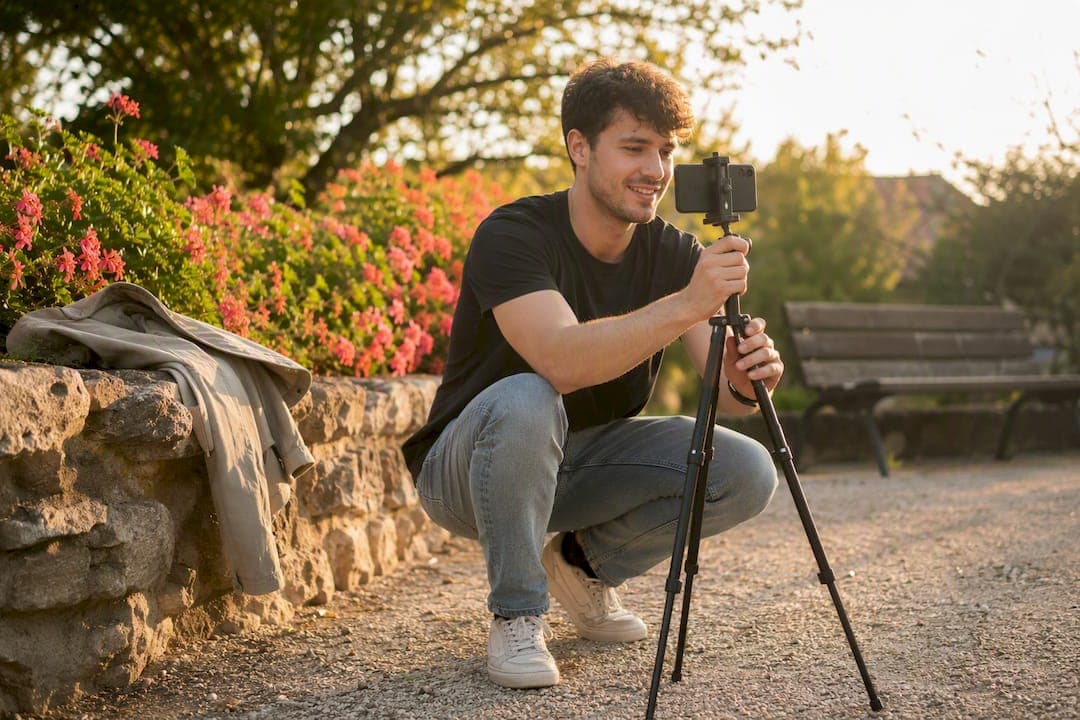
The five photo types that reliably increase matches are: a smiling headshot, a full-body shot, an action or hobby photo, a social proof shot, and one bonus image (pet, travel, or a sharp GQ close-crop). Copy this six-photo lineup: headshot smiling → full-body outdoors → hobby/action shot → group or social photo → travel or pet bonus → strong second headshot or GQ shot.
Skip these entirely:
- Mirror selfies, especially bathroom ones
- Group-only shots where you're not clearly identifiable
- Heavy filters that blur your skin or eyes
TruShot's analysis of thousands of profiles found the lead photo drives roughly 70% of the initial swipe decision. Get slot one right before touching anything else.
Key Takeaways
The strongest Tinder lineups combine a smiling close-crop headshot with a full-body, hobby, social, and one bonus photo, ordered so the strongest image leads.
| Point | Details |
|---|---|
| Lead photo matters most | The first photo drives roughly 70% of the initial swipe decision, so prioritise it above all else. |
| Use five or six archetypes | Mixing headshot, full-body, action, social, and bonus photos can triple your matches versus headshots alone. |
| Cut the damaging shots | Delete mirror flexes, sunglasses-only leads, and group-only photos where you're hard to spot. |
| Pair photos with captions | Match caption tone to photo type: humour for action, warmth for pets, confidence for social shots. |
| Test your lineup objectively | DoubleMyMatches' photo analyzer ranks your uploads and flags weak photos before you commit to a lineup. |
Table of Contents
- What are the best Tinder photo examples for men?
- How do you take the perfect first Tinder photo?
- How should you order your Tinder photos?
- Which photos actively reduce your matches?
- Twelve Tinder photo examples with caption templates
- What bio and caption lines pair best with your photos?
- How does an AI photo scorer judge your pictures?
- What actually moved the needle for real users
- Want an objective second opinion on your photos?
- Sources
What are the best Tinder photo examples for men?
Six archetypes cover every question a swiper subconsciously asks: what do you look like, what's your body type, how do you spend your time, are you sociable, and do you have any charm beyond the obvious. Profiles using a mix of these five or six photo types get roughly three times more matches than profiles built entirely from headshots or gym selfies.
The smiling headshot. Shoulders up, face filling most of the frame, natural light hitting you from the front or side. Genuine smile, not a smirk. This is your identity shot: the one people remember you by.
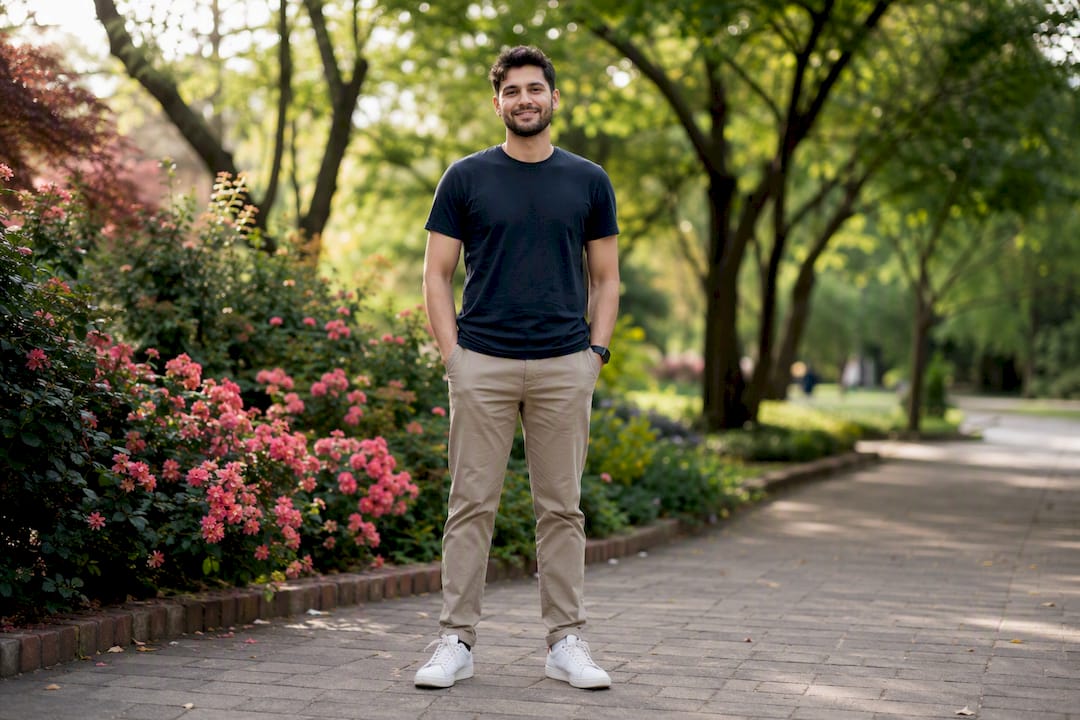
The full-body shot. Standing outdoors, full height visible, nothing baggy or oversized hiding your shape. Photography guides consistently recommend natural light over studio lighting for this shot because it reads as more honest.
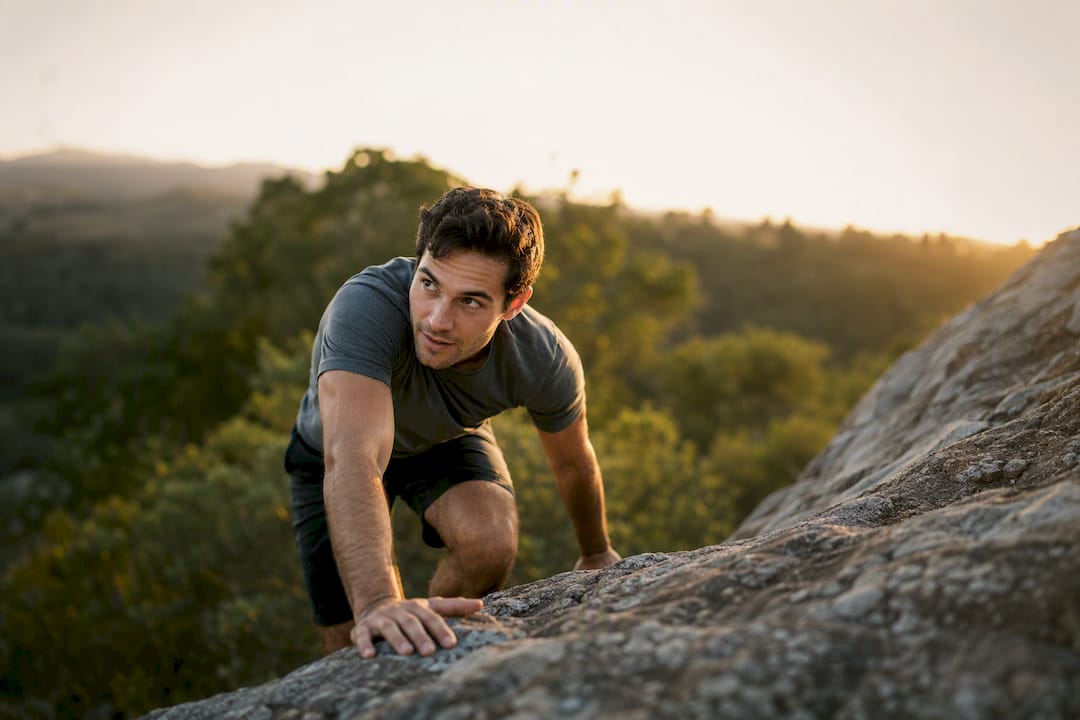
The action or hobby shot. Mid-activity, not posed for the camera: climbing, playing five-a-side, cooking, painting a fence. This answers "what do you actually do with your time" better than any bio line.
The social proof shot. You with one or two friends, laughing, clearly the focus of the frame (not lost in a group of eight). This signals you have a life and people like being around you.
The pet or animal bonus. A dog, a niece's cat, even someone else's dog you're clearly enjoying. It softens the whole lineup.
The GQ or close-crop shot. A sharper, more stylised close-up, usually shot slightly differently from your lead headshot, good for showing range.
Pro Tip: Candid-looking action shots rarely happen by accident. Set the camera up, start the activity, and have someone snap frames every ten seconds for two minutes. You'll get one genuinely unposed shot without staging a fake one.
How do you take the perfect first Tinder photo?
Your lead photo is a close crop with a genuine smile and visible eyes; everything else is secondary. Facial cues drive rapid social judgements, which means the details in that single frame carry more weight than people expect.
Run through this checklist before you upload anything to slot one:
- Lighting: natural, front-facing, no harsh shadows across your face
- Eye contact: looking at the lens, not off to the side or down at a phone
- Crop: head and shoulders, filling roughly two-thirds of the frame
- Expression: a real smile that reaches your eyes, not a flat stare
- Background: clean and uncluttered, nothing distracting behind you
Picture your face divided into three zones: eyes, mouth, jawline. Each needs to be visible and well-lit. If a hat brim shadows your eyes or a beard swallows your jawline in darkness, the photo fails before anyone reads your bio.
Never use: sunglasses, a hat that covers your eyes, a bathroom mirror background, or a filter that smooths your skin unnaturally.
Pro Tip: Take the shot near a window at midday rather than under an overhead bulb. Soft, indirect daylight flatters almost every face shape.
How should you order your Tinder photos?
Order matters almost as much as the photos themselves. Since the lead photo drives most of the initial swipe decision, the wrong photo in slot one can sink an otherwise strong lineup.
| Slot | Purpose | Example |
|---|---|---|
| 1 | Hook with your face | Close-crop smiling headshot, natural light |
| 2 | Confirm your build | Full-body shot outdoors, casual clothing |
| 3 | Show a genuine interest | Mid-hike photo, mid-laugh, not posed |
| 4 | Prove you're sociable | Group shot at a friend's birthday, you clearly visible |
| 5 | Add personality | Photo with your dog or on a trip abroad |
| 6 | Reinforce or test | A second strong headshot, or a GQ-style close-up |
Lineup for casual dating: headshot, hobby shot, full-body, social, GQ close-up, pet bonus. Leads with energy and range.
Lineup for relationship hunting: headshot, social shot, full-body, hobby, family-friendly bonus, second headshot. Leads with warmth and consistency.
Lineup for hobby-focused profiles: headshot, hobby shot, full-body, second hobby shot, social, bonus. Works well if your interest doubles as a conversation magnet, like climbing or music.
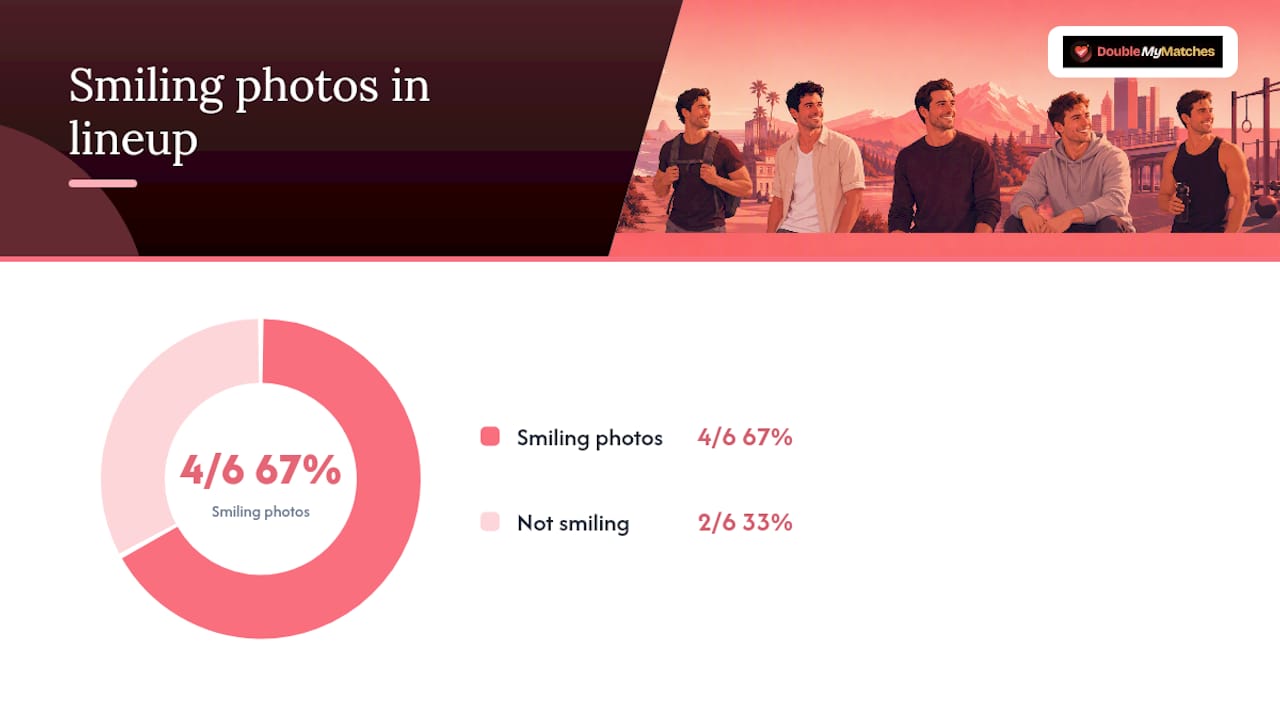
A few ordering rules worth sticking to: smile in at least four of six photos, never open with a group shot, and vary the background across every frame so your lineup doesn't feel like one long photoshoot.
Which photos actively reduce your matches?
Some photos don't just fail to help, they actively cost you swipes. Here's what to cut and what to shoot instead.
- Mirror flex shots read as insecure rather than confident. Replace with a natural full-body shot taken by a friend outdoors.
- Sunglasses-only lead photos hide the eye contact that drives quick trust. Replace with a bare-faced headshot in natural light.
- Group-only photos where you're hard to pick out waste a slot on ambiguity. Replace with a group shot where you're clearly the centre of the frame.
- Angry or scowling "smoulder" faces signal disinterest rather than intrigue. Replace with a relaxed, genuine smile.
- Heavily over-edited or filtered shots erode trust the moment you meet in person. Replace with an unfiltered shot in good light.
Quick red flags checklist for photos to delete tonight: outdated photos from more than two years ago, anything with an ex cropped out badly, blurry low-resolution shots, and anything shot in poor lighting that makes your skin tone look off. Emlovz's photo roundup makes a similar point: consistency and clarity beat cleverness almost every time.
Twelve Tinder photo examples with caption templates
Each of these pairs a shot note with a caption line you can copy directly.
- Headshot, coffee shop window light. Caption: "Ask me anything except my coffee order, it's complicated."
- Full-body, park path, jeans and jacket. Caption: "5'11" and still lose every argument with my dog."
- Hiking mid-trail, backpack visible. Caption: "Currently accepting trail recommendations."
- Cooking, mid-stir, kitchen lit by daylight. Caption: "Home-cooked date night is on the table, literally."
- With a dog, park or sofa. Caption: "She approves of most people. Jury's still out on you."
- Group shot, birthday or pub, you central. Caption: "The one who always gets the round in."
- Travel shot, market or coastline. Caption: "Currently plotting the next trip. Suggestions welcome."
- GQ close-crop, sharp jacket. Caption: "Cleaned up nicely for this one photo."
- Playing an instrument or singing. Caption: "Will play requests for the right audience."
- Sports mid-action, football or climbing. Caption: "Competitive to a slightly concerning degree."
- Casual laugh, candid, unposed. Caption: "This is what I look like most days, minus the effort."
- Second headshot, different angle or outfit. Caption: "Couldn't decide which photo, so here's two."
Photos one, two, and three are essential. The rest are optional extras that add flavour once your core lineup is solid.
What bio and caption lines pair best with your photos?
Match your caption to the photo type: use humour on action shots, warmth on pet photos, curiosity on travel shots, confidence on social shots, and simplicity on your GQ close-up.
Try one of these three bio templates depending on your goal:
- Funny: "Professional overthinker of restaurant choices. Send help, or a reservation."
- Aspirational: "Building a life I'm proud of, one bad pun at a time."
- Low-effort opener: "Ask me about the photo you swiped right on."
Keep your bio under three short lines. Avoid clichés like "just here for the memes" and skip anything negative about past dating experiences. Zoosk's caption guidance makes the same case: specific and light beats vague and generic every time.
How does an AI photo scorer judge your pictures?
Objective scoring tools typically judge six things: lighting, expression, composition, clothing, image quality, and authenticity. Each one is fixable once you know what it's checking.
- Lighting: even, natural, no harsh shadows across your face
- Expression: a genuine smile that reaches your eyes
- Composition: you're centred, background isn't distracting
- Clothing: fits well, colours contrast with your background
- Image quality: sharp, high resolution, not pixelated or stretched
- Authenticity: looks like a real moment, not a staged studio shot
Run a three-minute self-audit before uploading anything: check lighting direction, confirm your eyes are visible, look for background clutter, and ask whether the photo looks natural or forced.
Pro Tip: A one-time analysis is different from ongoing tracking. Tools like DoubleMyMatches' photo analyzer score your photos and then discard them, never storing images or using them to train the AI.
What actually moved the needle for real users
Most men don't need a new wardrobe or a professional photographer. The single biggest fix we've seen is reordering an existing lineup: moving a smiling, well-lit headshot into slot one and pushing a group photo or gym mirror shot further down.
One recurring pattern: a profile with a strong hobby shot buried in slot five, moved to slot one or two, consistently outperforms the same photos left in their original order. Small changes to the lineup, not a full reshoot, tend to produce the biggest shift.
Want an objective second opinion on your photos?
You've read the rules. The harder part is judging your own face objectively, because everyone thinks their favourite photo is the best one, and it usually isn't.
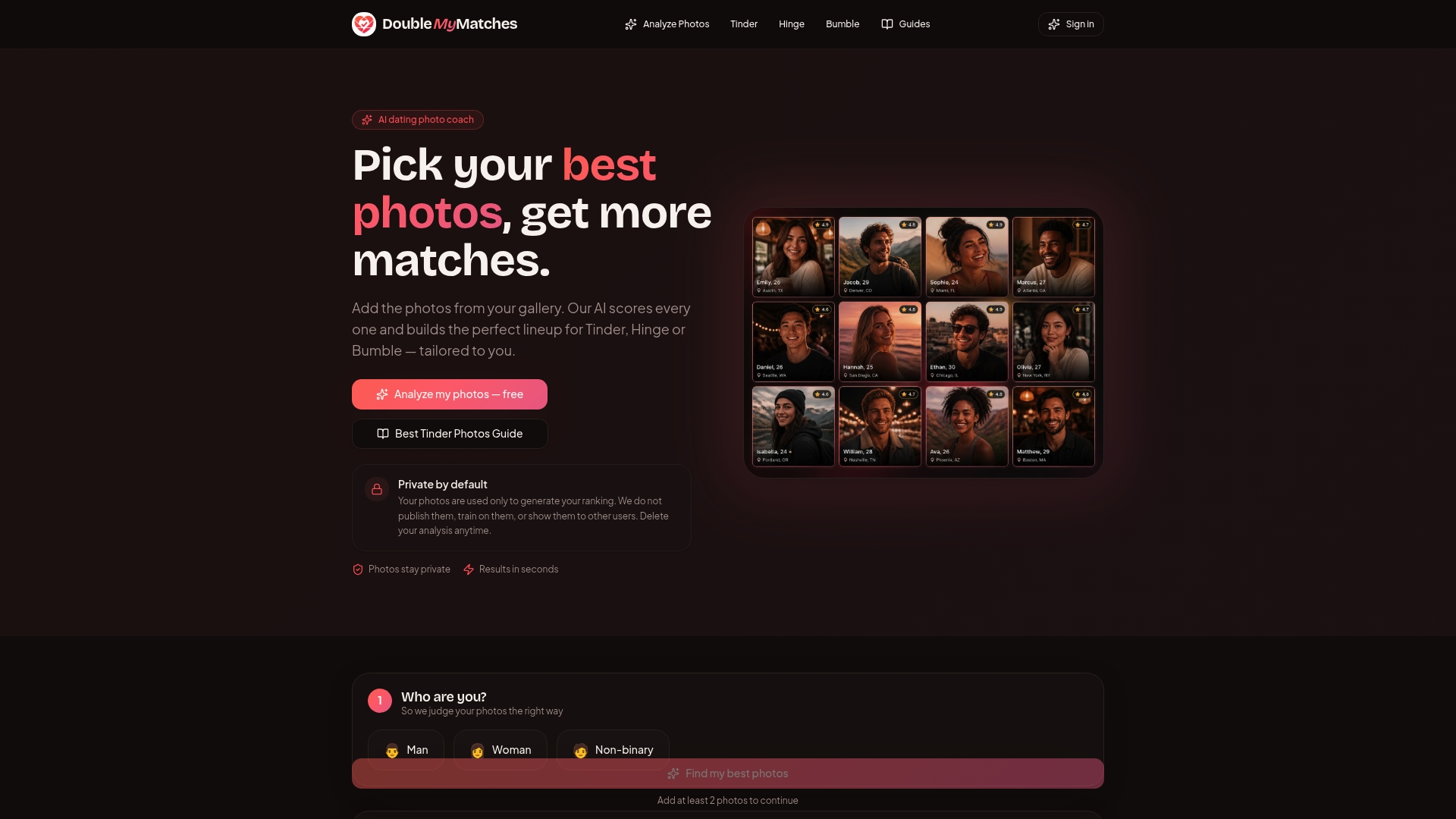
DoubleMyMatches gives you an outside, unbiased read on your lineup in minutes rather than guessing which shot to lead with. The dating photo analyzer scores every photo against the same lighting, expression, and composition checks covered above, then tells you which to lead with and which to cut.
Three things you get immediately:
- Instant best-to-worst ordering of your uploaded photos
- Per-photo feedback explaining exactly what's working or not
- A privacy-first, one-time analysis with no images stored or published
If you only try one photo tool this month, run your current lineup through it and see which shot it puts in slot one. You might be surprised it isn't the one you'd have picked yourself.