
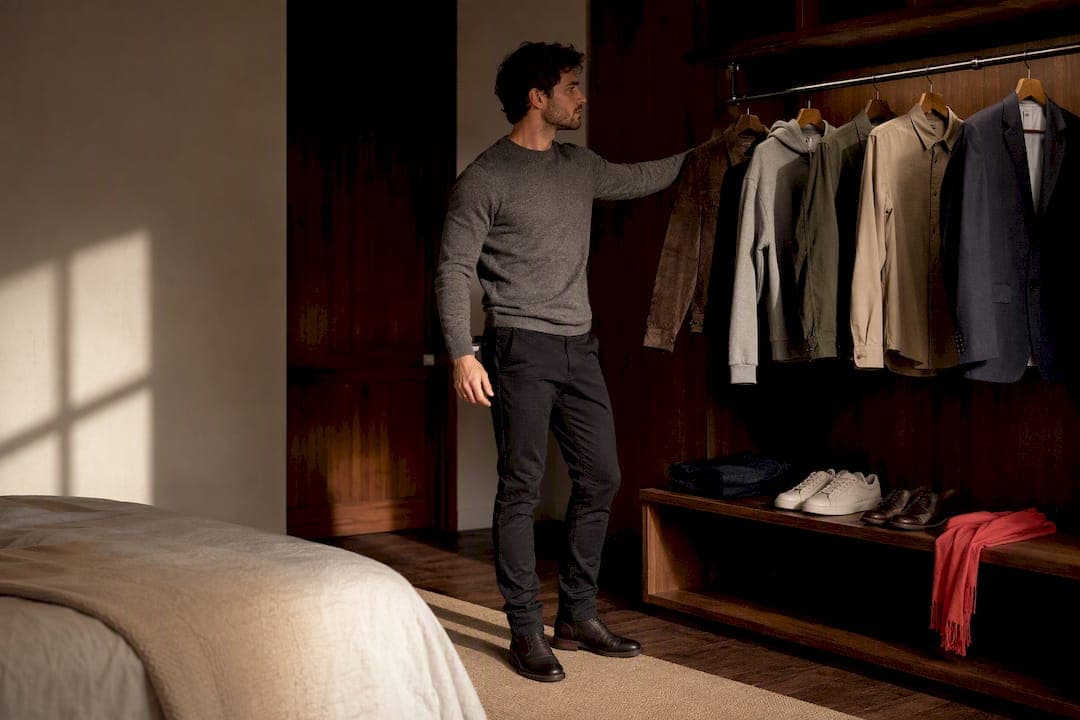
The best approach is simple: wear clothes that fit you properly, look like the real you, suit the setting you're in, and include at least one photo where you've made an effort to dress up. Fit, colour, variety and context all matter, and research from Tinder's own UK survey and a peer-reviewed clothing study both back this up. Tools like DoubleMyMatches can then help you check whether your outfit choices are actually working.
TL;DR:
- Proper fit is crucial, with shoulder seams at the edge of the shoulder and sleeves ending around the wrist bone to ensure clothing looks natural on camera.
- Wearing clothes that reflect your authentic style, avoiding costume-like or overly trendy pieces, helps prevent mismatches that could turn off potential matches.
- Incorporating at least three different looks, including a casual, activity-based, and dressy outfit, maximizes profile variety and showcases your personality.
- Adding subtle accents of red or black in your clothing can increase perceived attractiveness, but avoid overusing these colors or blending them into backgrounds.
- Preparing outfits in advance, including steaming clothes and choosing footwear thoughtfully, ensures a more polished appearance during photoshoots.
Table of Contents
- Core rules for choosing outfits: fit, authenticity and range
- Colour and skin tone: what the research actually says
- Dress for the setting you're actually in
- Outfit templates for every photo slot
- Clothing mistakes that quietly cost you matches
- How to prepare your outfits before a shoot
- How AI photo analysis can help you pick the best outfit photos
- What we'd tell a friend before their next photoshoot
- Try an AI Tinder photo analysis to check your outfit choices
- Sources
- FAQ
Core rules for choosing outfits: fit, authenticity and range
Fit beats fashion every time. A £15 t-shirt that fits your shoulders properly will photograph better than a £150 designer top that bunches at the seams. This is the cheapest, fastest upgrade you can make to your photos, and it costs nothing if the clothes are already in your wardrobe.
Here's how to check fit in under a minute:
- Shoulder seams should sit right at the edge of your shoulder, not drooping down your arm or pulling tight across your back.
- Sleeve length should stop around your wrist bone, showing a little hand rather than swallowing it.
- Waist and hem should sit close to your body without pulling or ballooning. If you tuck a shirt in, it should stay tucked when you move.
- Trouser break (where the fabric meets your shoe) should be clean, not pooling in folds.
Authenticity matters just as much as fit. The goal isn't to look like a different person, it's to look like yourself on a good day. Overly styled or costume-like outfits, think head-to-toe formalwear for a casual photo, or a borrowed leather jacket you'd never actually wear, tend to read as try-hard rather than aspirational. Tinder's UK research found that clothing-style mismatches get noticed fast, with a notable portion of young adults admit they've cut a date short or refused one entirely because of how someone dressed, with many noticing the mismatch early in the meeting. Your photos are the first test of that mismatch, long before any date happens.
Range is the third pillar. Four photos in the same grey hoodie tell a match nothing new after the first swipe. Aim for at least three or four genuinely different looks across your profile: a casual outfit, an activity-based outfit, a smart-casual outfit and one dressier option. Repetition doesn't just look lazy, it wastes valuable photo slots that could be showing something new about your life or personality.
Small polish details finish the job. Ironed or steamed clothing, clean trainers or shoes, and basic grooming (a fresh haircut, trimmed facial hair, tidy nails) all act as inexpensive trust signals. They tell a match you take care of yourself without saying a word.

Pro Tip: Lay out your planned outfits on the bed the night before a shoot and photograph them flat. If two looks feel interchangeable in a flat lay, they'll look even more similar on camera, so swap one out.
Colour and skin tone: what the research actually says
Colour choice isn't just a style preference, it changes how attractive you're perceived to be. A field study of 546 daters from the British television show First Dates found that people wore significantly more red and black on actual dates than in everyday pre-date interviews, while blue showed no such shift.
A peer-reviewed field study found daters wore noticeably more red and black clothing on dates than in casual, non-date settings, a pattern strong enough to be statistically significant. The researchers suggest black may work by signalling fashionableness, while red can signal sexual receptivity, and related experimental work on clothing colour backs up the link between these two colours and higher attractiveness ratings.
That doesn't mean drowning yourself in red or black head to toe. It means using them deliberately:
- A single red item, a jumper, a scarf, a lip colour, can work as a subtle attention-grabber rather than the whole outfit.
- A well-fitted black jacket or shirt reads as put-together without trying too hard.
- Avoid colours that blend into your background: a khaki top against green foliage, or a beige jumper against a sandstone wall, flattens the whole photo.
- Check your outfit against the likely backdrop of each photo before you commit to it for the whole shoot.
Skin tone plays a part too. Clothing-aesthetics research on colour matching suggests that cooler blue tones tend to suit fairer skin, while warmer orange and red hues tend to complement tanned or deeper skin tones. This isn't a hard rule, but it's a useful starting point if you're unsure which shirt to grab. If you want more detail on which specific shades tend to perform well in profile photos, there's a deeper breakdown of shirt colours worth reading before your next shoot.
Dress for the setting you're actually in
An outfit that looks great in isolation can still look wrong if it doesn't match the scene. A blazer at a rock-climbing gym or hiking boots at a rooftop bar both break the illusion, and matches notice inconsistency even if they can't quite say why.
A few quick rules by setting:
- Urban or street shots suit smart-casual pieces: a fitted jacket, clean trainers or boots, simple layers that read well against brick or concrete.
- Café or indoor shots work best with soft, warm-toned clothing that doesn't fight indoor lighting, avoid anything too dark that disappears into shadow.
- Outdoors or nature shots call for practical, weather-appropriate gear, a proper jacket in the rain, sun-ready layers in summer, nothing that looks borrowed for the occasion.
- Gym or activity shots should use clothing you'd genuinely wear to train in. Well-fitting activewear, like the kind found in Skoki Maev's activewear collection, photographs far better than baggy, faded kit.
- Travel shots benefit from breathable, practical layers that suit the climate you're actually in, not a jumper in July because it looked nice on the plane.
Context-appropriate dressing doesn't just look better, it makes you seem more socially aware and reliable, exactly the qualities matches are quietly scanning for. Texture also matters under different light: matte fabrics handle harsh midday sun better, while a little sheen can lift a dull, overcast shot.
Outfit templates for every photo slot
Every strong profile needs a handful of specific photo types, and each one calls for a slightly different outfit strategy.
- Lead photo: keep the outfit simple and let your face do the work. A solid-coloured top in a shade that contrasts with your skin tone and background, no busy patterns, no logos competing for attention. Head and shoulders framing works best, so the outfit only needs to look good from the collar up.
- Activity shot: choose clothing that proves the activity is real. A proper hiking jacket for a trail photo, a clean, well-fitted top for a gym or sport shot. This is where authenticity gets tested most, an activity outfit that looks staged undercuts the whole photo.
- Group shot: pick something that makes you easy to pick out among friends. A slightly bolder colour or a distinct jacket helps, but avoid anything so bright it overwhelms the group dynamic. The goal is standing out, not stealing the shot.
- Dressy shot: this is your one elevated look, a smart shirt or blazer, or a well-fitted dress, paired with simple, deliberate grooming. It doesn't need to be black-tie, just a visible step up from your other photos that shows you can dress up when it counts.
Pro Tip: If you only have time to plan one outfit properly, make it the dressy shot. It's the photo most likely to be missing from a typical lineup, and the contrast with your casual photos does a lot of work on its own.
For visual reference on how these templates play out in real lineups, the examples of Tinder photos for men page shows what a varied, well-planned set actually looks like in practice.
Clothing mistakes that quietly cost you matches
Some wardrobe choices do real damage without you noticing, because the problem isn't the outfit on its own, it's what the outfit does inside a five-second swipe decision.
- Busy prints and visible logos pull focus away from your face, which is the one thing that actually needs attention in a lead photo.
- Costume-like or overly trendy pieces, a viral fashion item or an obvious fancy-dress outfit, date quickly and can read as try-hard rather than stylish.
- Wearing the same outfit in multiple photos makes your profile feel thin, even if the photos were taken on different days.
- Sunglasses and face-obscuring hats in a lead photo are a common and avoidable mistake. There's a fuller explanation of why sunglasses hurt lead photos if you're deciding whether to keep one.
- Heavy filters that alter your skin tone or shape can create a mismatch between your photos and how you actually look in person, which tends to backfire once a match meets you.
If you've already spotted one of these in your current lineup, the fix is often a quick swap rather than a full reshoot. A full breakdown of photos worth removing entirely is worth a look before your next update.
How to prepare your outfits before a shoot
A few minutes of prep saves a lot of wasted photos, and it's the difference between a rushed set and one that actually shows range.
- Steam or iron everything the night before. Creases show up more than you'd expect on camera, especially in outdoor light.
- Lint-roll dark clothing right before shooting. Dust and pet hair are far more visible in photos than in person.
- Pack one backup top per outfit. Spills, sweat and last-minute doubts happen, and a backup means you don't lose a whole look to a stain.
- Choose footwear deliberately, even if it won't be fully visible. Shoes affect posture and confidence, which shows in your face and shoulders even when your feet are out of frame.
- Order your outfit changes from casual to dressy. This keeps your energy and grooming fresh for the shots that need the most polish, rather than saving the hardest look for when you're tired.
Grooming deserves its own five minutes: neat hair, trimmed facial hair if you have it, and clean, short nails all read clearly even in a mid-distance shot. Keep accessories minimal, a watch or a simple necklace can add character, but anything too large or shiny will distract from the outfit rather than complement it.
Pro Tip: Shoot your dressy outfit first if you're short on time. It takes the most setup, and doing it while you're still sharp tends to produce better results than squeezing it in last.
How AI photo analysis can help you pick the best outfit photos
Once your outfits are sorted, the harder question is which photos actually work best together, and that's tricky to judge on your own. It's genuinely difficult to be objective about your own face and clothing choices, especially across a dozen near-identical shots.
This is where a Tinder photo analyser can help. DoubleMyMatches scores your photos on lighting, expression and composition, all factors that interact directly with clothing choices, a great outfit photographed in bad light or with a flat expression still won't perform well. The scoring flags which photos are pulling their weight and which ones might be undermining your profile, including outfit-related issues like clashing colours or a look that doesn't suit the setting.
Privacy is built into how it works: your photos are analysed and then discarded, never published, never used to train the AI. That matters if you're uploading personal photos just to get feedback, you're not signing up for your face to end up anywhere else.
Once you've got a score, you can use it practically: reorder your lineup based on which photos rank highest, identify which outfit is quietly dragging down an otherwise good photo, and decide whether a look is worth reshooting or better left out entirely. It won't tell you what to wear next time, but it's a fast way to check whether your instincts about an outfit actually match how it reads to others.
What we'd tell a friend before their next photoshoot
If you take nothing else from this guide, take three things: fit is non-negotiable, authenticity beats styling, and one dressy photo does more work than people expect. We see the same mistake over and over, someone spends ages picking a "cool" outfit and ignores whether it actually fits, when fit alone would have fixed most of the problem.
A quick checklist worth pinning up:
- Does this outfit fit properly at the shoulders, sleeves and waist.
- Would I actually wear this outside of a photoshoot.
- Have I got at least one photo where I've clearly made an effort.
The uncomfortable truth is that most bad Tinder photos aren't bad because of the person in them, they're bad because of small, fixable choices: an ill-fitting top, a repeated outfit, a missing dressy shot. Fix those three things before you worry about anything else.
— The Team @ DoubleMyMatches
Try an AI Tinder photo analysis to check your outfit choices
Reading the rules is one thing, knowing whether your actual photos follow them is another. That gap is exactly what DoubleMyMatches is built to close: instead of guessing whether your outfit choices are working, you get a straight answer.
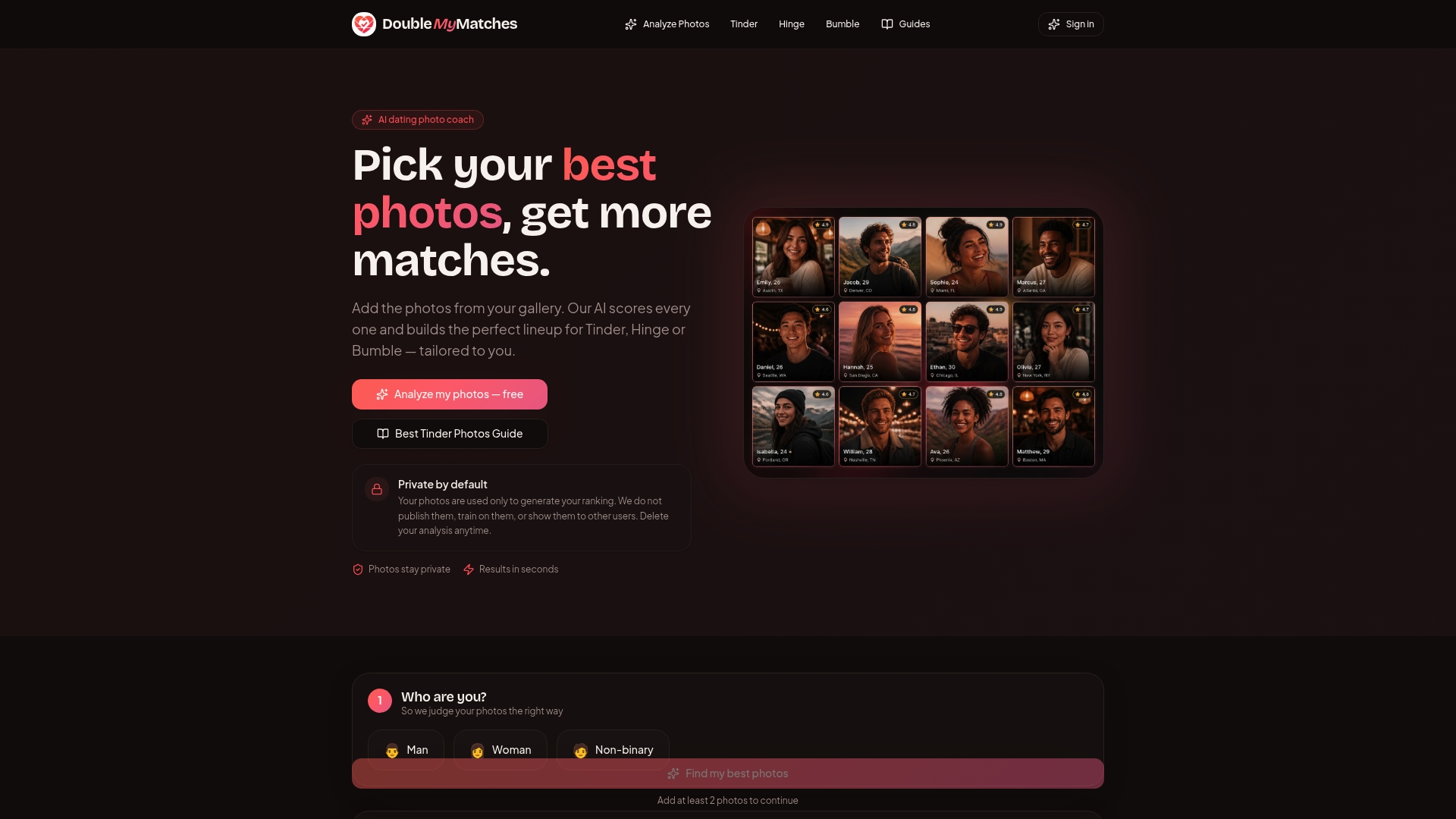
The service offers a Full Report as a one-off payment that gives you a full breakdown of your photo lineup, including how your outfit, lighting and expression are landing. If you've made changes based on this guide, a retest option lets you check whether the new photos actually score better before you commit to your final lineup. For anyone updating their profile regularly, a 12-month pass covers ongoing access, with pricing available on request.
As with the photo analysis itself, your images are reviewed and then discarded, they're never published or used to train the AI. That's worth knowing if you're uploading photos you wouldn't want stored anywhere.
This makes the most sense when you're not confident your lineup is working, or when you're short on time and want a clear read rather than a guess. If you're curious how this compares to crowd-voting tools, the breakdown of Photofeeler versus an AI photo analyser covers the difference directly. When you're ready to see where your current photos stand, head to DoubleMyMatches and run your lineup through a report.
Sources
- Displaying red and black on a first date: a field study using the 'First Dates' television series
- Distinguishing between perceiver and wearer effects in clothing color-associated attributions (Roberts et al., 2010)
- Mind the gap: Tinder tackles the swag gap by appointing its first-date stylist
FAQ
How do you take attractive photos for Tinder?
Focus on natural lighting, a genuine expression, and clothing that fits well and matches the setting. Variety matters too: aim for a mix of close-up, activity and dressier shots rather than several similar poses in the same outfit.
What outfit do guys find most attractive?
There's no single "best" outfit, but well-fitted clothing consistently outperforms trendy or ill-fitting pieces in how attractive someone appears. A field study of daters found people wore more red and black on dates specifically, suggesting these colours, used sparingly, can help.
Is it true that most Tinder users are men?
Tinder hasn't published an exact gender split, so any specific percentage circulating online isn't independently confirmed. What's better documented is that clothing and photo quality strongly affect match rates for everyone on the platform, regardless of the exact ratio.
What pictures attract matches on Tinder?
Photos that show a genuine smile, good lighting, and well-fitting, context-appropriate clothing tend to perform best. Bumble's own guidance also notes that using several varied photos, rather than near-identical ones, improves your chances of matching.
Should I wear bright colours in my Tinder photos?
Bright colours can work well as accents, but they shouldn't dominate your lead photo, where the focus should stay on your face. Research on clothing and dating suggests red and black used deliberately can boost how attractive an outfit reads, but subtlety matters more than boldness.