
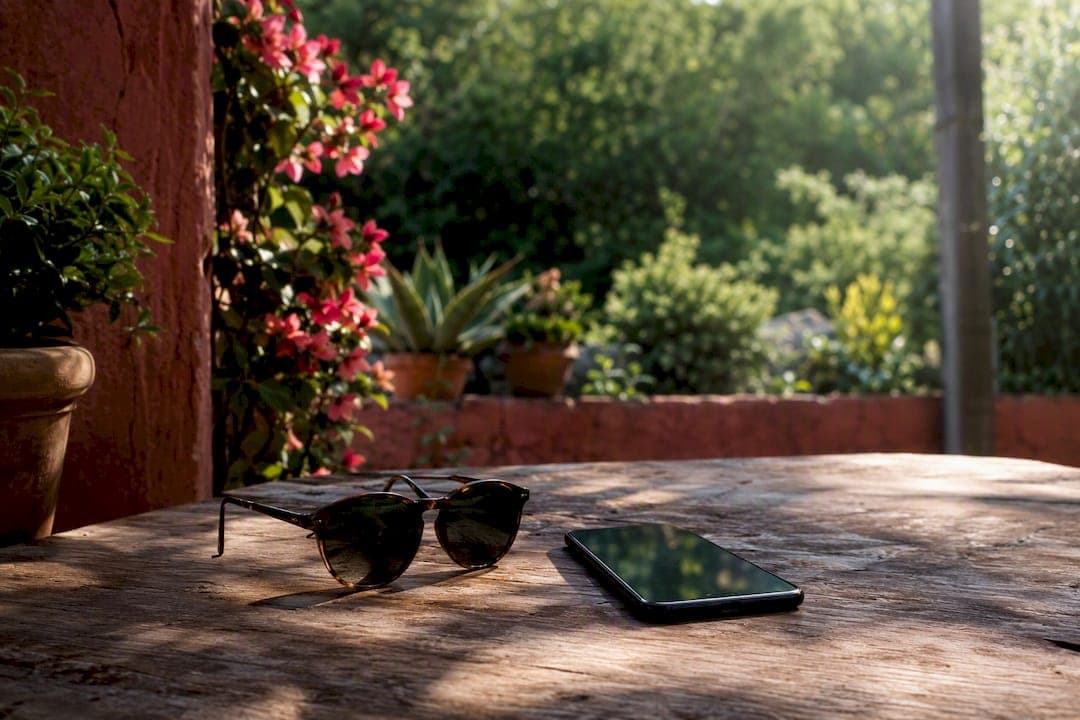
Skip the sunglasses on your main Tinder photo. Data reported via Mic links sunglasses in a lead profile picture to a 15% drop in right swipes, and dating coaches say the same thing constantly: cover your eyes, lose trust. Here's what to do about it right now.
- Swap your lead photo for a clear, well-lit headshot where your eyes are fully visible.
- Keep sunglasses photos, but move them further down your gallery as context, not your introduction.
- Test the change with a tool like DoubleMyMatches to see whether your new lead photo actually performs better.
Key Takeaways
Sunglasses in your main Tinder photo tend to reduce swipe rights because hidden eyes block the trust signals viewers rely on within the first five seconds.
| Point | Details |
|---|---|
| Never lead with sunglasses | Your primary photo needs visible eyes; hiding them costs trust and matches. |
| Reported swipe drop | Sunglasses in a lead photo were linked to a reported 15% fall in right swipes. |
| One contextual shot is fine | Keep sunglasses to a single activity-based photo, placed later in your gallery. |
| Build variety into your set | Mix an eyes-visible headshot, full-body shot, hobby photo, and social shot. |
| Test before you assume | DoubleMyMatches scores your photos objectively so you know which lead image actually works. |
Table of Contents
- Why obscuring your eyes hurts your Tinder swipe rate
- What dating experts and photographers actually recommend
- When sunglasses work in your dating photos
- A checklist for choosing your best Tinder photo
- How AI photo analysis removes the guesswork
- Sources
Why obscuring your eyes hurts your Tinder swipe rate
Your brain decides whether to trust a face in a fraction of a second, and eyes carry most of that decision, as explained in Blickkontakt beim Flirten – Interesse richtig zeigen. A Princeton study on rapid facial judgements found that people use visible eyes as high-priority information for assessing character and trustworthiness, often before they've consciously registered anything else about the face. Cover that up and you're asking someone to trust a stranger with half a face.
On a swipe-based app, that snap judgement happens in seconds, not minutes. Photographers who work with dating apps put a number on it: viewers decide whether to keep engaging within the first five seconds of landing on a profile. Sunglasses don't just hide your eyes; they read as guarded or staged, which is the opposite of what builds quick trust.
The reported cost: wearing sunglasses in your profile picture tends to decrease your chances of a swipe right by around 15%, according to a widely cited Tinder-linked analysis. Treat that figure as directional rather than gospel. It comes from a single reported source, not a controlled study, but it lines up with everything else dating experts observe.
What tends to happen when eyes are hidden:
- Viewers can't gauge your expression, so they assume the worst rather than the best.
- The photo reads as impersonal or distant, even when the pose is friendly.
- Matches drop off faster in the first few seconds of viewing, before your bio ever gets read.
What dating experts and photographers actually recommend
Every major piece of expert guidance on this topic lands in the same place: sunglasses do not belong in your main photo. British GQ interviewed photographers who work specifically with dating app clients, and their advice was blunt about what the lead image needs to do.
That's the core argument, repeated across nearly every credible source on the topic. BeFunky's dating-photo guide goes further, stating flatly that a sunglasses lead photo "almost guarantees" weaker engagement, because viewers simply can't read your vibe. Business Insider's dating app advice column takes the same line, with matchmakers recommending you ditch the sunglasses shot entirely and use prompts or activity photos to show personality instead.
Here's where the nuance comes in, and it matters: none of these sources say sunglasses are banned outright.
- The complaint is specifically about the lead photo, not sunglasses in general.
- One contextual sunglasses shot, further down a gallery of five or six photos, is generally fine.
- The problem is repetition and placement, not the accessory itself.
If your whole gallery is sunglasses and hats, that's a different issue entirely, and one that editorial dating advice consistently flags as a mistake worth fixing on its own.
When sunglasses work in your dating photos
Context changes everything. A sunglasses photo on a sunny hike or at the beach signals lifestyle, not concealment, because the setting explains the sunglasses rather than the sunglasses replacing your face. That's a completely different signal to a studio-lit headshot where sunglasses are the only reason your eyes are hidden.
Three rules keep this simple:
- Never lead with sunglasses. Your first photo needs bare eyes, full stop.
- Cap it at one sunglasses photo across your whole gallery, and make sure it's clearly tied to an activity.
- Balance your set with an eyes-visible headshot, a full-body shot, a hobby or action photo, and something social. Variety does more for your match rate than any single "best" photo ever will.
A checklist for choosing your best Tinder photo
Run your current lead photo against this before you touch anything else.
Primary photo, non-negotiables:
- Eyes fully visible, no sunglasses, no shadow across the face.
- Natural light, ideally outdoors or near a window, never a dim indoor flash.
- A genuine smile, not a forced grin or a flat stare.
- A simple, uncluttered background so the focus stays on your face.
- Cropped close enough that facial detail is clear on a small phone screen.
If you're including a sunglasses shot:
- Make the activity obvious. Sunglasses on a hike, on a boat, or at a festival read as lifestyle.
- Keep your facial outline visible; a hat pulled low plus sunglasses is one obstruction too many.
- Never place it as photo one or two. Third or fourth position, once trust is already building, works better.
Pro Tip: Change one variable at a time. Swap only your lead photo, leave your bio and photo order for the rest of your set untouched, and give it at least a week before judging the result. Mixing changes makes it impossible to know what actually moved the needle.
That last point is the one most people skip, and it's the reason so many profile "fixes" go nowhere. Guessing which photo helped or hurt from memory is unreliable. If you want a faster, more precise answer, a Tinder photo analyzer that scores each image against known engagement factors takes the guesswork out entirely. For deeper reading on the mechanics behind these mistakes, DoubleMyMatches' guide on why bad photos hurt match rates breaks down the full picture.
How AI photo analysis removes the guesswork
You don't have to trust your own judgement on which photo works, and honestly, you shouldn't. Most people are terrible judges of their own best angle. AI-powered photo analysis scores each of your photos against the same factors that drive real swipe decisions: lighting, expression, composition, and how well a shot fits the norms of apps like Tinder, Hinge, or Bumble.
What that actually gives you:
- A best-to-worst ranking of your existing photos, so you know exactly which one should lead.
- Specific feedback on each image, like whether a shot's lighting or crop is working against you.
- A flag on any photo that's quietly costing you matches, sunglasses or otherwise.
Privacy matters here too. DoubleMyMatches runs a one-time analysis, discards your photos afterwards, and never uses them for AI training or publishes them anywhere. You get direct feedback, not a black box, and the confidence of knowing your lineup is backed by scoring rather than a guess over drinks with mates.
Why visible eyes shape everything we build
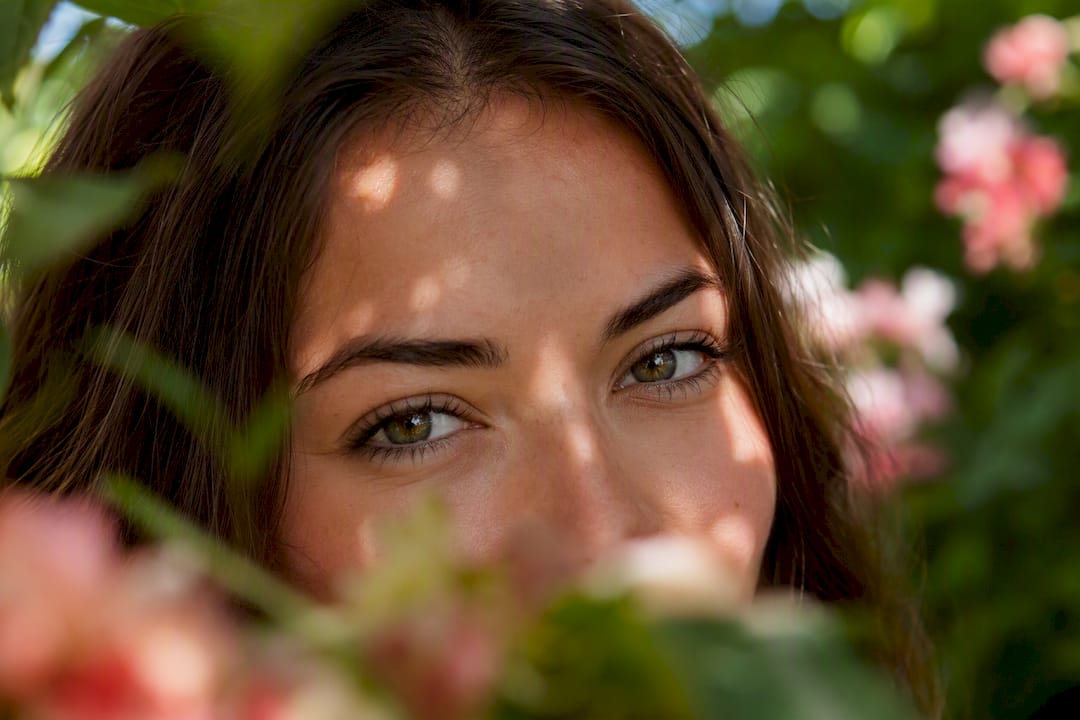
We built DoubleMyMatches around one repeated observation: photos that hide the eyes almost always score lowest, no matter how good the lighting or setting is. It's the single clearest pattern in profile feedback, and it's why our scoring weighs facial visibility so heavily.
Get your photos scored before you guess again
There are other ways to figure out which of your photos works best, from asking friends to running your own manual A/B tests across a few weeks. Both take time, and both rely on opinions that can be biased or simply wrong. DoubleMyMatches skips that entirely: upload your photos, and you get an instant, objective score across lighting, expression, and composition, ranked from strongest to weakest, with specific feedback on each shot.
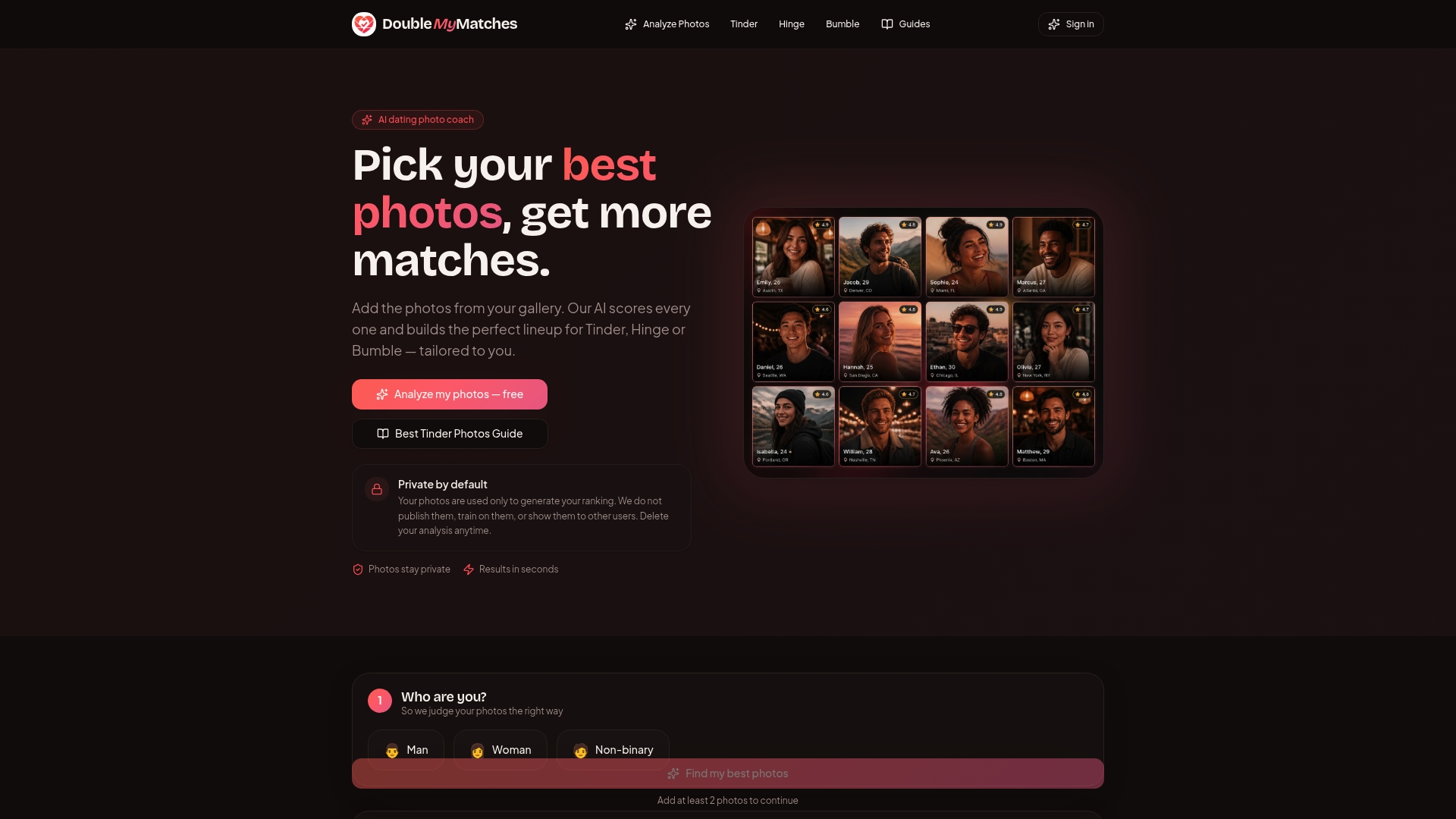
You get a clear answer on whether that sunglasses shot belongs in position one or position four, without weeks of manual testing. Every analysis is private: your photos are scored once, then discarded, never published, never used to train the AI. If you're ready to stop guessing which photo is quietly costing you matches, start with the dating photo analyzer and get your ranked results in minutes.
Sources
- 8 dating app mistakes that are easy to make, but could cost you a right swipe
- How to take a good dating app photo, according to dating app experts | British GQ
- Snap judgments decide faces' character, psychologist finds | Princeton University
- The Do’s and Don’ts of Dating Profile Photos | Learn BeFunky