
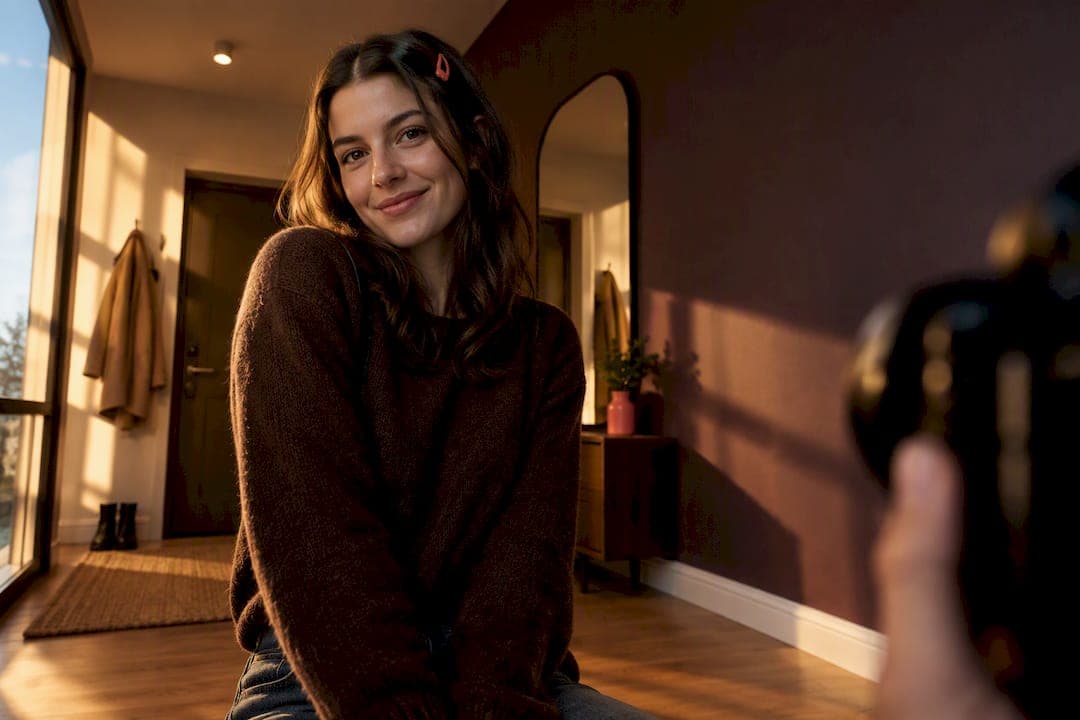
The single most effective change is this: swap any forced or staged smile for a relaxed, genuine expression, add soft, even lighting, and frame yourself head and shoulders with your eyes clearly visible. Research on first impressions backs this up. Small, honest tweaks beat heavy editing every time, and you can test your options privately with AI before you upload a single photo.
TL;DR:
- Genuine, relaxed expressions with engaged eyes and soft lighting significantly increase approachability and authenticity in dating photos.
- Testing multiple photo variations privately through AI scoring yields more reliable insight than relying on opinions or guesses.
- Light edits are beneficial, but excessive beautification can diminish perceived authenticity and warmth, negatively impacting attractiveness.
- Starting with a clear headshot, followed by candid, action, and full-body photos in a consistent order, enhances storytelling and engagement.
- Small, honest changes outperform heavy retouching, with objective testing and gradual adjustments leading to better matches over time.
Table of Contents
- What makes a photo look approachable?
- How do you get a genuine smile on camera?
- Does lighting change how friendly you look?
- What order should your dating photos go in?
- How do you test which photos actually work?
- Why small, honest changes beat heavy retouching
- Test your photos privately before you commit
- Sources
- FAQ
What makes a photo look approachable?
Approachability in a photo comes down to four things working together: your expression, your posture, the light on your face, and whether the whole image matches the tone of your bio. Get those right and you look inviting even in a thumbnail-sized crop. Get one wrong, and the others struggle to compensate.
Here's the checklist to run through before you upload anything new.
- Expression: aim for a genuine, relaxed smile or a calm, neutral face. A forced grin reads as tense, not friendly.
- Eyes and facing: keep your eyes and face clearly visible. Sunglasses, low hat brims, or heavy shadow across the face all work against you in a lead photo.
- Light and clarity: use soft, front or side lighting. Skip the heavy filters. They flatten detail and make skin look artificial rather than healthy.
- Body language: open shoulders, a slight forward lean, and relaxed hands all signal warmth without you having to say a word.
- Clothing and grooming: neat, uncluttered colours that suggest energy and health work better than anything too busy or too formal.
- Variety: lead with a clear headshot, then follow with a candid or social shot, a hobby or action shot, and a full body photo.
- Privacy: test your shortlist privately using a tool that deletes your photos after scoring them, rather than posting them publicly for feedback.
Pro Tip: Before you commit to a lead photo, take three versions in the same setting: one smiling naturally, one neutral, and one mid-laugh. You'll often be surprised which one your face actually does best.
How do you get a genuine smile on camera?
A study of 385 perceivers rating 146 portrait targets found that people showing relaxed, healthy, energetic looks, including genuine Duchenne smiles, were rated most favorably at first glance. Forced, non-Duchenne smiles were often liked less than a calm neutral face, according to the same research on perceiver and target look. In other words, faking it is worse than not smiling at all.
There's a physical reason for this. A real smile engages the muscles around your eyes, not just your mouth, and people pick up on that difference almost instantly, even in a still image. Separate experimental work found that when smiles in live interaction are naturally synchronised between two people, attraction increases measurably, a sign that congruent, authentic warmth reads as inviting even outside face-to-face settings, according to research published in PNAS.
Try these steps to get there:
- Think of something genuinely funny or warm for a few seconds before the shot. It changes your whole face, not just your mouth.
- Ask whoever's taking the photo to make you laugh naturally, then shoot in that window rather than on a countdown.
- Film a short video instead of posing for stills, then pull the best frame. Candid movement almost always beats a held pose.
- Check your eyes in the result. If they look tense or unengaged, the smile probably isn't quite landing yet.
- If smiling feels forced no matter what, go neutral instead. A relaxed, calm face often outperforms a tense grin. Authentic smiles that engage the eyes tend to be rated more positively than forced smiles, though individual perception varies.
Pro Tip: Relax your jaw and drop your shoulders half a second before the shutter goes. Most "stiff" photos come from tension in the jaw and neck, not the smile itself.
Does lighting change how friendly you look?
Yes, and it matters more than most people expect, especially once your photo shrinks down to a thumbnail on Tinder, Hinge, or Bumble. Flat, harsh light erases the soft shading that makes a face look warm, while strong backlight can hide your expression entirely.
A few rules keep things simple:
- Use soft window light or diffused outdoor shade rather than direct midday sun or a single overhead bulb.
- Frame head-and-shoulders or chest-up, with your eyes clearly visible even at small sizes.
- Shoot from eye level or slightly above. Low angles distort your face and can make you look closed off rather than open.
- Keep the background uncluttered, and pick clothing that contrasts with it so the focus stays on your face.
- Light edits are fine, but heavy retouching risks the opposite of what you want. Research on visual richness in dating profiles found that modest enhancement can help, yet excessive beautification tends to damage perceived authenticity, according to Frontiers in Communication.
A slightly off-centre face, rather than dead centre, often reads as more natural too. Perfectly symmetrical, studio-style framing can feel staged.
What order should your dating photos go in?
Your lineup tells a story before anyone reads a word of your bio, and the order matters as much as the photos themselves.
- Lead with a clear headshot. Your eyes and a natural expression should be the first thing anyone sees.
- Follow with a candid or social shot. This shows you're relaxed around other people, not just posed alone.
- Add a hobby or action photo. Movement and context signal energy far better than another static portrait.
- Include one full body or travel shot. This rounds out the picture of your lifestyle and general health.
- Avoid opening with a group photo. It forces a swiper to guess which person you are, and hesitation costs matches.
Keep the mood across all four to six photos consistent with your bio. A playful bio paired with five serious portraits sends mixed signals. Bumble's own guidance echoes this: lead with a clear, well-lit face and build variety from there. If you're testing changes, swap only one photo at a time so you can actually tell what moved the needle.
How do you test which photos actually work?
Here's the honest answer: you can't always tell which photo is your strongest just by looking at it. Personality differences between viewers mean what reads as approachable to one person can land as merely neutral to another, according to the Helsinki study on perceiver and target traits. That's exactly why testing beats guessing.
A simple loop works well:
- Shortlist two or three candidate photos for the same slot in your lineup.
- Run them through a private AI analysis rather than posting them publicly for opinions.
- Implement whichever one scores highest, and monitor your matches for about a week.
- Retest whenever you change your hair, style, or setting, or if matches drop off noticeably.
Objective scoring catches things a friend often misses, like a shadow across one eye or a background that competes with your face. Photos analysed and then deleted afterwards keep your testing private the whole way through.
Why small, honest changes beat heavy retouching

Most advice on looking approachable focuses on posing harder or editing more. Our experience runs the other way. The photos that consistently perform best are the ones that look like an honest, good day, not a studio session. That's not a hunch. It matches what the research on genuine expression and modest enhancement keeps showing: authenticity and warmth outscore polish.
Our focus at DoubleMyMatches sits at that intersection of photography and dating psychology, backed by privacy-first testing rather than crowd opinion. We'd rather you try one small swap, measure it honestly, and keep what works, than overhaul your whole profile on a guess. Test cautiously, trust the data over your own nerves, and let the results tell you what your face actually does best.
— The Team @ DoubleMyMatches
Test your photos privately before you commit
DoubleMyMatches gives you what a group chat of friends never can: an honest, private score with no social awkwardness attached. Photos are analysed once, ranked for lighting, expression, and composition, then deleted, so nothing you upload ever gets published or used to train a model.
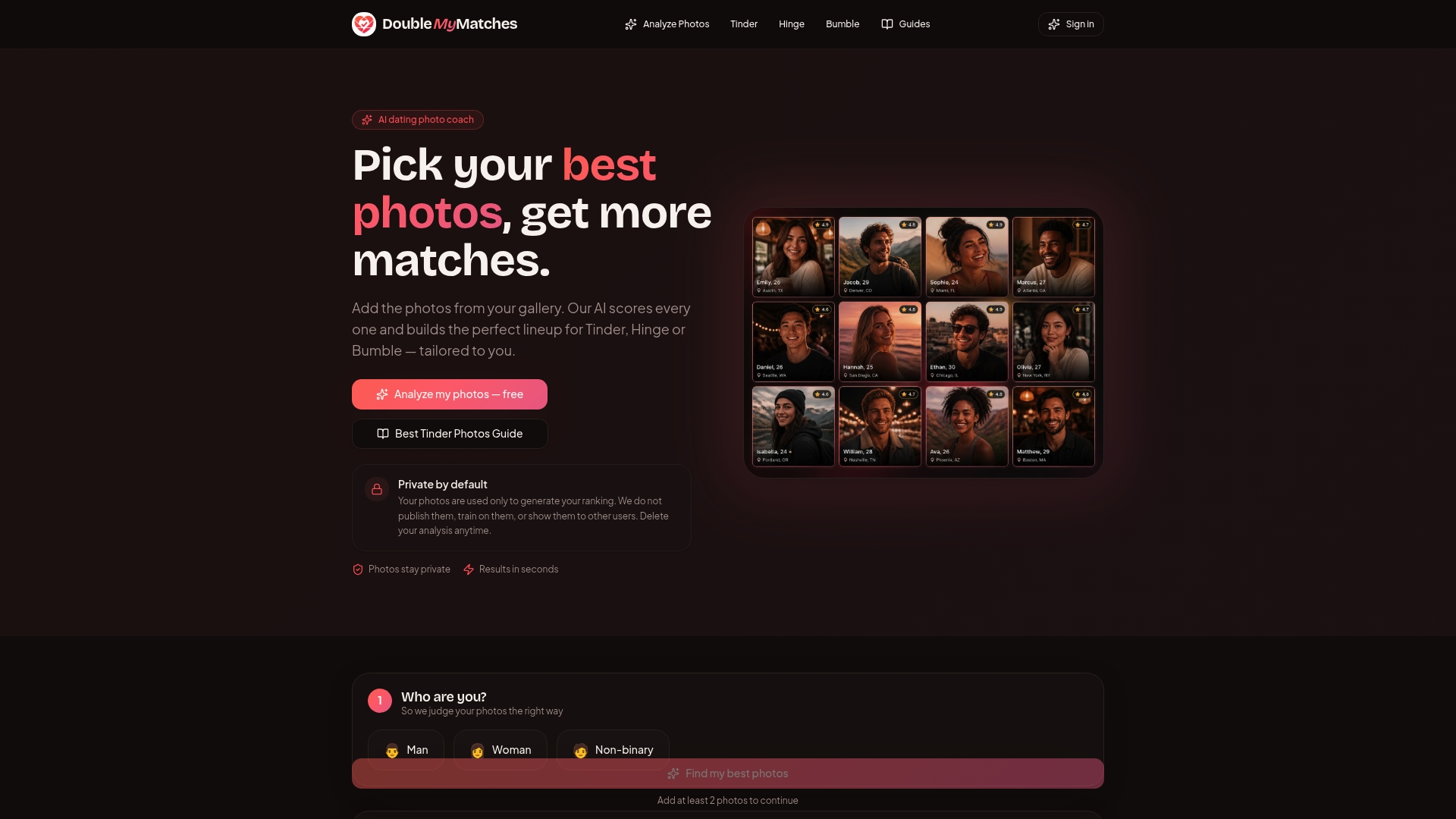
Run your current lineup through the Full Report for $7 and you'll get instant scoring, a best-to-worst photo order, and specific feedback on which shots are quietly working against you. If you want to fine-tune a single photo after making a change, the Retest & Lock In option for $17 lets you confirm your new lead photo actually improved before you commit your profile to it. Frequent testers can check pricing for the 12-Month Pass directly on the site's pricing page. Start with the profile picture tester, see where your current photos score, and change one thing at a time.
Sources
- Who likes whom? The interaction between perceiver personality and target look
- PNAS study on smile alignment and attraction (2024)
- Frontiers in Communication — visual richness and beautification effects in online dating (2025)
- How to choose the best first photo on Bumble
FAQ
Should I smile or stay neutral in my main photo?
Go with whichever looks genuine on you. Research shows relaxed, healthy, and genuinely happy expressions rate highest, while a calm neutral face often beats a forced smile.
How many photos should I use on my dating profile?
Most guidance, including Bumble's own advice, points to four to six photos that show your face clearly along with some variety in setting and activity. Lead with your clearest headshot and build outward from there.
Can heavy editing make me look more approachable?
Mild correction is fine, but heavy beautification tends to backfire. Research on visual richness in dating profiles found that modest enhancement can help, yet excessive beautification tends to damage perceived authenticity, according to Frontiers in Communication, which matters more than a flawless finish.
How much does it cost to get my photos analysed?
A single Full Report costs $7, and if you want to confirm a swap worked, a Retest & Lock In costs $17. Both are one-off payments with no ongoing commitment.
How do I know if a photo swap actually improved my matches?
Change one photo at a time and give it about a week before judging the result. Comparing match rates before and after a single, controlled swap is far more reliable than changing your whole lineup at once.