
For most daters, AI photo analysis beats a photoshoot because you can test and swap photos fast, cheaply, and privately. A photoshoot only makes sense when your current photos are genuinely poor or you need one polished hero shot. The strongest setup for most men on Tinder, Hinge, or Bumble is a hybrid: one or two real, candid photos paired with AI-optimised choices ranked by expression, lighting, and composition.
TL;DR:
- AI photo analysis allows for rapid testing of dozens of photo combinations at a low cost, outperforming a single professional photoshoot in flexibility and scalability.
- Authentic, candid images captured in real moments still outperform AI-enhanced photos, especially in conveying genuine micro-expressions and relaxed body language.
- For optimal results, maintain a six-photo lineup with a clear headshot, activity shot, social recognition photo, full-body image, polished portrait, and a personal conversation starter.
- The best photo edits involve small, targeted swaps, focusing on readability, warmth in expression, background clarity, and clothing fit, tested over short, consistent periods.
Table of Contents
- AI photo analysis vs photoshoot: the trade-offs
- Which one should you choose?
- How to run AI photo analysis properly
- Your six-photo lineup, audited this weekend
- What surprises most people about their own photos
- Get your photos ranked without the studio bill
- Selected research and guides behind this article
- Sources
- FAQ
AI photo analysis vs photoshoot: the trade-offs
The core difference comes down to speed. AI photo analysis lets you test dozens of photo combinations in a day for a few pounds. A photoshoot gives you one set of images, shot once, at a cost that usually runs into the hundreds. One dater who spent $400 on a professional shoot then tried an AI tool for $29 reported roughly 60% more matches after iterating on the AI-ranked lineup, rather than sticking with the static studio set.
That said, a skilled photographer still wins on things AI cannot fake: genuine micro-expressions, a natural laugh caught mid-conversation, body language that reads as relaxed rather than posed. AI can score a photo for lighting and composition, but it cannot make you smile in a way that looks unrehearsed if the moment wasn't real to begin with.
Here's how the two stack up on the factors that actually move match rates:
- Speed and iteration: AI lets you test a new lineup every few days; a photoshoot gives you one static set until your next booking.
- Cost over time: A single photoshoot is a one-off spend with no built-in way to retest; AI analysis scales cheaply across repeated rounds.
- Authenticity: Photographers capture real, in-the-moment expressions; heavily edited or AI-touched images can read as less authentic to viewers, especially on close inspection.
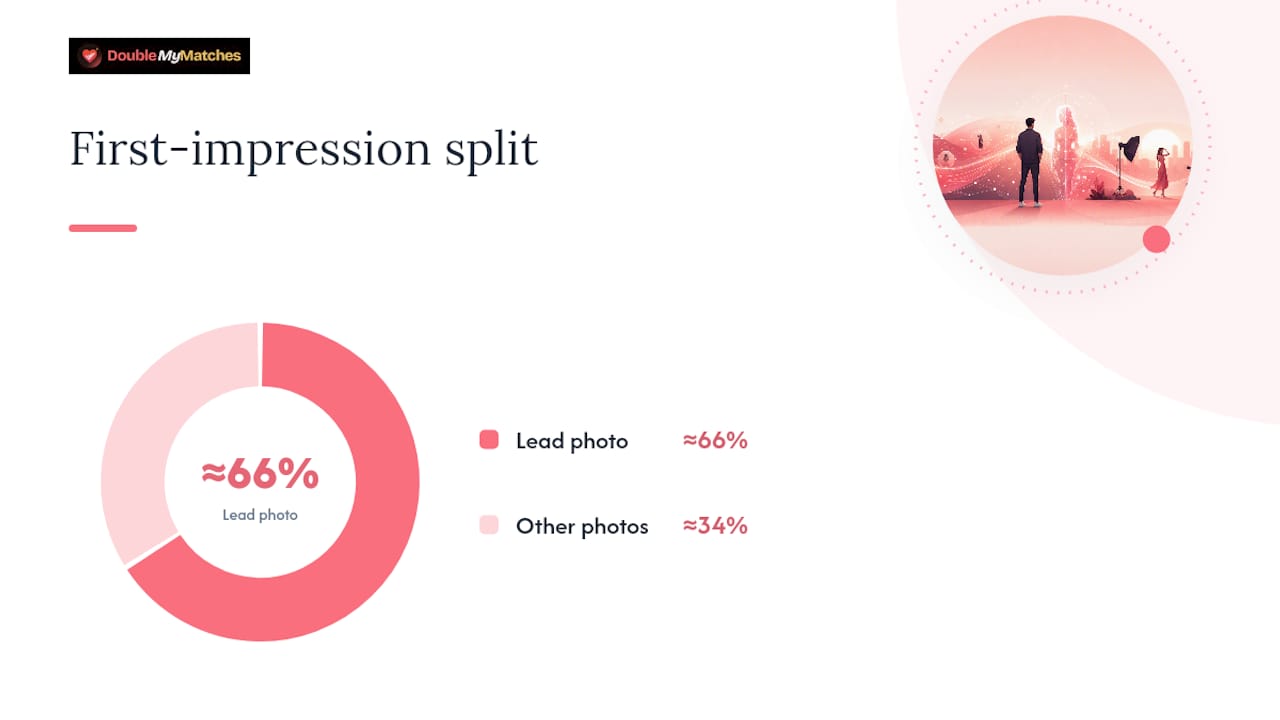
- Platform fit: Your lead photo carries roughly two-thirds of the first impression, so whichever method sharpens that one image matters most.
- Risk: Over-filtered photos risk looking manufactured, while a photoshoot risks feeling stiff if the photographer doesn't know how to direct a natural pose.
Neither method wins outright. The smart move is using each for what it's good at.
Which one should you choose?
Your starting point decides the answer faster than any theory does.
- All your current photos are weak or outdated. Book at least one decent session, even an informal one with a friend and a good camera, to create a solid base image. AI can polish and rank photos, but it can't invent flattering lighting from a blurry selfie.
- You already have a few decent candid shots. Skip the studio. Run them through AI analysis first, see which ranks highest, then iterate. This is the fastest, cheapest path to a stronger lineup.
- You work in a visual or client-facing profession (acting, fitness coaching, modelling-adjacent work) and need one polished hero shot that doubles as a professional asset. A photographer is worth the cost here, then use AI to rank that shot against your other photos.
- You're not sure which category you fall into. Start with AI analysis anyway. It's the lower-risk, lower-cost test, and it'll tell you exactly which existing photos are dragging your profile down before you spend on anything else.
Before uploading anything, check the tool's privacy policy. Look for explicit language confirming one-time analysis and deletion after your report, not indefinite storage or use in training data.
Pro Tip: Never trust a free tool that stays vague about what happens to your photos after analysis. If a privacy page doesn't mention deletion outright, assume your images are being kept.
How to run AI photo analysis properly
Getting useful results from AI photo analysis is less about the tool and more about how you test.
- Change one variable at a time. Swap only your lead photo, or only your third slot, then wait before judging results. Changing everything at once tells you nothing about what actually worked.
- Test for a short, fixed window. Give each variant three to seven days before comparing match counts. Dating pools shift daily, so longer windows just add noise.
- Rank, swap, retest. Use AI scoring to spot your weakest photo, replace it, then run the same short test again. This loop is where most of the gains happen.
When you get your results back, focus on the same categories every time:
- Readability: Can a stranger tell what you look like in half a second?
- Expression: Does your face look open and warm, not stiff or half-caught?
- Background: Is anything cluttered, dim, or distracting from you?
- Clothing fit: Does the outfit look intentional, or thrown on?
Always keep one or two clearly candid, recent photos in the mix, even after AI ranks your set. This preserves the authentic feel that heavily processed images tend to be lost, and it protects you from the awkward in-person moment where you look nothing like your profile. For a walkthrough of exactly how the scoring works, see how AI ranks dating photos.
Pro Tip: If two photos score almost identically, keep the one that looks more like you on an average Tuesday, not your best possible day. Matches fade fast when reality doesn't match the profile.
Your six-photo lineup, audited this weekend
Profiles with five or six photos consistently outperform those with fewer than four, so an empty slot is a wasted opportunity, not a safe default.
Here's a slot-by-slot structure worth testing:
- Slot 1: An honest, well-lit headshot. This carries the most weight of any photo in your set.
- Slot 2: You doing an activity, ideally one that invites a conversation starter.
- Slot 3: A social photo where you're clearly recognisable, not lost in a group shot.
- Slot 4: A full-body photo, shot naturally rather than posed against a wall.
- Slot 5: A composed portrait, slightly more polished than your headshot.
- Slot 6: A conversation hook, something a little unusual or personal that gives someone a reason to message first.
For each photo, ask three questions: is your face clearly recognisable, does it read as warm rather than guarded, and does it tell a true story about your life? A photo that fails any one of these is dragging your whole lineup down.
Changing just two photos at a time tends to produce the clearest, most measurable improvement, rather than rebuilding the entire set at once, which makes it impossible to know what actually worked. For a template you can copy directly, check this six-photo lineup guide.
What surprises most people about their own photos
Working through hundreds of profiles at DoubleMyMatches, a pattern keeps showing up: the photo someone thinks is their strongest is rarely the one that performs best. Stoic, unsmiling lead photos are the single most common mistake we flag, followed by over-filtering that makes skin look flat or unreal, and profiles stacked with five near-identical selfies instead of any variety.
What actually moves match rates fastest isn't a full wardrobe change or a weekend in a studio. It's small, specific swaps: a genuine smile instead of a smirk, a lead photo where your face is unmistakably clear, one less selfie in favour of an activity shot. Daters consistently underestimate how much a single weak lead photo is costing them.
The other thing people don't expect is relief. Getting private, immediate feedback without posting your face for public voting or asking friends for their honest opinion removes a surprising amount of pressure. Confidence tends to follow once you know exactly which photo is holding you back.
— The Team @ DoubleMyMatches
Get your photos ranked without the studio bill
This service offers an alternative to booking a photographer: you upload existing photos and receive an instant, ranked lineup indicating which photos to lead with and which may be lowering your match rate. The Full Report costs $7 and gives you per-photo feedback on lighting, expression, and composition, tailored to your gender and the app you're using.
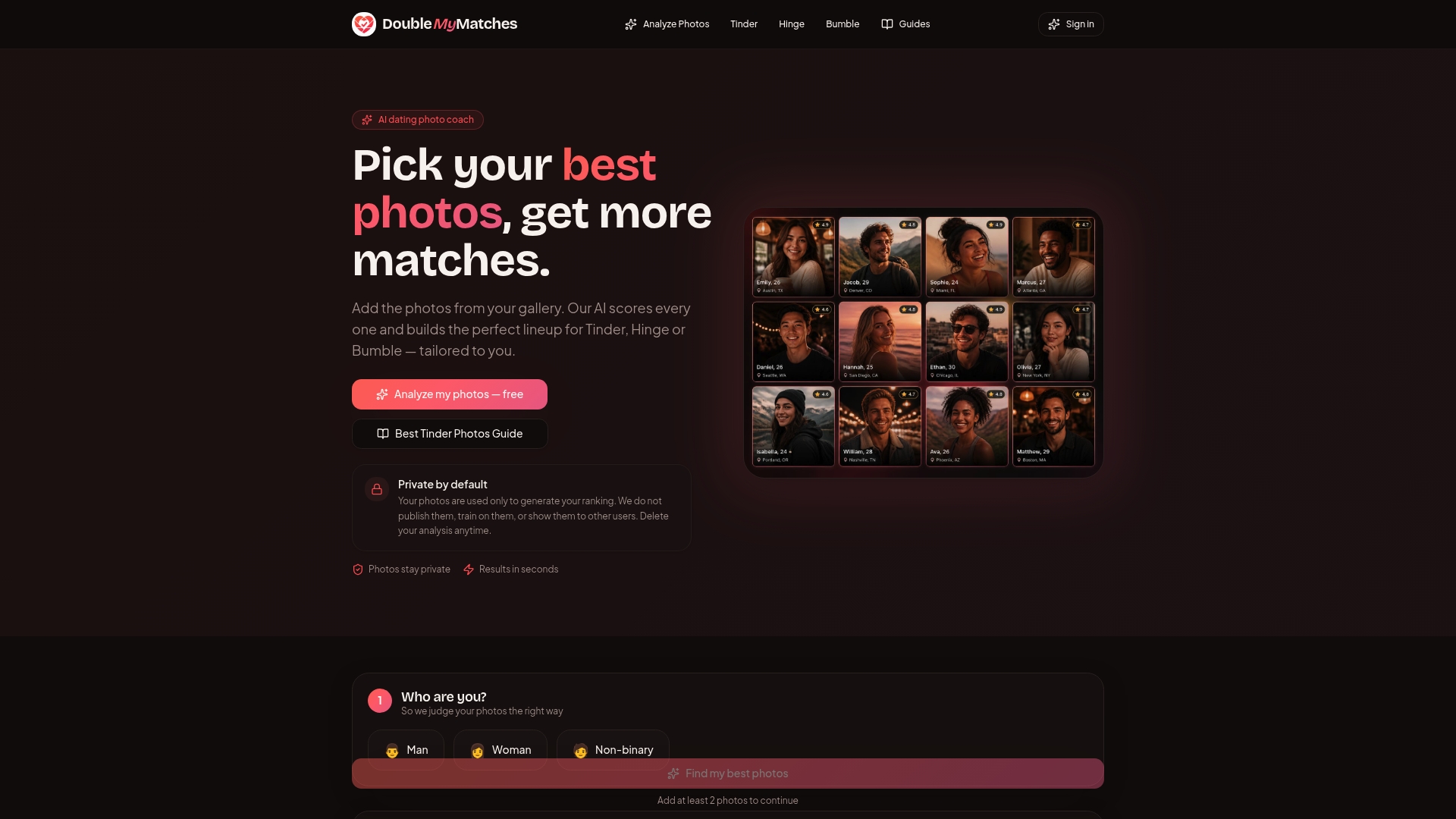
Photos are analyzed once and then deleted. They are not published, shown to other users, or used to train the AI, reflecting a strong privacy commitment. If your first report reveals a photo worth testing again after a swap, the Retest & Lock In option runs $17, or the 12-Month Pass suits anyone planning ongoing changes across several months. Start with the dating photo analyzer and see your best-to-worst ranking within minutes.
Selected research and guides behind this article
The claims above draw on face-perception research showing how quickly first impressions form, alongside real user comparisons of AI tools against paid photoshoots.
- Dating App Photos That Get Replies: The 2026 Research, on lead-photo weight and lineup size.
- The Honest AI vs Photoshoot Comparison, a first-hand cost and results account.
- 12 Dating Photo Tips (2026 Data), on blending AI and real photos.
- Dating Profile Photos for Men Guide, on when a photoshoot is worth booking.
Sources
- Dating App Photos That Get Replies: The 2026 Research
- I spent $400 on a dating photoshoot. Three weeks later I paid $29 for an AI tool. Here's the honest comparison.
- 12 Dating Photo Tips That Tripled Match Rates (2026 Data) | LensCherry
FAQ
Is AI photo analysis more accurate than a photoshoot?
AI analysis is reliably accurate for scoring lighting, composition, and expression, but it can't judge the genuine warmth a skilled photographer captures in a candid moment. The two measure different things rather than competing directly on accuracy.
Will using AI-optimised photos get me flagged or look fake?
Only if the photos are heavily filtered or clearly manufactured. Viewers can detect over-polished images, so keep one or two unedited, candid photos in your lineup alongside AI-ranked choices.
How much does DoubleMyMatches cost compared to a photoshoot?
The Full Report is a one-off $7, and Retest & Lock In is $17, both a fraction of a typical photoshoot, which often runs into the hundreds.
Are my photos stored after analysis?
No. DoubleMyMatches analyses each photo once, then deletes it. Nothing is published or used to train the AI.
How many photos should I test at once?
Change one or two at a time and give each version three to seven days before comparing results, rather than overhauling your whole lineup in one go.