
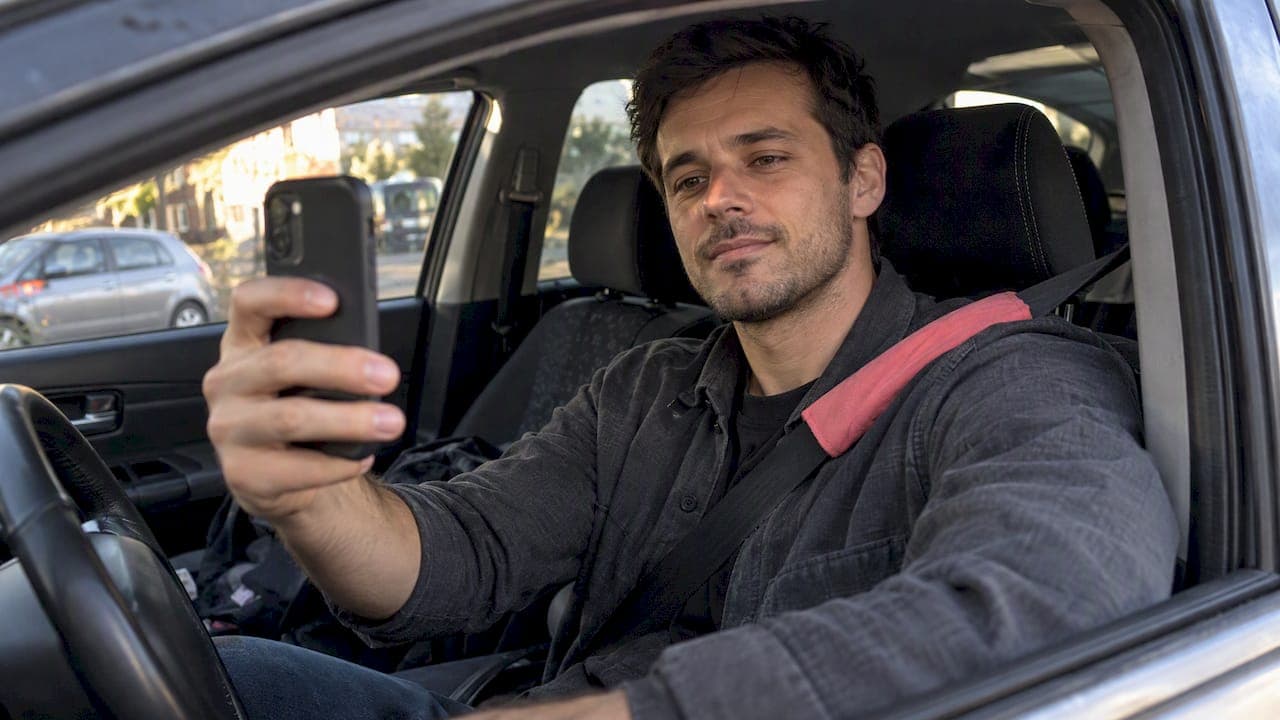
A car selfie can help, but only when your face is clearly visible and the shot looks like a real moment, not a flex. Keep the focus on you, pick a photo that tells a small story about your life, and skip anything that hides your eyes or screams "look at my car." Run the quick checklist below before you upload anything.
TL;DR:
- Car selfies can improve your profile's appeal if they support clear, authentic face shots and show genuine context without being the main focus.
- Proper framing, natural lighting, visible eyes, and a relaxed pose are critical to making a car selfie work without appearing staged or flex-like.
- Testing placement by moving the photo to the third slot and running a 48 to 72-hour trial can determine whether it boosts your matches and conversations.
- Heavy filters, props, or photos that hide your face or depict borrowed cars can damage credibility and reduce your chances of matching.
- An AI photo analysis report helps identify which images, including car selfies, actually support your chances and guides optimal profile arrangement.
Table of Contents
- 1. Should you use a car selfie? a quick decision checklist
- 2. How to take a better car selfie: composition, lighting and framing
- 3. Where to place a car photo in your Tinder lineup and how to test it
- 4. When a car selfie harms your profile: common mistakes and red flags
- 5. What the evidence says: studies, Tinder guidance and practical test data
- 6. Psychological impact of car selfies on Tinder match rates
- 7. Differences in effectiveness of car selfies across demographics (age, gender)
- 8. Comparison of car selfies with other popular selfie environments (gym, outdoors)
- 9. Ethical considerations and authenticity in using car selfies
- 10. Examples of successful versus unsuccessful car selfies on Tinder
- 11. What our photo audits reveal about car selfies and male profiles
- How an AI photo analysis report can help you decide faster
- Sources
- FAQ
1. Should you use a car selfie? a quick decision checklist
A car selfie earns its place when it supports your face, not when it replaces it. If the shot shows genuine context, like you heading off on a road trip or washing your own car on a Sunday, and the lighting is good enough that a stranger could describe your face from memory, it's worth testing. If the car is doing all the talking while you're a blurry shape in sunglasses, leave it out.
The biggest mistake men make is treating the car selfie as their main photo. That slot should always go to a clear, current, smiling headshot. A car photo works better further down the lineup, where it adds a detail rather than making a first impression.
Run through this before you upload:
- Is your face in full light and easy to see, with no sunglasses or heavy shadow?
- Does the photo show an authentic moment rather than a staged "show-off" pose?
- Is the car a backdrop to you, not the main subject of the frame?
- Would this photo still work if you cropped the car out halfway?
- Is the image sharp, not a grainy screenshot or a zoomed crop?
If you answered "no" to any of these, the shot needs work before it goes anywhere near your profile. For more on which selfies help and which quietly sink your profile, see our guide to selfies on Tinder.
2. How to take a better car selfie: composition, lighting and framing
Good car selfies follow the same rules as any other dating photo: light on your face, clarity on your expression, and a composition that doesn't distract from you.
- Shoot in natural light. Open the car door or roll the window down and use daylight rather than the car's interior lighting, which usually casts yellow or green tones across your skin.
- Frame from the chest or waist up. A tight face-only crop inside a car can look cramped and awkward. Pulling back shows your posture and gives the shot room to breathe.
- Keep your eyes visible. Save the sunglasses for a secondary photo. Your eyes carry most of the trust signal in a first photo, and hiding them is one of the fastest ways to lose a swipe.
- Dress simply. A plain t-shirt or shirt reads as confident and tidy. Busy patterns or anything overly dressed-up for a casual shot can feel staged.
- Sit or stand with open body language. Leaning on the door frame or resting an arm on the wheel looks natural. Crossed arms or a stiff pose reads as guarded.
- Check the background for clutter. Fast food wrappers, parking tickets or a messy back seat pull attention away from you and undercut the story you're telling.
- Avoid heavy filters. A light edit for brightness or sharpness is fine. Anything that smooths skin or changes colour tone too much can look odd next to your other photos, and it may sit awkwardly against Tinder's own verification checks, which compare your photos to a live selfie.
Pro Tip: Take the shot with the car door open and one foot still on the ground outside, it reads as a candid, in-motion moment rather than a posed studio shot.
Before you upload, run a 30-second check: is the focus sharp, is your face the brightest part of the frame, and does the photo still look like you at a glance? If yes, it's ready to test. If you want visual reference before shooting, our round-up of Tinder photo examples for men shows what a strong frame actually looks like.
3. Where to place a car photo in your Tinder lineup and how to test it
Don't lead with the car. Your first photo should be a clear, friendly headshot, full stop. A car selfie tends to perform better as your second or third photo, where it adds context after your face has already made the first impression.
Once it's placed, test it properly rather than guessing:
- Change one photo at a time so you know exactly what caused any shift in results.
- Run the test for 48 to 72 hours, which is long enough to see a meaningful pattern without waiting weeks.
- Track both swipe volume and match quality: are people actually messaging you, or just swiping and going quiet?
- If matches rise but conversations don't, the photo might be grabbing attention for the wrong reasons.
- If both swipes and message quality improve, keep the photo and move on to testing the next slot.
If a car photo doesn't move the numbers after a fair test, swap it out rather than assuming it's a one-off. Our breakdown on posing with a car on Tinder covers this exact testing routine in more depth.
4. When a car selfie harms your profile: common mistakes and red flags
Most car selfie failures come down to the same handful of mistakes.
- Flexing wealth or status. Leaning on a bonnet with your arms crossed, or captioning the shot about the model, tends to read as try-hard rather than attractive.
- Hiding your face. Sunglasses, low light, or a crop that cuts off your eyes all reduce trust, since the photo stops doing its one real job: showing people who you are.
- Over-editing. Heavy filters or an obviously staged pose trigger scepticism, and an inconsistent look across your photos can sit awkwardly against Tinder's Photo Verification checks, which compare your profile images against a short video selfie.
- Props that raise safety concerns. Anything that looks staged, aggressive or like a dare, rather than a natural moment, can put people off before they even read your bio.
For a wider list of photo choices that quietly cost matches, see photos to avoid on Tinder.
5. What the evidence says: studies, Tinder guidance and practical test data
The evidence on car selfies is mixed but useful. A UK-style Carscoops study found that profiles posed next to certain premium models, such as a Mercedes C-Class, saw higher match rates in controlled swap tests, though the sample methods limit how far that result generalises.
Around 20% of British daters report using car photos deliberately to boost their profile's appeal, according to a carwow experiment and survey, which also found that posing with higher-range cars lifted attractiveness ratings in its image tests. That's a meaningful minority, not a majority, which tracks with how narrow the "car selfie helps" window really is.
On the verification side, Tinder's Photo Verification process uses a short video selfie and facial geometry to confirm you match your photos, and a verified badge adds a trust signal that can offset some of the scepticism a staged car shot might otherwise invite.
In practical terms, simple lineup changes, like moving a vehicle-related photo to the third slot instead of the first, tend to improve match metrics more reliably than swapping the photo itself.
6. Psychological impact of car selfies on Tinder match rates
A car selfie works on two psychological levels at once: status signalling and storytelling. Done well, it suggests you have a life outside the app, a hobby, a trip, a routine that includes the car. That reads as grounded rather than performative.
Done badly, it tips into status signalling with nothing behind it. People scrolling Tinder are fast judges. A photo that reads as "look what I own" rather than "here's a moment from my life" invites the same scepticism as an obviously filtered gym mirror shot. The brain processes authenticity cues quickly, posture, eye contact, context, and a car used purely as a prop tends to fail that check almost instantly.
There's also a confidence signal at play. A relaxed, natural shot in a car you clearly use day to day reads as self-assured. A stiff, staged pose next to a car that looks borrowed or rented reads as anxious, even if that's not the intent. Matches respond to the feeling a photo gives off far more than to the object in it.
The practical takeaway is that the car itself rarely drives the reaction. The story and the body language around it do the work, which is why the same setting can help one profile and hurt another.
7. Differences in effectiveness of car selfies across demographics (age, gender)
Car selfies don't land the same way for everyone. Younger men in their twenties often get more leeway with a flashier or more playful car shot, since the context reads as fun rather than status-driven at that life stage. For men in their thirties and beyond, the same photo can tip into "trying too hard" territory unless it's clearly tied to an authentic hobby, like restoring an old car or genuine weekend driving.
Women using car selfies on dating apps tend to be judged on a different axis. Context and setting usually matter more than the vehicle itself, and the car rarely reads as a status marker the way it can for men, since the cultural association between cars and status skews heavily towards male profiles.
Across age groups generally, older daters tend to respond better to photos that suggest stability and routine (your actual car, your actual life) over anything that looks rented, borrowed or staged for the shot. Younger audiences are more forgiving of a bit of showmanship, provided the face and expression still do the heavy lifting.
The common thread is that demographic leeway changes the margin for error, not the underlying rule. Face visible, context authentic, car secondary. That rule holds regardless of who's looking at the profile.
8. Comparison of car selfies with other popular selfie environments (gym, outdoors)
Car selfies sit in the middle of the pack compared with other common Tinder settings. Gym photos carry more risk: they can read as confidence or as pure status display, and mirror shots in particular often come with poor lighting and unflattering angles. Outdoor photos, hiking, travel, a dog walk, tend to perform more consistently because the setting naturally suggests an activity and a story, with far less risk of looking like a flex.
A car selfie falls closer to the gym end of that spectrum than the outdoor end, because a car, like a gym body, can easily read as a status object rather than a backdrop. The difference is that outdoor photos rarely invite the "is he showing off" read, while both gym and car shots can tip that way fast if the framing centres the object instead of the person.
The practical implication is that a car selfie needs more care than an outdoor shot to land the same result. If you're choosing between environments for a single photo slot, a well-lit outdoor shot with a clear smile is the safer bet. A car selfie can match or beat that, but only when it's framed as context rather than centrepiece, which takes more deliberate effort to get right.
9. Ethical considerations and authenticity in using car selfies
The core ethical question with any car selfie is simple: is this your actual life, or a borrowed prop for the photo? Posing with a friend's car, a rental, or a dealership demo vehicle and implying ownership crosses into the kind of misrepresentation that erodes trust fast once it comes up in conversation, which it usually does.
Authenticity matters here for a practical reason as well as an ethical one. Tinder's own Photo Verification system checks that your photos match a live video selfie of you, which keeps the focus on confirming you're a real person behind the profile rather than verifying the car. But a profile built around a borrowed vehicle still sets up a mismatch between the story your photos tell and the truth you'll eventually have to explain in person.
The honest approach is to use the car you actually drive, in a moment that actually happened. If you don't own a car, there's no need to manufacture one. Plenty of strong profiles never feature a vehicle at all. The goal of any photo, car or otherwise, is to give an accurate preview of a date with you, not a performance you'll have to walk back later.
10. Examples of successful versus unsuccessful car selfies on Tinder
A successful car selfie usually looks something like this: you're leaning against your own car on a bright afternoon, wearing something simple, mid-laugh or mid-conversation with whoever's taking the photo, car visible but clearly secondary to your face and expression. It reads as a snapshot from an actual day, not a photoshoot.
An unsuccessful version swaps almost everything. Sunglasses on, arms crossed over the bonnet, expression flat or overly serious, car positioned dead centre of the frame with you almost an afterthought in the corner. It reads as a flex with nothing behind it, and it often sits oddly next to the rest of a profile's photos, which is exactly the kind of inconsistency that can raise flags against Tinder's Photo Verification checks if the lighting or angle makes your face hard to match.
Another common failure is the "borrowed garage" shot: a supercar at a show or dealership, clearly not yours, with you posed next to it like a brochure model. It rarely fools anyone and tends to invite exactly the scepticism it's trying to avoid.
The pattern across every successful example is the same: the car supports a real moment instead of replacing one. For side-by-side visual comparisons, our Tinder photo examples for men guide breaks down several real lineups photo by photo.

11. What our photo audits reveal about car selfies and male profiles
Across the profiles we review, car selfies are rarely the problem on their own, placement and face visibility usually are. The fix is often small: move the car photo out of the lead slot, crop to chest-up, make sure your eyes are visible.
Try this now: shift your car selfie to the third slot and test for 48 to 72 hours. If matches and message quality don't move, cut it. When you want a second opinion beyond your own judgement, that's when a professional photo review earns its cost.

How an AI photo analysis report can help you decide faster
Guessing which photo is holding your profile back takes weeks of trial and error. A faster route is to let an AI photo analysis tool do the comparing for you, scoring every photo in your lineup, including that car selfie, so you know exactly where it stands before you waste another 72-hour test on it.

Our Full Report gives you:
- A score for every photo you upload, including lighting, expression and composition.
- A best-to-worst ordering so you know which photo should lead and which should sit further back.
- Specific feedback on each shot, flagging anything (like an obscured face or a flex-heavy pose) that's quietly working against you.
Every photo is analysed and then deleted, so nothing you upload is published or kept. If you've already run your own 48 to 72 hour test and the results are still unclear, or you just want a straight answer on whether your car selfie belongs in slot one, two or nowhere, the Full Report gives you that answer in minutes, with a Retest & Lock In option once you've made changes.
Sources
Claims in this guide draw on Tinder's own Photo Verification documentation, a UK-focused Carscoops study and the carwow experiment on car attraction, alongside wider dating profile photo advice.
- How Does Photo Verification Work? – Tinder
- UK Study Finds Which Cars Are More Likely To Help Land You A Tinder Date | Carscoops
- carwow — car attraction experiment and survey
FAQ
Is it true that 75% of Tinder users are men?
There's no figure for Tinder's user gender split in this guide's sources, so that number can't be confirmed here. What's more reliable is focusing on the photo advice itself, since it applies regardless of the exact gender ratio on the app.
Why is Tinder verifying my selfie?
Tinder's Photo Verification uses a short video selfie and facial geometry to confirm that the person in your profile photos matches a live person. Verified profiles display a badge, which adds a trust signal that can help offset scepticism around staged or heavily edited shots.
Is Tinder mostly for hookups or dating?
Tinder is used for a mix of casual and serious dating, and intent varies widely from person to person rather than following one dominant pattern. The best way to signal your own intent clearly is through your photos and bio, not by guessing at the app's overall purpose.
Can Tinder detect AI photos?
Tinder's verification tools compare your profile photos against a live video selfie using facial geometry, which is designed to catch mismatches between your photos and your real appearance. This guide's sources don't specify a separate AI-image detection system, so the safest approach is to use real, current photos of yourself.
Does a car selfie definitely improve my match rate?
No single photo type guarantees better results, and a car selfie only tends to help when your face is clearly visible and the context looks authentic. A UK study and a carwow experiment both found some positive effects in controlled tests, but running your own 48 to 72 hour test on your own profile is the only way to know for sure.