
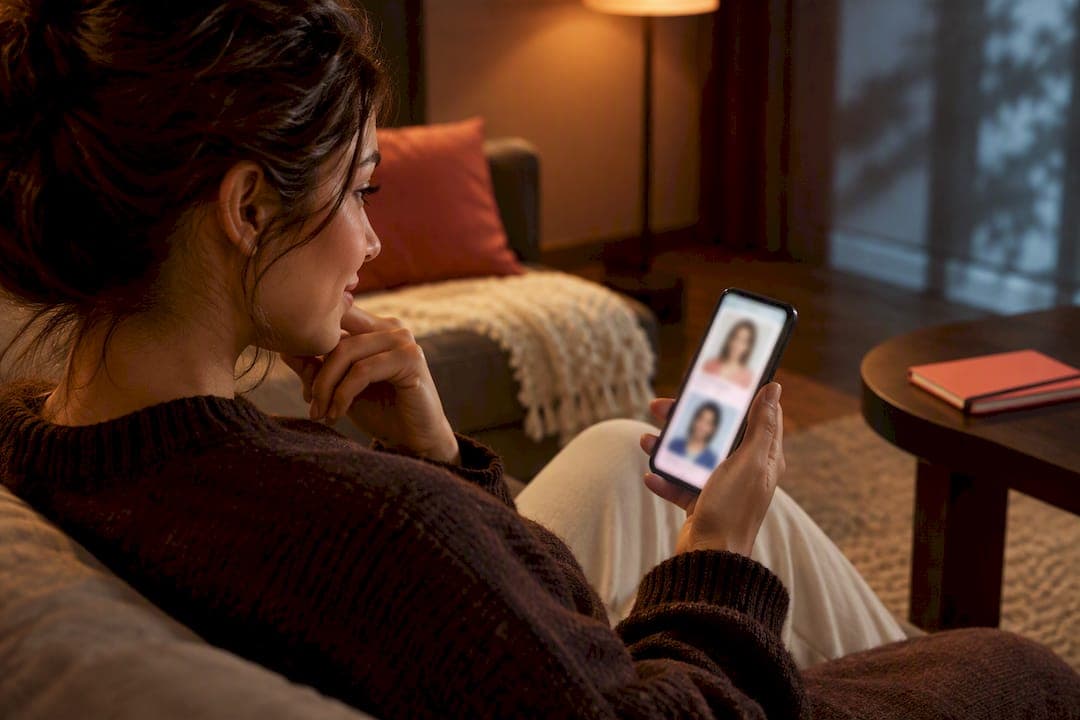
Your best lead photo shows an authentic, Duchenne smile: the kind that reaches your eyes and looks relaxed rather than posed. If you can't get that naturally, a calm neutral expression beats a forced grin every time. This choice matters because your thumbnail is the gatekeeper: if it doesn't land, nobody reads your bio. Test both, then keep what works.
TL;DR:
- A clear, face-focused thumbnail with the subject's eyes visible and simple background is crucial for attracting initial attention.
- Authentic, relaxed smiles or calm neutral expressions outperform fake or posed smiles, especially when the eyes show crinkling or crow's feet.
- Organizing a photo lineup with a warm headshot first, followed by candid, activity, full-body, social, and styled shots, creates emotional momentum.
- Testing and iterating by swapping one photo at a time, using AI analysis tools, or observing match rate changes leads to better profile performance.
- Avoid using heavily filtered, occluded, or group photos as the lead; small adjustments based on objective feedback often yield the most visible improvements.
Table of Contents
- Choose a lead photo that reads in a thumbnail
- Which expressions work: smiles, laughter and calm neutral frames
- Build the photo lineup: ordering expressions to create momentum
- How to test and iterate: experiments, app tools and AI analysis
- Quick posing exercises for genuine expressions
- Common mistakes to avoid with expressions and thumbnails
- What our photo data tells us about expressions
- Get an objective read on your own photos
- Sources
- FAQ
Choose a lead photo that reads in a thumbnail
Your lead photo has one job: read clearly at a tiny size. Before it says anything about your personality, it needs to pass a basic clarity test on someone's phone screen.
A thumbnail works when your face takes up enough of the frame, your eyes are visible, and the background stays simple. Busy backgrounds, harsh shadows, or a face shrunk down in a wide landscape shot all compete with your expression for attention. Eye-tracking research on multimodal dating profiles found that pictures draw the first fixation and more attractive photos get more and longer looks before anyone reads a word of text. Your photo has to win that first glance before your bio gets a chance.
Larger face crops preserve more of your expression. Computer-vision testing on dating photos found that images cropped to show the face clearly (around 600 by 600 pixels) correlated far better with human judgement than smaller, distant crops. A head-and-shoulders framing, where your face fills a good portion of the shot, keeps your expression legible even when squeezed into a thumbnail.
Run this quick checklist before you commit to a lead photo:
- Open the photo on your phone and shrink it to thumbnail size, then check if your expression still reads clearly.
- Give yourself a 3-second glance test: does the photo communicate something warm or interesting in that time?
- Remove sunglasses, hats that shadow your eyes, or anything else that hides your face.
- Skip group photos and cropped-out exes for your lead slot; save those for later in the set.
Which expressions work: smiles, laughter and calm neutral frames
Not all smiles are equal, and the research backs that up clearly. A large study of portrait ratings found that people consistently prefer relaxed, laughing expressions and authentic (Duchenne) smiles over posed, non-Duchenne ones. That study looked at 146 targets and 385 perceivers, and fake smiles actually rated lower than a plain neutral face.
That's the key insight: authenticity beats effort. A forced "cheese" smile, tight around the mouth with no movement around the eyes, reads as try-hard rather than approachable. If you can't produce a genuine smile in the moment, a calm, neutral expression is the safer choice. It won't work against you the way a fake smile can.
Here's what to look for in an authentic smile:
- Your eyes crinkle slightly at the corners, sometimes called "crow's feet," a hallmark of a Duchenne smile.
- Your cheeks lift naturally rather than being held in place.
- Your mouth curves without looking stretched or held too long.
A related study on expressive alignment found that when people mirror each other's smiles during an interaction, attraction increases in a measurable way. That's a live-interaction finding, but it points to something useful for a still photo too: expressions that look open and reciprocal (relaxed eyes, soft mouth, no tension) tend to invite a response rather than shut one down.
Quick self-check: film a short video of yourself talking about something you enjoy, then screenshot a few frames. The natural smiles that slip out mid-laugh usually beat anything you pose for directly. If none of those frames look right, switch to a still, neutral shot with relaxed shoulders and soft eyes rather than forcing a smile that isn't there.

Build the photo lineup: ordering expressions to create momentum
One good photo gets you noticed. A well-ordered set keeps someone swiping through and builds trust as they go. Aim for four to six photos, and think about the emotional arc, not just individual shots.
A workable template looks like this:
- Lead headshot with an authentic smile or calm neutral, clear face, simple background.
- A candid photo mid-laugh or mid-conversation, ideally with someone else cropped out.
- An activity shot showing you doing something you enjoy, hiking, cooking, playing music.
- A full-body photo in decent lighting so people can see your build and style.
- A social shot with friends (you clearly identifiable, not hidden in a group).
- A styled close-up, slightly more polished or dressed-up, placed near the end.
The logic behind the order matters as much as the photos themselves. Keep the most open, warm expression up front. Save more composed or serious expressions for later in the set, once someone's already interested enough to keep looking. Across the whole set, aim to balance three things: warmth (smiling, open posture), competence (clean, put-together appearance), and approachability (relaxed body language, direct eye contact in at least one or two shots). A lineup that's all big grins can feel one-note; a lineup that's all serious can feel closed off. Mixing both, in the right order, does more work than any single photo.
How to test and iterate: experiments, app tools and AI analysis
You don't need to guess which photo works best. Small, quick tests beat overthinking every time.
A simple approach: swap one photo in your lineup and leave the rest alone. Observe any changes in your match rate over a short period, then compare it with your previous baseline. Change one variable at a time so you know what actually moved the needle.
Tinder's own Photo Selector tool can help narrow down candidates. It's an on-device feature that scans your camera roll and flags photos based on lighting and composition, with all the scanning kept local to your phone. It's a useful first filter, though it still leaves the final call, and the expression judgement, up to you.
For more direct feedback, DoubleMyMatches gives you an objective read on your photos using AI-generated photo analysis that scores lighting, expression and composition. You upload your photos, get a ranked breakdown, and the images are analysed once and then discarded, never published or used to train anything.
- Change one photo at a time and give it a few days before judging the result.
- Use an on-device tool like Photo Selector as a first pass, not a final answer.
- Get an outside, objective opinion when you're too close to your own photos to judge them fairly.
Pro Tip: Keep a simple note of which photo you swapped and when, so you're not relying on memory when you compare results a week later.
Quick posing exercises for genuine expressions
Genuine expressions are easier to trigger than most people think. A few short routines can get you there without feeling stiff in front of the camera.
- Think of a specific memory that makes you laugh right before the shutter goes, not a generic "cheese."
- Have someone ask you a real question and snap the photo mid-answer, when your face is naturally animated.
- For a neutral frame, breathe out slowly and let your jaw soften before the photo is taken.
- Angle a light source in front of you rather than overhead, since harsh top-down light exaggerates every tense muscle.
- Take ten quick shots in a row, then pick the two that still read clearly when shrunk to thumbnail size.
Pro Tip: Your best expression usually shows up on shot six or seven, once you've stopped thinking about the camera.
Common mistakes to avoid with expressions and thumbnails
A few errors show up again and again, and each one has a straightforward fix.
- Fake, forced smiles: if it doesn't reach your eyes, switch to a calm neutral instead.
- Sunglasses or heavy occlusion: your face needs to be fully visible in your lead photo, so save the sunglasses shots for later in the set.
- Group photos up front: viewers waste time guessing which person you are, so keep your lead photo solo.
- Heavy filters or extreme crops: both flatten or hide the natural detail that makes an expression read as genuine.
What our photo data tells us about expressions
Across the photos we've analysed, the same patterns keep showing up: forced smiles score lower than people expect, and a calm, well-lit neutral often outperforms a stiff grin. Small swaps, like changing the lead photo or dropping a shot with sunglasses, tend to shift results more than a full profile overhaul. Every photo is analysed once and then deleted, so you're getting a private, honest read rather than a public vote. Consistency matters more than perfection: a decent expression tested and kept beats a "perfect" one left unused.
— The Team @ DoubleMyMatches
Get an objective read on your own photos
Guessing which expression works best is hard when it's your own face on the screen. Some AI tools offer a private, generated breakdown of your photos, scored on lighting, expression and composition, so you know which shot to lead with.
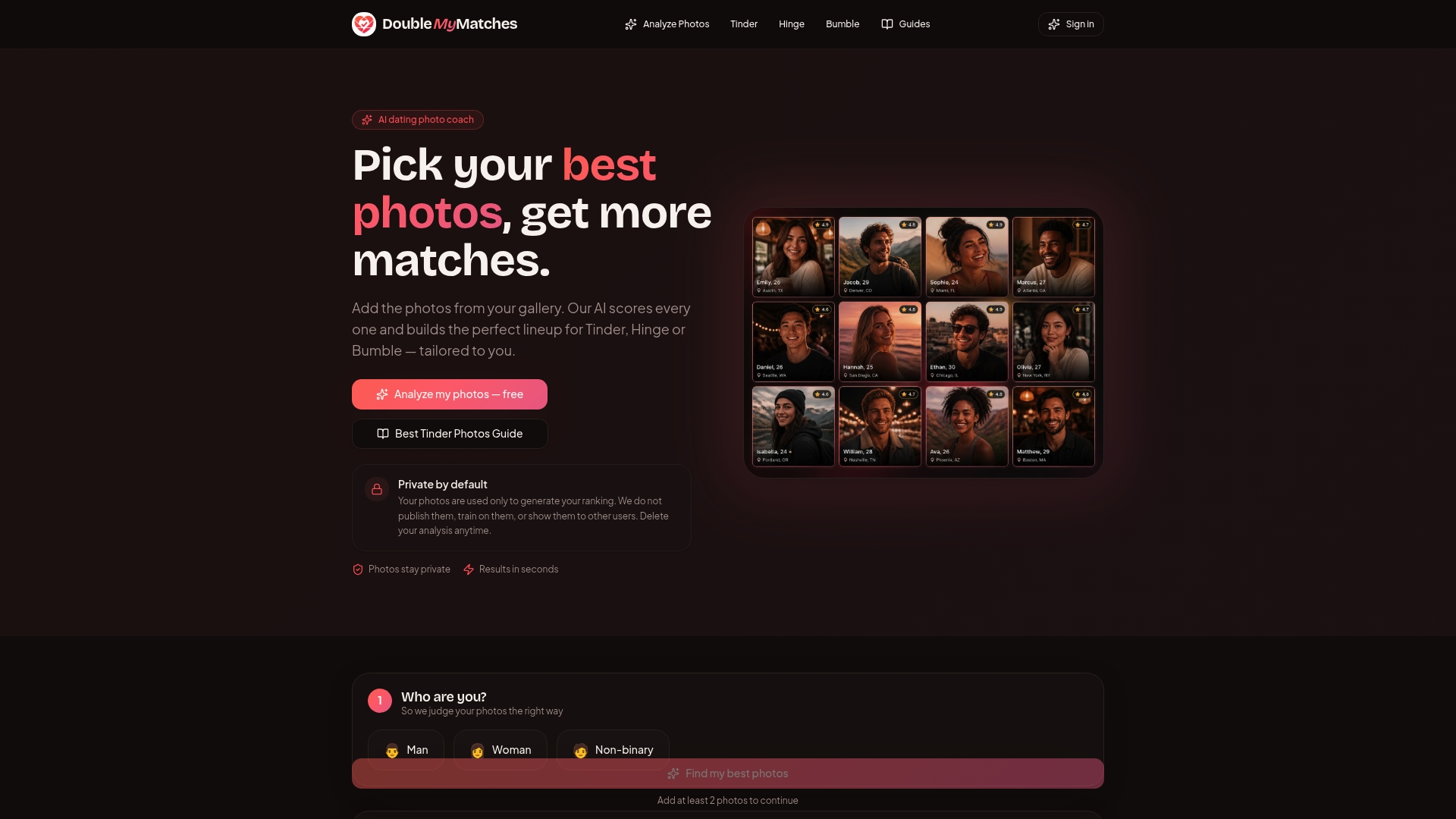
Some available paid reports provide rankings for your full lineup and flag photos that may be holding you back. There are also options to get fresh reads after swapping in new shots. Every photo is analysed once and then discarded, never published or used to train AI.
- Upload your current lineup and get a ranked breakdown of your strongest and weakest photos.
- See which expressions and crops are working against you before you waste a week testing blind.
- Retest after changes to confirm the swap actually helped.
Try the instant photo analyser on a single photo first, or get the Full Report for your whole set.
Sources
FAQ
What are some good ideas for Tinder photos?
Aim for a mix of a clear lead headshot with an authentic smile or calm neutral, a candid laugh, an activity shot, a full-body photo, and one social shot with friends. Keep your face clearly visible and avoid sunglasses or heavy crops in your lead photo, since pictures draw the first fixation before anyone reads your bio.
Is it true that most Tinder users are men?
There's no verified figure in this article to confirm a specific gender split among Tinder users. What matters for your photos is the same regardless of who's viewing them: a readable, authentic lead photo gives you the best chance of a match.
What are some good comments to use on photos?
This isn't something the research or sources here address directly, since photo comments on matches vary by app and context. Focus instead on making sure your photos themselves, particularly your expression and lighting, are doing the work before you worry about captions.
What's the best catchy bio for Tinder?
There's no single formula proven to work best, since bios depend heavily on personal style and context. What the research does show is that your bio only gets read once your photo has already earned attention, so a strong lead photo matters more than bio wording alone.
How do I know if my Tinder smile looks authentic?
Check for slight crinkling around your eyes, often called a Duchenne smile, along with relaxed cheeks and a mouth that isn't held stiffly. If a photo looks forced when you review it, a calm neutral expression is a safer choice than a smile that doesn't reach your eyes.