
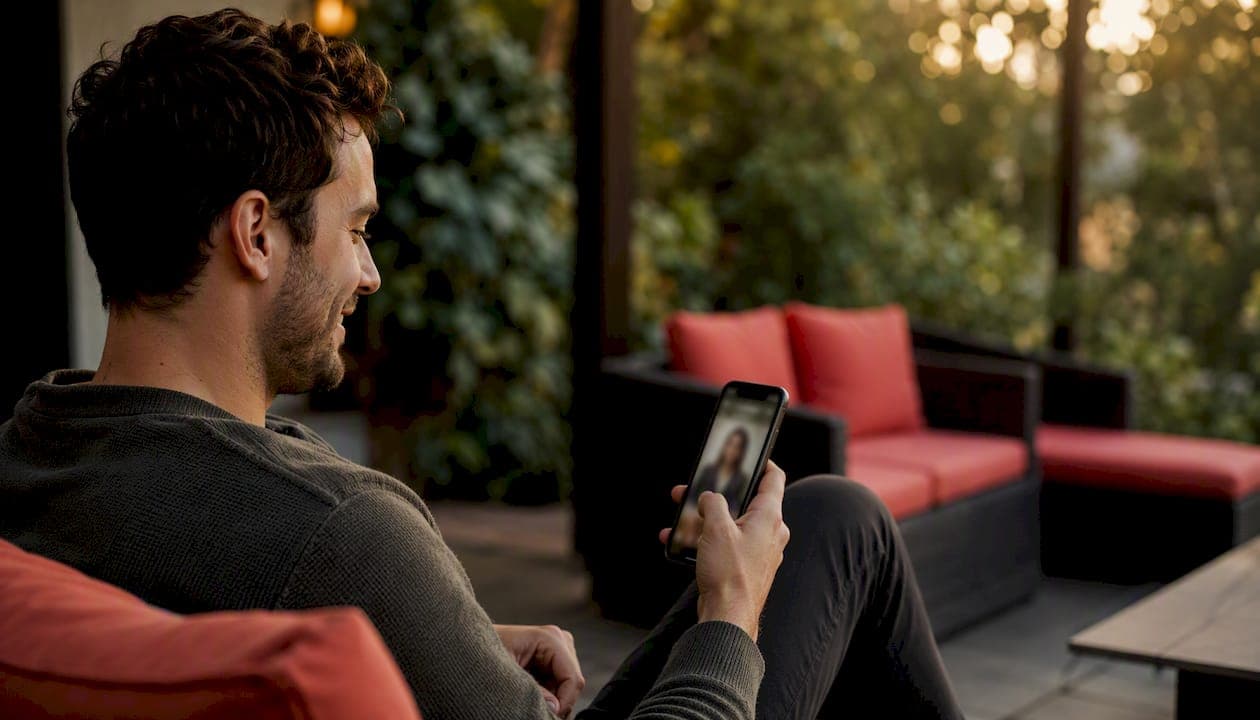
Your lead photo needs to do one thing above all else: show your face clearly. A well-lit head-and-shoulders shot with visible eyes and a genuine smile is the strongest opener you can have, according to photographer analysis. Quick checklist before you read further: natural light, no sunglasses, solo shot, taken within the last 12 months. If your current first photo fails any of those four checks, swap it now and watch your engagement shift.
Key takeaways
Filling all six Hinge photo slots with varied, well-lit images — each serving a different purpose — is the single most effective change you can make to your profile today.
| Point | Details |
|---|---|
| Swap your lead photo first | Use a clear, solo, well-lit head-and-shoulders shot with visible eyes and a genuine smile. |
| Fill all six slots | Profiles with six photos get roughly 41% more matches than those with four or fewer. |
| Prioritise variety over perfection | Each slot should answer a different question: face, lifestyle, activity, candid, travel, wildcard. |
| Fix lighting before anything else | Face a window or shoot in open shade — it is the highest-leverage technical change you can make. |
| Use DoubleMyMatches to rank your shots | The AI analyser scores your photos on Hinge-specific factors and suggests the strongest lineup order. |
Table of Contents
- What are the six essential Hinge photo types?
- How do you shoot better Hinge photos with a phone?
- What should you wear and where should you shoot in the UK?
- What photo mistakes quietly cost you matches?
- How much editing is too much on Hinge?
- Three copyable Hinge photo lineups
- How many photos should you upload to Hinge?
- What the six-photo strategy gets right (and what most people miss)
- Get your photos ranked and ordered instantly
- Sources
What are the six essential Hinge photo types?
Hinge's six-photo limit is not a gallery — it is a six-question conversation. Each slot should answer something different: Am I attracted to this person? What does their life look like? Do we share interests? Is there something memorable here? Treat every slot as a distinct job, and variety beats repeated attractiveness every time.
1. Lead headshot
Your anchor image. Frame from the chest up, camera at eye level or slightly above, with your face filling roughly two-thirds of the frame. Look directly into the lens with a relaxed, genuine smile.
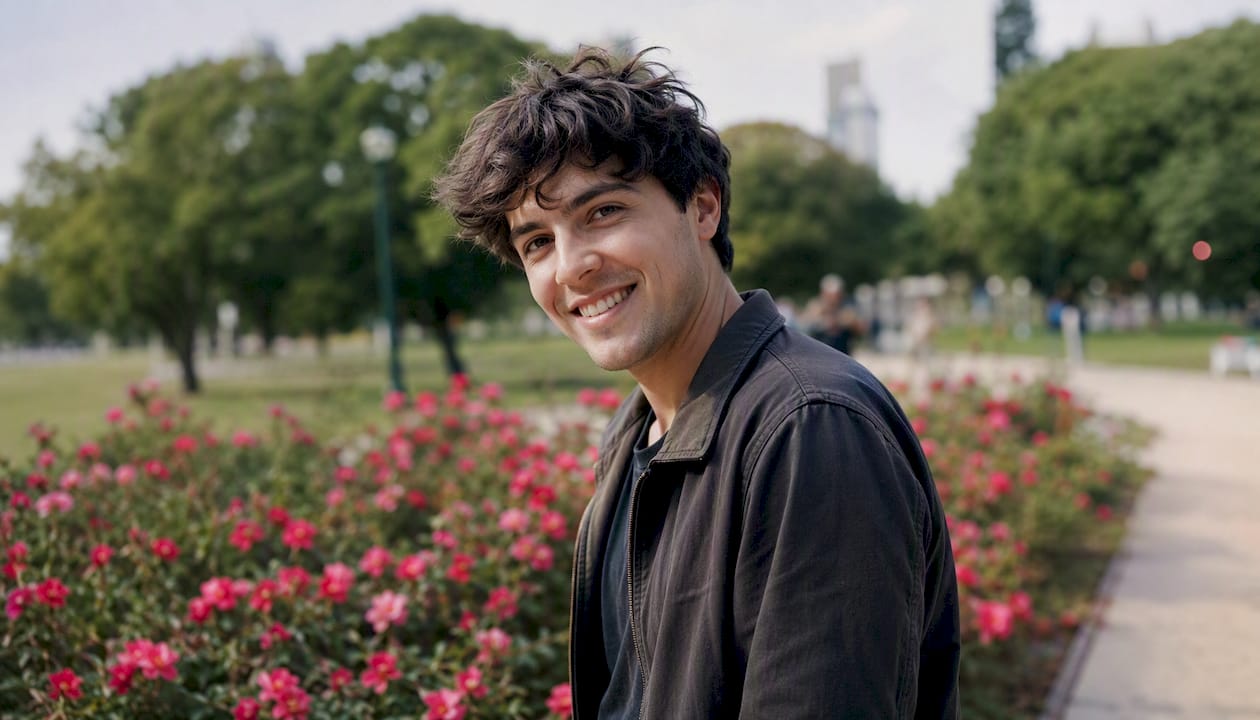
Pose ideas: Stand slightly angled to the camera (not square-on) with your weight on one foot. Alternatively, sit at a café table and lean forward slightly — it reads as confident and approachable.
Prompt pairing: "A life goal of mine" works well here because it invites a question without requiring the photo to do all the work.
2. Full-body or environment shot
Show your height, build, and the world you move through. Step back to at least two metres from the camera and include recognisable surroundings — a London street, a riverside path, a market.
Pose ideas: Walk towards the camera mid-stride for a natural, unposed feel. Or stand in front of an interesting backdrop (a colourful mural, a harbour) with your hands relaxed at your sides.
Prompt pairing: "My most irrational fear" pairs well because the contrast between a confident full-body shot and a self-deprecating prompt is disarming.
3. Activity or hobby shot
Candid and activity photos receive roughly 15% more likes than posed glamour shots. Show yourself doing something you genuinely enjoy — cycling, cooking, climbing, playing an instrument.
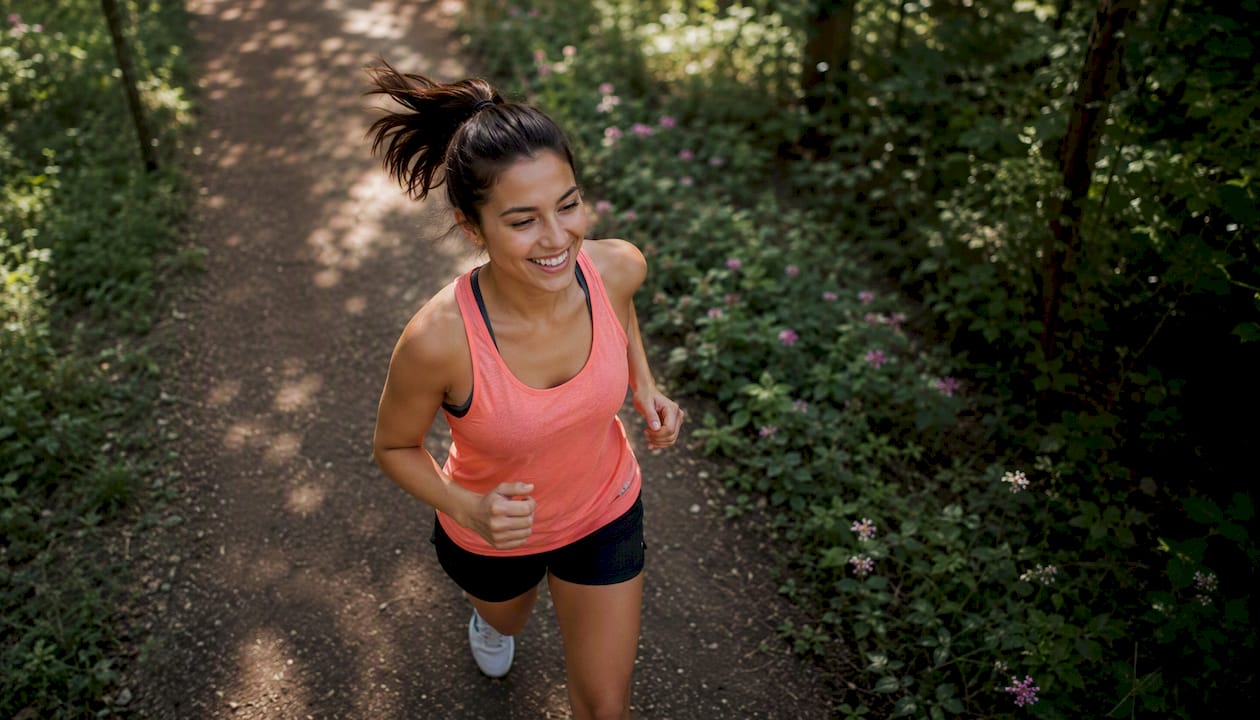
Pose ideas: Mid-action is best: a shot of you mid-swing at a cricket net, or stirring something at the hob with a laugh caught on camera. Ask a friend to shoot from a slight distance so the activity is visible.
Prompt pairing: "I'm weirdly competitive about" sits perfectly next to a sport or game photo.
4. Candid or laughing moment
Authenticity is the whole point of this slot. A photo where you are caught mid-laugh at a dinner table or reacting to something at a gig reads as far more trustworthy than a posed grin.
Pose ideas: Ask a friend to photograph you during a real conversation without warning you. Alternatively, look away from the camera and laugh at something just off-frame — it creates the same candid energy.
Prompt pairing: "The most spontaneous thing I've done" amplifies the candid mood perfectly.
5. Social proof or travel shot
This slot signals that you have a life outside the app. A photo from a trip, a festival, or a social occasion (without making it a group shot) shows range. Phireso's Hinge photo guide notes that black-and-white works well in later slots as a visual experiment — a travel shot converted to B&W can stand out against a sea of colour profiles.
Pose ideas: Sit on a wall or step with a cityscape behind you. Or hold a local food item at a market stall abroad — it is an instant conversation hook.
Prompt pairing: "The best trip I've ever taken" is the obvious choice, but "Two truths and a lie" works equally well if the location is unusual.
6. Wildcard or conversation starter
Your most memorable slot. This is where a prop, an unusual setting, or a genuinely funny moment lives. A photo with a pet, a shot of you in fancy dress, or an image that raises an obvious question all work here.
Pose ideas: Hold something that tells a story — a trophy, a bizarre souvenir, a handmade sign. Or use a low angle to make an ordinary moment look cinematic.
Prompt pairing: "I know the best spot in town for" or "Change my mind" both thrive next to a wildcard image.
Pro Tip: A short 5–10 second video prompt is one of the most underused tools on Hinge. It shows your voice, movement, and how you carry yourself — and it can convert viewers who are undecided after your still photos. Keep the audio quiet, look at the camera, and say something short and natural.
How do you shoot better Hinge photos with a phone?
Lighting is the single highest-leverage fix you can make. A well-lit average photo beats a poorly lit great photo every time, because Hinge thumbnails are small and dark images simply disappear.
Where to stand relative to the light: Face a window or stand in open shade outdoors (under a tree canopy, in a doorway, on the shaded side of a building). Never stand with a window or bright sky behind you — that turns your face into a silhouette. Dating photographers recommend diffused natural light, camera at or slightly above eye level, and variety in shot distance as the three highest-impact technical changes.
Phone settings worth using:
- Portrait mode blurs the background and makes your face the clear subject — use it for your lead headshot.
- Grid lines help you apply the rule of thirds: place your eyes on the upper horizontal line rather than dead-centre.
- Exposure lock (tap and hold on your face before shooting) stops the camera from auto-adjusting when you move.
Shot distances to cover: Your lead photo should frame from the chest up. Your full-body slot needs at least two metres of distance. Your activity and candid shots can vary freely — the variety itself signals a richer life than six identical close-ups would.
A quick 10-minute shoot plan: Find a window or a shaded outdoor spot. Shoot your headshot first (five to ten frames). Move outside for a full-body shot (five frames walking towards the camera). Finish with a candid moment — ask whoever is with you to keep shooting while you do something natural. You will have usable material in under ten minutes.
What should you wear and where should you shoot in the UK?
Outfit choices matter more than most people realise, because your photos collectively signal your lifestyle. Wear something you would actually wear on a date — not your smartest suit unless that is genuinely you, and not a gym vest in every shot.
Wardrobe rules that photograph well:
- Solid colours and subtle patterns read better on screen than busy prints or large logos.
- Vary your outfit across slots — wearing the same shirt in three photos suggests they were all taken on the same afternoon, which undermines the sense of a full life.
- Fit matters more than brand. A well-fitted plain shirt photographs better than an expensive but ill-fitting one.
UK locations that work as conversation hooks:
- Riverside or waterfront (the Thames, the Cam, Bristol Harbour, the Clyde) — water in the background reads as relaxed and aspirational without being try-hard.
- Market streets (Borough Market, Portobello Road, Altrincham Market) — busy, colourful backdrops that signal you are out and engaged with your city.
- Parks and green spaces (Hampstead Heath, the Meadows in Edinburgh, Bute Park in Cardiff) — natural light is usually excellent and the setting is universally appealing.
- Coastline or harbour (Cornwall, Brighton, Whitby, the Jurassic Coast) — a coastal shot in a later slot signals adventure and gives your profile geographic personality.
- A café or independent coffee shop — intimate, warm light and a natural prop (a coffee cup) make this one of the easiest settings for a candid shot.
Props that help: A dog is the single most effective prop on any dating app. A musical instrument, a book, a coffee cup, or a piece of sports kit all invite questions. Avoid photos where alcohol is the central prop — one social shot with a drink is fine, but three in a row signals something different.
What photo mistakes quietly cost you matches?
Most profiles are not hurt by one catastrophic photo. They are hurt by a slow accumulation of small errors that reduce trust or remove conversation hooks. Community feedback from Hinge users consistently flags the same issues.
Red flags to remove immediately:
- Group photo as the lead image. Viewers should not have to guess which person you are. If you want a group shot, put it in slot four or five, not slot one.
- Sunglasses or hats hiding your eyes. Eyes are the primary trust signal in a profile photo. One outdoor shot with sunglasses is acceptable; hiding your eyes in multiple photos is a pattern that reads as evasive.
- Low-resolution or pixelated images. A blurry photo suggests either that the image is very old or that you do not care enough to use a better one. Neither is a good signal.
- Too many similar headshots. Three near-identical close-up selfies in a row tell the viewer nothing new. Photo variety across distance, setting, and mood is what drives comments.
- Misleading or outdated photos. If your photos are more than two years old, or show a noticeably different version of you, the first in-person meeting becomes awkward. Recency is a trust signal.
- Over-filtered or heavily edited images. Heavy smoothing, dramatic colour grading, and face-altering filters all reduce authenticity. Viewers can usually tell, and it raises the question of what you are hiding.
One-sentence rule: If a photo does not show your face clearly, add new information about your life, or invite a question, delete it.
For a fuller breakdown of common Hinge profile mistakes and how to fix them, that page covers the most frequent errors with specific swap suggestions.
How much editing is too much on Hinge?
The short answer: minimal retouching, honest colours. Hinge is a platform built around conversation and eventual real-world meetings, so a profile that looks dramatically different from the person who shows up creates a trust problem before the date even starts.
What is acceptable:
- Cropping for better composition (removing distracting edges, adjusting headroom).
- Basic colour correction — adjusting exposure, contrast, and white balance so the image looks like the real scene.
- Light blemish removal for a single prominent spot. This is the same as wearing foundation; it is not deceptive.
- Converting a later-slot photo to black and white as a deliberate stylistic choice, as Phireso notes can make a profile stand out.
What to avoid:
- Slimming tools or facial reshaping filters. These create a gap between your photo and your appearance that viewers notice.
- Heavy skin smoothing that removes all texture — it reads as artificial even to people who cannot identify exactly why.
- Dramatic colour grading (deep orange tones, high-contrast moody edits) that makes the image look like a fashion shoot rather than a real moment.
Technical export settings: Hinge compresses uploaded images, so start with the highest resolution your phone produces. Export as JPEG at full quality. Avoid screenshots of photos — they lose resolution twice. For photo quality factors that affect how your images display on the app, the key variables are file size, compression, and original resolution.
Recency rule: Photos should be within roughly 12 months. If your hair, weight, or general appearance has changed noticeably since a photo was taken, retire it regardless of how good it looks.
Three copyable Hinge photo lineups
These templates give you a ready-to-use slot order. Each one is built around a different personality type, but the underlying logic is the same: variety, hooks, and a memorable final slot.
Template 1: The active adventurer
- Lead headshot — well-lit, outdoors, genuine smile. Prompt: "A life goal of mine."
- Full-body action shot — mid-stride on a trail or at a sports venue. Prompt: "I'm weirdly competitive about."
- Travel or location shot — coastline, city abroad, or UK landmark. Prompt: "The best trip I've ever taken."
- Candid social moment — laughing at a post-match dinner or a festival. No prompt needed — let the energy speak.
- Activity close-up — hands on a climbing wall, paddle in water, bike in frame. Prompt: "My most irrational fear."
- Wildcard — a photo with a dog, a funny trophy, or an unusual souvenir. Prompt: "Change my mind."
Swap suggestion: If you only have four photos, drop slots 4 and 5 and keep 1, 2, 3, and 6. The wildcard slot is too valuable to lose.
Photographer note on the wildcard: The best wildcard photos raise a question the viewer cannot answer without asking you. A trophy with no context, a photo in an unusual location, or a prop that needs explaining all work. Avoid anything that requires a long caption to make sense — the image itself should do the work.
Template 2: The thoughtful creative
- Lead headshot — indoor natural light, relaxed expression, slight smile. Prompt: "A life goal of mine."
- Full-body in a creative setting — bookshop, studio, gallery, or café. Prompt: "My most controversial opinion."
- Activity shot — cooking, playing an instrument, sketching, or at a gig. Prompt: "I'm weirdly competitive about."
- Candid laughing moment — caught mid-conversation at a dinner table. No prompt.
- Black-and-white travel or social shot — a considered, slightly artistic image. Prompt: "Two truths and a lie."
- Wildcard — something that shows your sense of humour or an unusual interest. Prompt: "The most spontaneous thing I've done."
Swap suggestion: With five photos, keep all six slots but combine slots 4 and 5 by choosing whichever single image is more distinctive.
Template 3: The urban socialiser
- Lead headshot — city backdrop, smart-casual outfit, direct eye contact. Prompt: "A life goal of mine."
- Full-body on a city street or market — Borough Market, Portobello Road, or a local equivalent. Prompt: "I know the best spot in town for."
- Social candid — at a rooftop bar, a sporting event, or a live show. Prompt: "The most spontaneous thing I've done."
- Activity or hobby shot — something that contrasts with the social shots (a run, a class, a creative hobby). Prompt: "I'm weirdly competitive about."
- Travel shot — a city break or a weekend away. Prompt: "Two truths and a lie."
- Wildcard — a pet, a funny moment, or a photo that raises an obvious question. Prompt: "Change my mind."
Swap suggestion: With four photos, use slots 1, 2, 4, and 6. You keep the lead, the lifestyle signal, the personality contrast, and the conversation hook.
Pro Tip: Consider adding a short video prompt alongside any of these lineups. Ten seconds of natural movement and a direct look at the camera can convert viewers who are on the fence after your still photos.
How many photos should you upload to Hinge?
Use all six slots. Profiles with six photos get roughly 41% more matches than profiles with four or fewer — a meaningful lift that costs nothing except the effort of taking more photos.
Hinge's per-photo comment mechanic is part of why this matters. Viewers can comment on any individual photo, which means each slot is a potential conversation opener. A profile with two photos has two hooks; a profile with six has six.
| Photos uploaded | Relative match potential |
|---|---|
| 1–2 | Significantly lower — minimal hooks, profile feels incomplete |
| 3–4 | Below average — some variety but missing key slots |
| 5 | Close to optimal — one slot short of maximum hooks |
| 6 | Highest match potential — all conversation hooks active |
Recommended order: Lead headshot first, full-body or environment second, activity third, candid fourth, social proof or travel fifth, wildcard sixth. This sequence answers the viewer's questions in the order they naturally arise.
Three-photo fallback: If you genuinely only have three good photos right now, use: (1) lead headshot, (2) activity or hobby shot, (3) wildcard. This gives you a face, a personality signal, and a conversation hook — the three minimum requirements.
How often to refresh: Aim to update at least one photo every three to four months. Profiles that show recent activity tend to perform better, and refreshing a slot with a new image can restart engagement from people who have already seen your profile.
For step-by-step guidance on optimising your profile photos over time, that post covers the update cycle in more detail.
What the six-photo strategy gets right (and what most people miss)
The six-photo framework works because it mirrors how attraction actually builds in real life. You do not fall for someone because of one perfect moment — you build a picture from dozens of small signals: how they laugh, what they do on weekends, whether they seem like someone you could talk to for an hour.
Most people treat their Hinge profile as a highlights reel. The better frame is a conversation brief. Every photo should give the viewer something to ask about or react to. A technically perfect headshot with no personality context is a missed opportunity. A slightly imperfect candid that catches a genuine laugh is worth three polished studio shots.
The confidence tip that actually works: before a shoot, spend two minutes doing something that genuinely makes you laugh or feel relaxed — a voice note to a friend, a funny video, whatever works for you. The difference between a forced smile and a real one is visible in a thumbnail, and no amount of editing closes that gap. Shoot immediately after, while the feeling is still in your face.
Get your photos ranked and ordered instantly
Knowing which photos to use is one thing. Knowing which of your photos is strongest — and in what order — is where most people get stuck. DoubleMyMatches solves that with an AI photo analyser that scores your shots on lighting, expression, and composition, then ranks them best to worst for Hinge specifically.
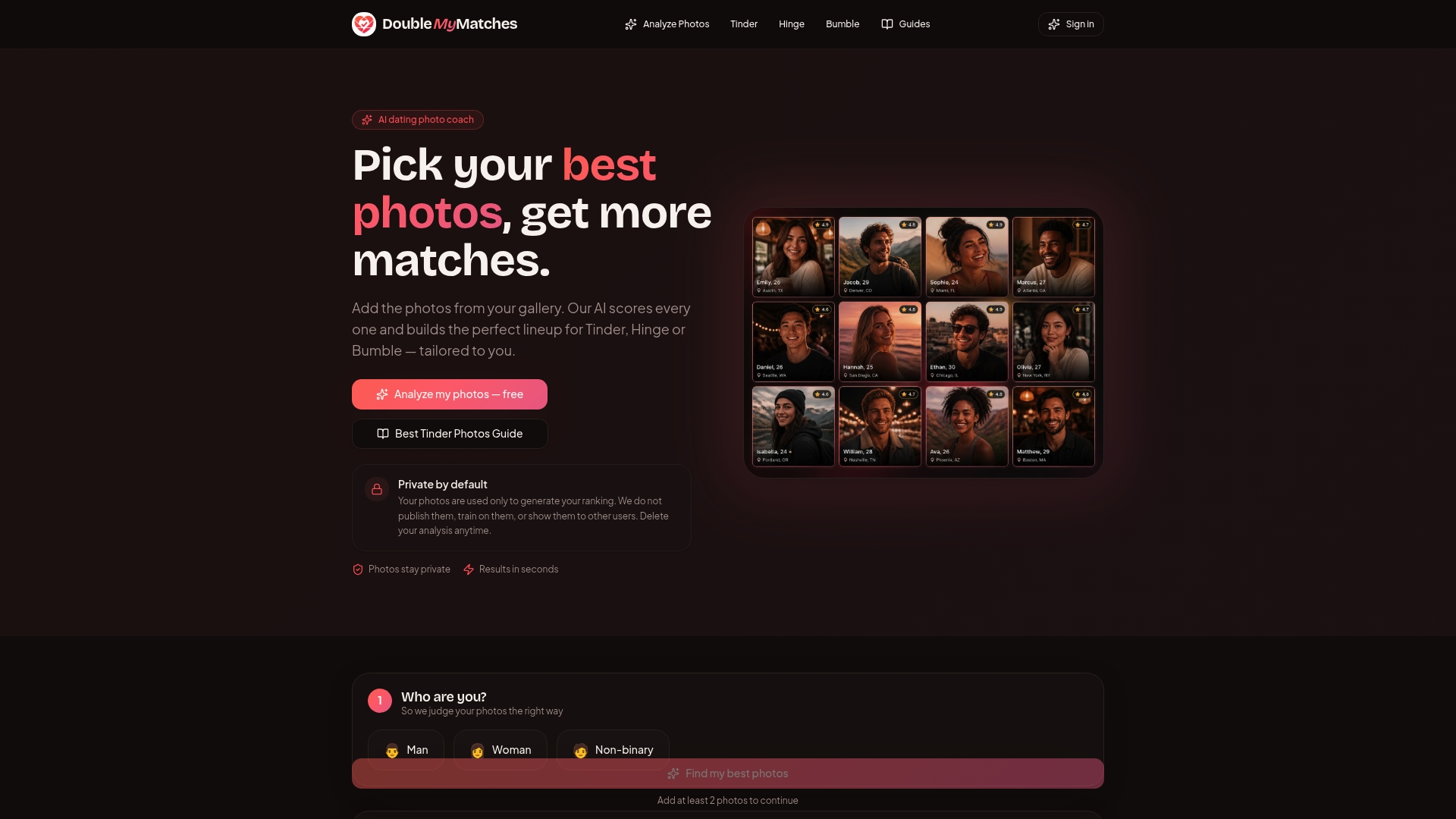
Upload your photos and you get per-photo feedback, a suggested lineup order, and a clear view of which images are hurting your profile. The analysis is one-time and private: your photos are assessed and then discarded, never stored or used to train the AI. No guessing, no asking friends who will be kind rather than honest.
Start with a free single-photo evaluation to see how your lead photo scores, or go straight to the full dating photo analyser for a complete lineup report.
Sources
The following sources informed this article and are worth exploring directly for deeper guidance:
- Best Hinge Profile Photos: What Actually Works in 2026 | Photography Shark Studios
- Hinge Photo Guide: What Actually Works | Phireso