

AI photo ranking for dating profiles is defined as the process where machine learning models analyse your photos as performance signals, ordering them by predicted engagement to maximise right-swipes. This is the standard industry practice behind what platforms call "smart photo" or "photo optimisation" features. Understanding how AI ranks dating photos gives you a real edge. Tinder's Vision-Language Model achieves 76% pairwise accuracy in ranking photos, compared to 68% for its previous CNN-based system. That improvement means the AI is far better at predicting which of your photos will earn a like before a single person sees it. DoubleMyMatches applies the same class of AI analysis to help you put your strongest images first, every time.
How AI ranks dating photos: the mechanics behind the model
AI photo ranking works by comparing every possible pair of photos in your set and counting which image wins more comparisons. Modern AI systems evaluate all possible photo pairs using a method called pairwise comparison, then aggregate win counts into a ranked order. The result is a probability score for each photo, not just a simple "best to worst" list.
The system does not stop at a single snapshot of your photos. It uses a Multi-Armed Bandit (MAB) algorithm to keep gathering swipe data over time, refining its predictions as more people interact with your profile. Think of it like a live experiment: the AI continuously tests which photo earns more engagement and adjusts the order accordingly.
Training data for these models comes from real engagement signals. Likes, impressions, and swipe patterns all feed into the model, teaching it which visual qualities predict a positive response. A photo that earns consistent likes across a wide audience climbs the ranking; one that gets ignored drops.
The biggest recent shift is the move from Convolutional Neural Networks (CNNs) to Vision-Language Models (VLMs). VLM-based AI systems understand abstract social context beyond pixel-level features, reading social cues, vibe, and intent from a photo rather than just measuring sharpness or colour balance. A photo of you laughing with friends at a rooftop bar signals something very different from a solo gym selfie, and a VLM can tell the difference.
Pro Tip: Do not assume the AI only cares about technical image quality. It reads the story your photo tells. A well-lit, sharp photo of you looking bored will still rank below a slightly grainy shot where you look genuinely happy and engaged.
- The AI compares every photo pair in your set.
- It assigns win counts and probability scores to each image.
- It uses live swipe data to keep refining the ranking over time.
- It reads social context, not just visual quality.
What makes a dating photo score well with AI?
Dating photos are treated as performance signals, not decoration. The AI evaluates qualities that statistically predict engagement, starting with the basics and moving into far more nuanced territory.
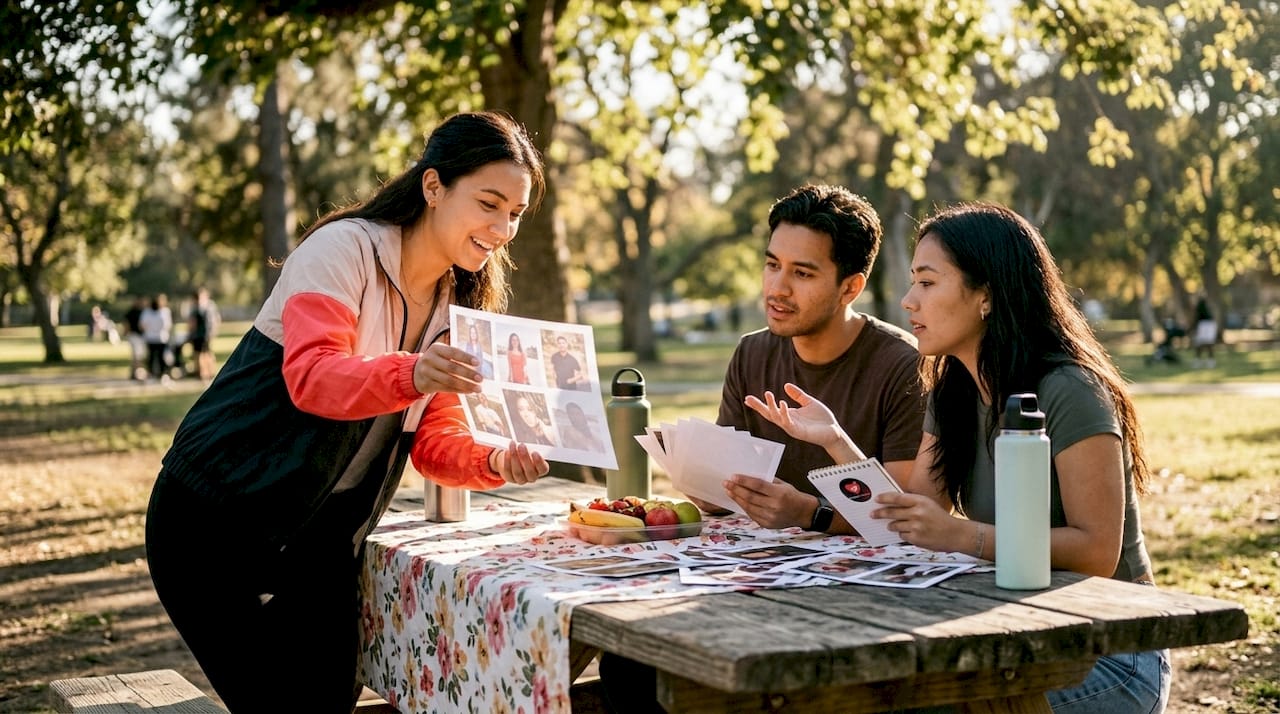
The baseline metrics are lighting, composition, and clarity. A well-lit face, a clean background, and a sharp focus all contribute positively. These are table stakes. Every photo in your set should clear this bar before the AI even begins comparing them against each other.
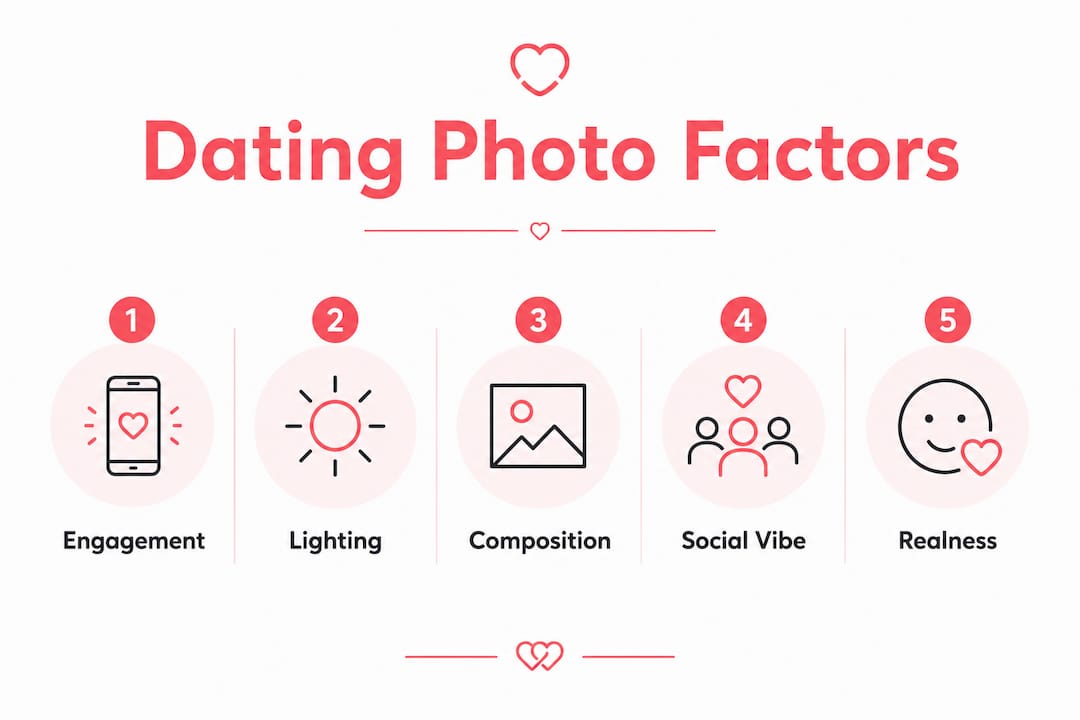
Beyond the basics, the AI reads higher-level contextual cues. Social vibe matters: are you in a group, outdoors, doing something interesting? Intent matters too: does the photo suggest you are approachable, active, or confident? A VLM can assess these qualities because it has been trained on millions of images paired with engagement outcomes.
Realness scoring adds another layer. AI-generated photos below a realness score of 85 often contain subtle anomalies that people detect subconsciously, such as lighting inconsistencies or unnatural skin textures. These anomalies damage profile credibility even when viewers cannot articulate exactly what feels off.
Pro Tip: Authenticity outperforms polish. A candid photo from a weekend trip will often outscore a studio-quality headshot because it signals a real, interesting life.
Key factors AI uses to score your photos:
- Lighting: Natural, even light on your face scores highest.
- Composition: Centred subject, uncluttered background, good framing.
- Social context: Photos with other people or in interesting settings signal an active social life.
- Facial expression: Genuine smiles and open, relaxed expressions consistently outperform neutral or posed looks.
- Realness: Photos that look natural and unedited score better than heavily filtered or AI-generated images.
- Variety: A mix of settings and moods across your photo set performs better than six similar shots.
How to use AI ranking insights to improve your photo selection
Your primary photo is the single most important decision you make. The primary photo acts as a veto-level gatekeeper: if it fails to engage, your overall profile ranking drops regardless of how strong your other photos are. Get this one right first, and get human feedback on it before you commit.
AI tools are best used as a filter, not a final judge. AI eliminates your weakest photos but is limited by sample size and heuristics. Use it to cut the bottom third of your photo set, then apply human judgement to the remaining images. Tools like the profile picture tester at DoubleMyMatches combine AI scoring with audience feedback, giving you both data points at once.
Profiles combining AI-ranked images with candid photos perform better than fully optimised sets. Aim for a mix: two or three AI-scored, well-composed shots alongside two or three genuine candid images. The candid photos anchor your profile in reality and prevent it from looking manufactured.
Practical steps for applying AI ranking insights:
- Lock your primary photo manually. Do not let the app auto-select it. Choose the image with the strongest human feedback and the highest AI score.
- Use AI to cut, not to crown. Let the AI identify and remove your weakest images. Use human testing to confirm your top two or three.
- Build a mixed set. Combine your best AI-scored photos with real candid shots from your life.
- Test with your actual audience. Use an AI dating photo review service that incorporates real audience feedback, not just algorithmic scoring.
- Refresh regularly. Swipe data changes over time. Revisit your photo set every few months and re-run the analysis.
Common misconceptions about AI photo ranking
AI ranking is one data point, not the final word on your photos. AI suggestions should be treated as a filter, supplemented by human feedback from your actual target audience. Treating the AI's output as absolute truth is the most common mistake people make.
The AI can also promote photos that attract attention without attracting the right kind of attention. A shirtless gym photo might rank highly on raw engagement metrics but attract matches that do not align with what you are looking for. The algorithm optimises for clicks, not compatibility.
Sparse data is a real limitation. If your profile is new or has low traffic, the AI has fewer swipes to learn from. Its early recommendations may be less reliable than those generated after weeks of real-world testing.
"The best profiles in 2026 appear current, believable, and inviting rather than overly polished. AI aids optimisation, not fabrication. A profile that looks too perfect raises suspicion, not interest."
Distinguishing between a high realness score and high engagement potential is also worth understanding. A photo can score above 85 on realness and still underperform if the social context it conveys does not resonate with your audience. Realness is a floor, not a ceiling.
The right approach blends AI analysis with personal authenticity. Use the AI to remove obvious weak spots, then apply your own judgement and real human feedback to make the final call. Your photos should represent who you actually are, not who the algorithm thinks performs best.
Key takeaways
AI photo ranking works best when you treat it as a filter and combine it with human feedback, not as a standalone judge of your best images.
| Point | Details |
|---|---|
| AI uses pairwise comparison | Every photo pair is compared and scored; the image with the most wins ranks highest. |
| VLMs read social context | Modern AI reads vibe, intent, and social cues, not just lighting and sharpness. |
| Primary photo is critical | A weak primary photo lowers your entire profile ranking, regardless of other images. |
| Realness score matters | AI-generated or heavily edited photos below a realness score of 85 damage credibility. |
| Mix AI and candid shots | Combining AI-scored images with genuine candid photos produces the strongest overall profile. |
The honest truth about AI and your dating photos
The most surprising thing we have learned at DoubleMyMatches is how little most people know about their own worst photo. They keep it because they like how they look in it, or because a friend took it, or because it was from a good holiday. The AI does not care about any of that. It only cares about what earns a swipe.
That objectivity is genuinely useful. But we have also seen people go too far in the other direction, handing their entire photo strategy over to an algorithm and ending up with a profile that looks polished but feels hollow. The matches come in, but the conversations go nowhere, because the profile no longer reflects the actual person.
Our honest view: use AI to identify and cut your weakest images fast. That alone will improve most profiles significantly. Then use human feedback to confirm your top choices. And keep at least two or three photos that are just real. Not perfect. Real.
The primary photo choice matters more than any other single decision. We have seen profiles with mediocre secondary photos perform well because the primary image was genuinely compelling. We have also seen technically excellent photo sets underperform because the first image was flat. Get that one right, and the rest follows.
AI is a tool for optimisation, not identity replacement. The goal is a profile that looks like the best version of you, not a version of you that the algorithm invented.
— The Team @ DoubleMyMatches
Put your best photos forward with DoubleMyMatches
You now know what the AI is looking for. The next step is finding out how your current photos actually score.
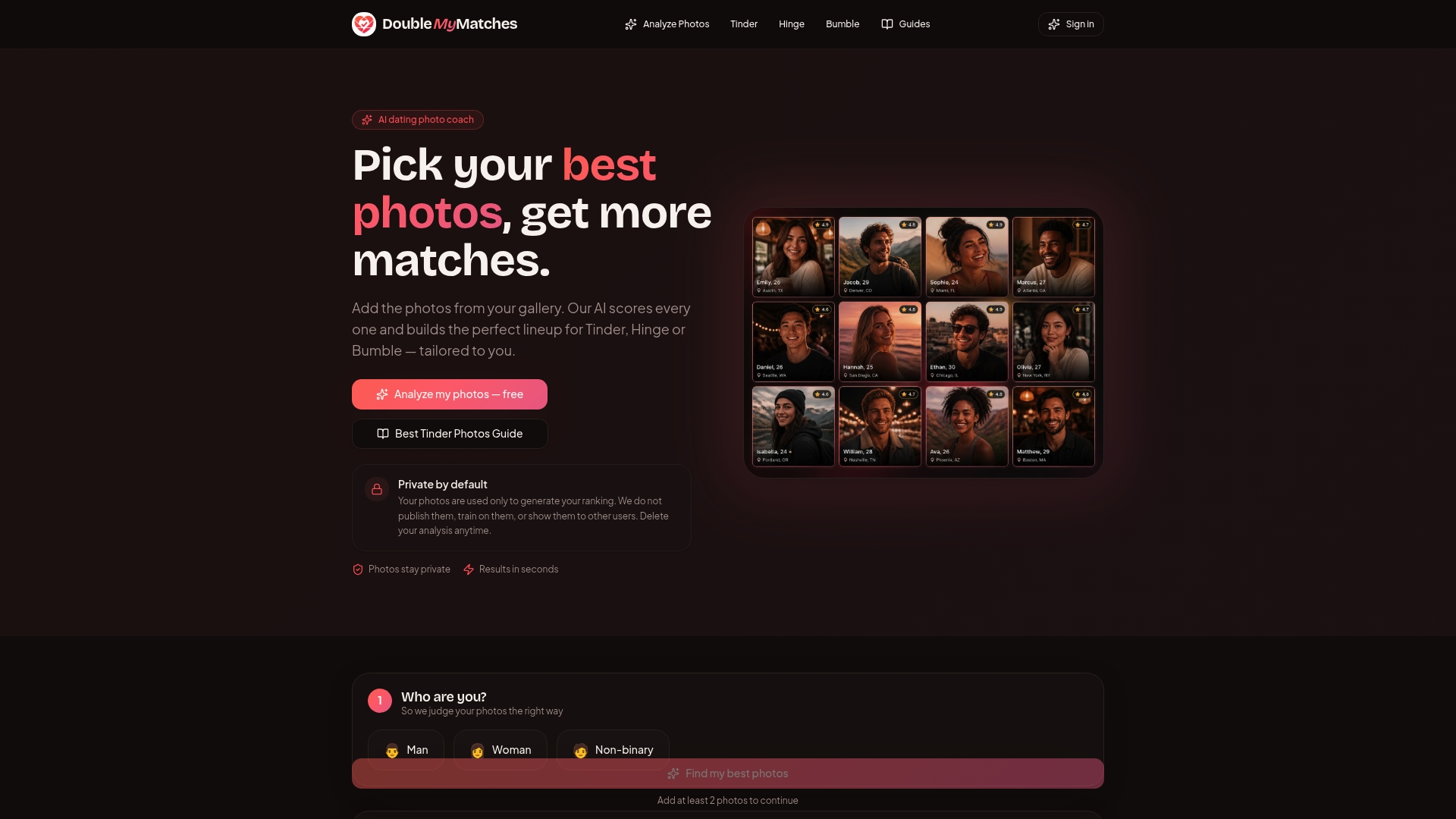
DoubleMyMatches analyses your dating photos using the same class of AI that powers platform-level ranking, scoring each image on lighting, composition, expression, and social context. The dating photo analyser gives you an instant ranked order of your photos, so you know exactly which to lead with and which to cut. You can also use the full suite of AI tools to test photos with a real audience, get honest written feedback, and build a photo set that is both AI-optimised and genuinely you. Your photos are analysed and then discarded. They are never stored or used to train the AI.
FAQ
How does AI decide which dating photo ranks first?
AI ranks photos by comparing every possible pair and counting which image wins more comparisons based on engagement signals like likes and swipes. The photo with the highest win probability is placed first.
What is a realness score in AI photo ranking?
A realness score measures how natural and unedited a photo appears to both the AI and human viewers. Photos scoring below 85 often contain subtle anomalies that reduce profile credibility.
Does AI photo ranking work the same on all dating apps?
The core pairwise comparison method is common across major platforms, but each app trains its model on its own user engagement data. Results and rankings can differ between apps.
Can I override the AI's photo ranking?
Yes. Most platforms allow you to lock your primary photo manually. DoubleMyMatches recommends doing this after combining AI scores with real human feedback rather than relying on the app's auto-selection.
Why does my primary photo matter more than the others?
The primary photo is the first image anyone sees. Poor engagement on it lowers your overall profile ranking across the platform, reducing how often your profile is shown to potential matches.