
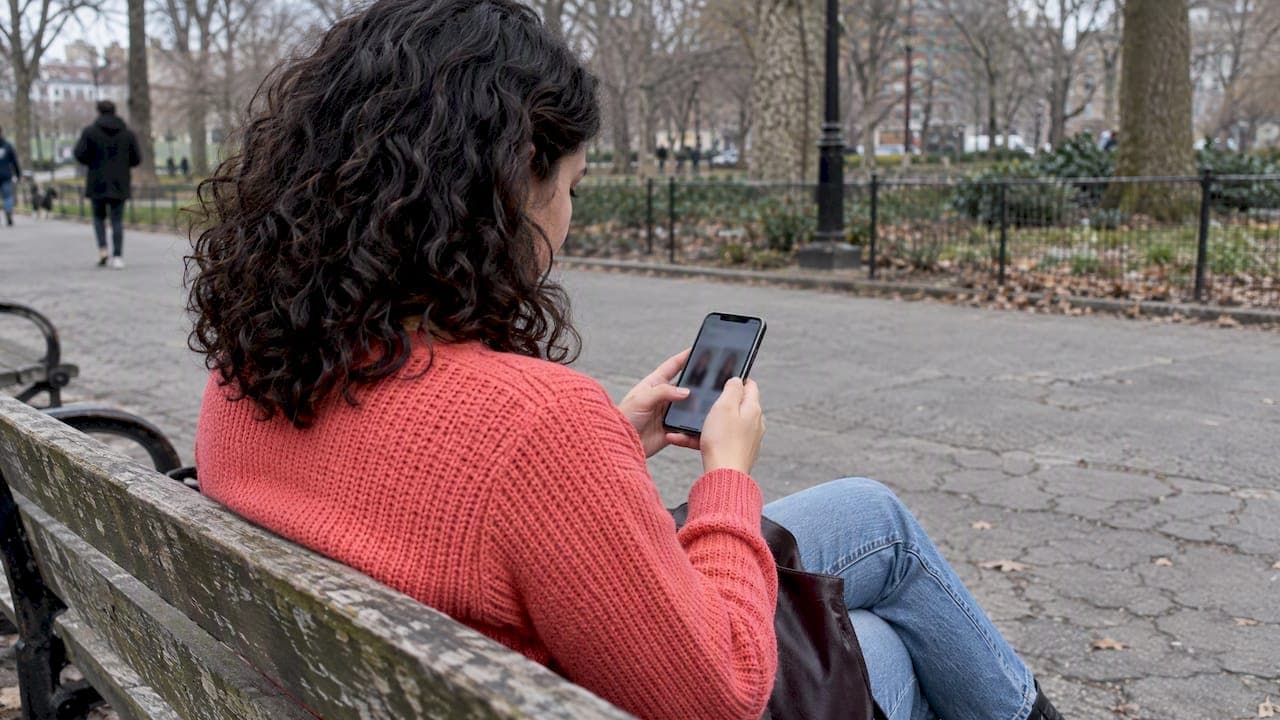
Your second Tinder photo should be a clear, well-lit full-body shot, or a sharp activity photo that shows off a hobby you genuinely enjoy. It matters because your first photo earns the swipe-worthy glance, but your second photo decides whether that glance turns into a match by confirming you're real and giving a fuller picture of your life. The exception: if you have a stronger single-subject candid that shows your face clearly and adds genuine context, test that instead.
TL;DR:
- Choosing an activity or full-body photo for slot two helps confirm your identity and demonstrates a fuller picture of your life compared to repetitive selfies.
- Natural lighting, clear facial visibility, and authentic settings are crucial for trustworthiness, especially when appealing to a more selective audience.
- Avoid dark, blurry, or heavily filtered images, and ensure your second photo provides something new and engaging without redundancy.
- Testing different second photos for a week and tracking matches can optimize your profile, with AI tools offering objective scoring to guide your choice.
- Gender-specific patterns influence photo choices, with men benefiting from varied activity shots and women gaining from authentic candid or full-body images to add diversity.
Table of Contents
- The ideal Tinder photo order and why slot two matters most
- Choosing between full-body, activity, candid, or pet photos for slot two
- How gender and selectivity shape your second-photo choice
- What to avoid as your second Tinder photo
- How to test and optimise your second photo
- What the research says and how we apply it
- What we keep seeing when reviewing real profiles
- Get a private, AI-scored second opinion on your photos
- FAQ
- Sources
The ideal Tinder photo order and why slot two matters most
Think of your six photo slots as a short story. Slot one gets attention. Slot two either confirms the promise or breaks it. Here's the order we recommend for most profiles:
- Slot 1: A sharp, smiling headshot or close crop. This is your thumbnail, so it needs to be instantly clear and flattering.
- Slot 2: A full-body or activity shot that proves the first photo wasn't a lucky angle and adds context about who you are.
- Slot 3: A candid, single-subject photo in a natural setting: at work, travelling, or doing something you love.
- Slot 4: A photo with friends, but one where you're clearly identifiable and not lost in a crowd.
- Slot 5: Something that signals personality: a pet, a hobby, or a setting that sparks conversation.
- Slot 6: A final close-up or a second activity shot that reinforces consistency across the set.
Slot two carries the most weight after your opener because it's where most people decide whether to keep scrolling or swipe away. Tinder's own Photo Tips guidance recommends adding variety and swapping out redundant selfies for hobby or activity shots, which is exactly the job your second slot should do.
A good pairing looks like this: a tight, smiling headshot followed by a full-body shot at a beach or on a hike, wearing something similar to photo one so the viewer's brain confirms "yes, same person, and they have a life." A poor pairing is a close-up headshot followed by another close-up headshot from a slightly different angle. It feels repetitive and tells the viewer nothing new, so they lose interest fast.
The same logic applies in reverse. If your first photo is a full-body shot, your second photo should move closer, showing your face more clearly. The goal across any two consecutive photos is always the same: confirm identity, then add new information. Never repeat the same distance, lighting, or expression twice in a row.
Choosing between full-body, activity, candid, or pet photos for slot two
Four realistic options compete for your second slot. Each has a different job, and picking the wrong one for your situation can cost you matches.
- Full-body shot. This proves your first photo wasn't cropped to hide something, and it remains the safest default for most profiles. Shoot it in natural daylight, standing at a slight angle rather than straight-on, with enough distance that your whole outfit is visible but your face is still readable. It wins when your first photo is a close crop; it loses if the lighting is dim or the background is cluttered.
- Activity or hobby shot. A photo of you climbing, playing an instrument, or cooking tells a story a headshot can't. It wins when the activity is visually clear and you're still identifiable; it loses when the hobby is buried in gear (helmets, masks, distance shots) that hides your face.
- Candid single-subject photo. A natural, unposed moment, caught mid-laugh at a café or mid-stride on a street, reads as authentic. It wins because research on visual cues in online dating found that straightforward, individual-focused images with genuine emotional clarity tend to hold attention better than posed group shots, even though smiling and group photos are what first grab the eye in a combined NeuroLab and online study. It loses if the moment is blurry or the framing is awkward.
- Pet photo. A clear shot of you with a pet can build warmth and conversation starters fast. It wins when your face is still the focal point; it loses when the pet dominates the frame and your face becomes an afterthought.
Run through this checklist before locking in your choice: is your face clearly visible, does the photo look different from slot one in setting or distance, does it feel authentic rather than staged, and does it include a trust cue such as natural lighting or a real-world setting rather than a filtered studio look?
Pro Tip: If you're unsure between two options, pick the one that would make a stranger ask you a question about it, not just comment on your looks.
Gender patterns show up here too. Genre analysis of a large number of Tinder images found that men's early slots tend to show more variety already, so a strong activity shot can set a man apart, while women's profiles more often lean on intimate or mirror selfies in early slots, according to a machine-learning analysis of gendered self-representation on Tinder. For women, swapping a second mirror selfie for a full-body shot taken by someone else, or a clear candid, often introduces variety that the profile was missing.
How gender and selectivity shape your second-photo choice
Who you're trying to attract changes what your second photo should prioritise. An experimental study of profile judgements found that women applied stricter visual criteria and weighed trustworthiness more heavily than men did, with ambiguous or low-context photos penalised harder by female viewers, according to research on what makes a Tinder match work. Men in the same study were generally more forgiving of photo quality, though clarity still helped.
If you're aiming at a more selective audience, lean into trust cues. Choose a simple, uncluttered background over a busy one. Skip heavy filters or retouching, since they read as less authentic and can undercut the trust your photo is meant to build. Favour natural lighting, ideally outdoors or near a window, over artificial light that flattens your features.
A few quick dos and don'ts for this audience:
- Do show your face clearly and unobstructed in at least one of your first two photos.
- Do choose a setting that explains itself: a park, a café, a trailhead.
- Don't rely on a heavily edited or filtered photo as your second image.
- Don't use a photo where your context is ambiguous, such as an unexplained formal event or a photo that could belong to someone else's trip.
What to avoid as your second Tinder photo
Some photo choices quietly sabotage your match rate, and they're easy to fix once you spot them.
- Mirror selfies. They often introduce clutter, bad lighting, and an obvious phone in frame.
- A second close-up selfie. It repeats information instead of adding new context, which is the opposite of what slot two should do.
- Dark or low-resolution images. Poor lighting flattens your features and signals a lack of effort.
- Ambiguous group shots. If a stranger can't tell which person is you within two seconds, the photo is working against you.
- Sunglasses or anything covering your eyes. Eye contact builds trust, and hiding it removes a key cue.
- Heavy filters. They can make a photo look less authentic and raise doubts about what you really look like.
Run a fast two-point test on any photo you're unsure about: can a friend identify you in under two seconds, and does the photo show something your other photos don't? If either answer is no, swap it out. Our guide on photos to avoid on Tinder walks through replacement ideas for each of these common mistakes.
How to test and optimise your second photo
Tinder's own tools can help here. Photo Selector runs entirely on your device, detects clear face outlines, and filters out group photos when suggesting your best images, though it won't tell you why a specific photo underperforms once it's live on your profile.
To find out what actually works for you, run a simple test:
- Pick one variable. Swap only your second photo, and leave everything else the same.
- Run it for one week. This gives Tinder's algorithm enough time to show your profile to a reasonably steady pool of people.
- Track matches per week, not just right-swipes, since matches reflect mutual interest.
- Swap back or forward based on which version produced more matches, then repeat with a new variable.
- Stop testing once you find a stable top performer rather than endlessly tweaking.
Statistic Callout: Meaningful comparisons generally need enough profile views to avoid random noise, so testing for at least a full week before judging a change gives your results more than a handful of impressions to work with, per Tinder's Photo Tips guidance on using variety and replacement thoughtfully.
For a deeper breakdown of why photo changes tend to outperform bio edits in short tests, see our piece on swapping one photo and waiting a week.
What the research says and how we apply it
The research behind this guide points in a consistent direction. Smiling faces and group photos grab attention fast, but straightforward, individual-focused images with real emotional clarity tend to sustain interest better once someone stops to look, based on combined NeuroLab and online study findings. Tinder's own Photo Tips echoes this by recommending variety and discouraging redundant selfies, and its on-device Photo Selector favours clear, single-subject photos over group shots.
We built our AI dating photo coaching tool around these same principles. It scores your photos on lighting, expression, and composition, then recommends a best-to-worst order so your second photo earns its place rather than being a guess. Every photo is analysed and then deleted, never stored or used to train the AI.
What we keep seeing when reviewing real profiles
We see the same three fixes come up again and again; for practical photo examples and shooting tips, check out these dating profile photos that actually get you matches. First, a near-duplicate selfie in slot two, easily replaced with a full-body shot that adds real information. Second, a second photo so dark it hides the person entirely, fixed by reshooting near a window. Third, a group shot where the uploader is barely visible, swapped for a clearer solo image.

One quick reminder: when using a shared or group photo, check who else appears in it and whether they'd be comfortable with it on a dating profile.
Get a private, AI-scored second opinion on your photos
We built our AI dating photo coach to take the guesswork out of exactly this decision: instant scoring on lighting, expression, and composition, plus a best-to-worst photo order so you know precisely which shot belongs in slot two.
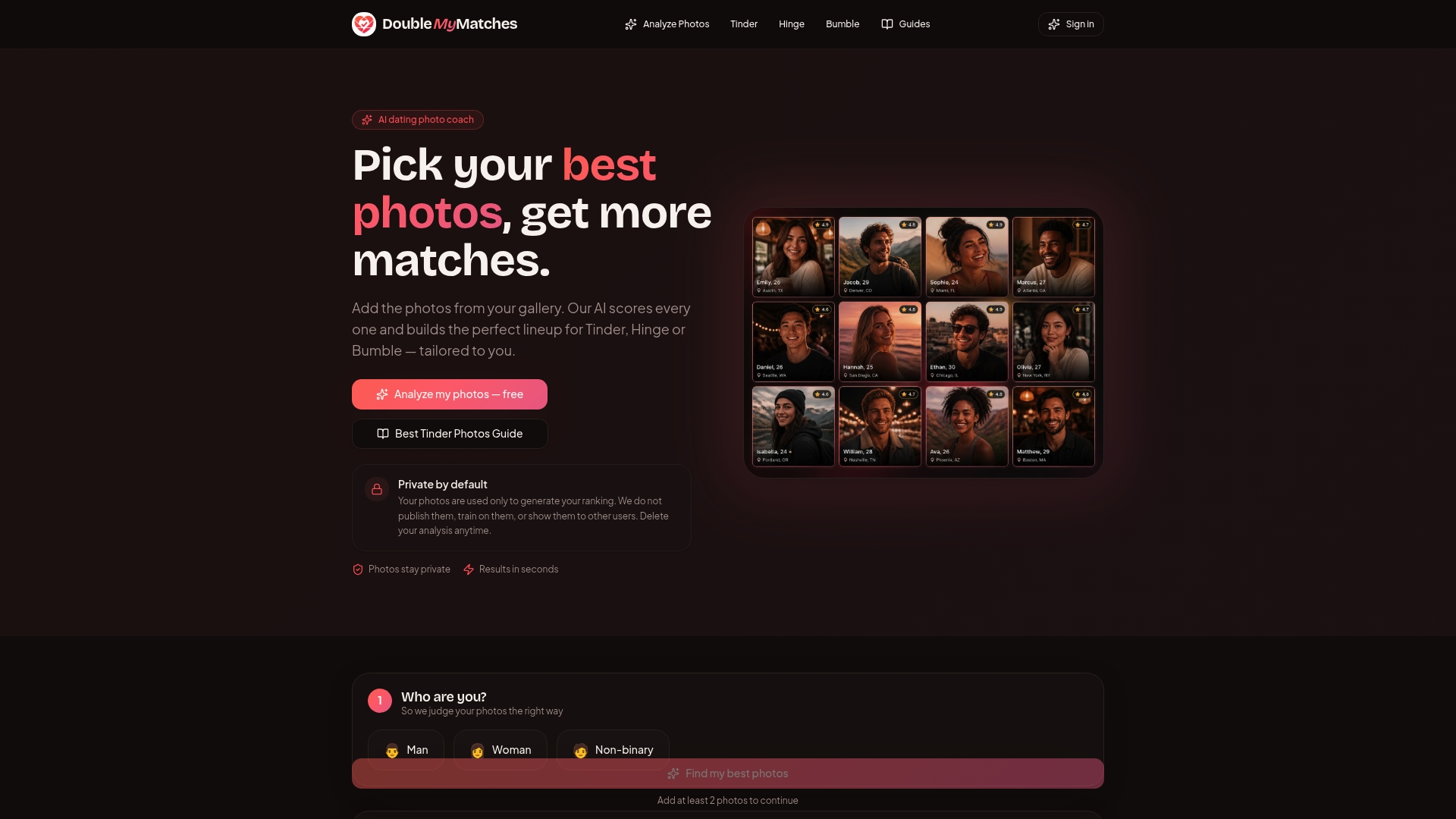
It's the right fit if you've got several decent candidates for your second photo and want an objective read rather than asking friends who are too polite to say which one is weakest. Start with the Full Report for a full breakdown, or add Retest & Lock In once you've made changes to confirm you've improved. Every photo is analysed privately and deleted straight after, never published or used to train our models, so you can test freely.
FAQ
What does a second look mean on Tinder?
A second look on Tinder refers to a profile reappearing in your stack after you've swiped on it before, usually when Tinder is trying to resurface a potential match. It isn't a guarantee of a new match, but it does give your second photo another chance to make an impression.
Is it true that most Tinder users are men?
Tinder has not published an official, current gender breakdown of its user base that we can verify, so any specific percentage circulating online should be treated with caution. What matters more for your strategy is that your second photo works across a broad audience, which the full-body or activity shot approach is designed to do.
Which photo does Tinder show first?
Tinder shows whichever photo you've placed in your first slot, and its Photo Selector tool can suggest reordering based on clear face detection, but you make the final choice. A sharp, well-lit headshot in slot one sets up the rest of your profile to perform.
Will Tinder show you the same person twice?
Yes, Tinder can show you a profile more than once, particularly if you didn't swipe left or right decisively, or if the person updates their photos. This is one more reason a strong, well-tested second photo matters: it keeps working every time your profile reappears.
Sources
- Photo Tips – Tinder
- Eyes on the price: how visual cues influence users’ matching decision in online dating
- Gendered self-representation on Tinder (machine-learning analysis)