
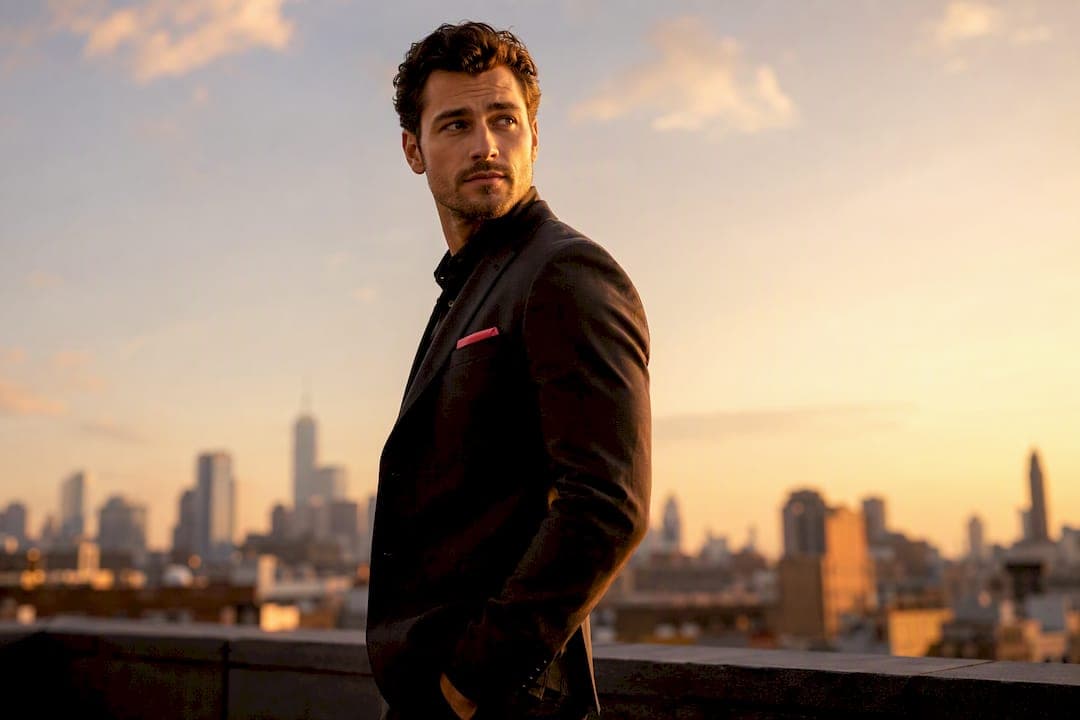
Step back from the camera and push your jaw forward, then drop your chin slightly. Those two moves alone change how masculine you read in a photo. Next, tidy your facial hair, angle your body 15 to 25 degrees rather than facing the lens square on, and pay attention to where the light falls on your cheekbones. Test each change one at a time rather than guessing at all of them together.
TL;DR:
- Shooting from several steps back with a zoom or crop reduces facial distortion and makes the face appear more masculine, as close-range photos soften features.
- Balancing lighting by facing a window at an angle creates defined shadows on the jaw and cheekbones, enhancing a sculpted, masculine look.
- Keeping facial hair tidy, with a defined neckline and even density, strengthens a strong, deliberate appearance in photos.
- Relaxing the shoulders, turning the torso 15 to 25 degrees, and holding the jaw forward with a gentle chin drop improves posture and facial definition for masculinity.
- Comparing multiple shots with slight variations helps identify which pose, lighting, and framing best accentuate a masculine presence.
Table of Contents
- How can I look more masculine in photos through posing alone?
- Does camera distance really change how masculine you look?
- Getting the lighting right for jaw and cheekbone definition
- What facial hair and haircut choices look most masculine?
- How does clothing fit change your silhouette in photos?
- A five-minute self-shoot routine you can repeat
- A quick checklist for testing what actually works for you
- A short authorial note on masculine presence in photos
- Want a second opinion before you post the photo?
- Sources
- FAQ
How can I look more masculine in photos through posing alone?
Posing does more heavy lifting than most people expect, and it costs nothing. The jaw and chin are the fastest fix: push the jaw slightly forward and drop the chin a touch, which sharpens the jawline and removes the soft, receding look a straight-on shot creates. It feels unnatural for about ten seconds. It doesn't look unnatural in the photo.
Body angle matters just as much. Turn your torso 15 to 25 degrees away from the camera rather than facing it head on, shift your weight onto your back foot, and let your shoulders sit relaxed rather than pulled up towards your ears. Practical posing guides for men consistently recommend this angle because it narrows the silhouette just enough to look intentional without looking twisted.
Hands are where most self-shot photos fall apart. Give them a job: rest one in a pocket, hold a jacket lapel, or let an arm cross loosely at the waist. Clenched fists or hands hanging dead at your sides read as stiff, not strong.
Common mistakes to fix:
- Chin lifted too high, which exposes the nostrils and reads as arrogant rather than confident
- Jaw clenched, which creates tension lines around the mouth
- Shoulders locked up towards the ears instead of dropped and relaxed
- Facing the camera dead on with no body rotation at all
Pro Tip: Practise the jaw forward, chin down movement in a mirror first. It should feel like you're gently extending your neck, not straining it. If your neck muscles are visibly tight in the photo, you've overdone it.
Once the pose is right, the best camera angles for dating photos become far easier to use to your advantage.
Does camera distance really change how masculine you look?
Yes, and the effect is larger than most people assume. A peer-reviewed study in PLOS ONE compared portraits shot at 50mm, 85mm and 105mm focal length equivalents and found the 50mm images, the kind a phone camera produces at close range, were rated significantly less masculine and less dominant than the longer focal lengths.
The fix is simple: stop bringing the phone close to your face. Step back several paces, then use your camera's 2x or 3x zoom (or crop in afterwards) to fill the frame again. Hasselblad's own portrait guide backs this up from the professional side, recommending 50 to 70mm equivalents for full or half-length shots and 70 to 100mm for tighter portraits, specifically to avoid the nose and jaw distortion that close range creates.
Try this test:
- Shoot the same pose from arm's length using your standard lens
- Shoot it again from three or four steps back using 2x zoom
- Shoot it a third time from further back still using 3x zoom
- Compare all three side by side and look at which one narrows your face the least
Framing choices matter too. A head-and-shoulders crop emphasises the face and jaw; a half-length shot brings shoulder width and posture into the picture, which is where a lot of perceived size actually comes from.
Getting the lighting right for jaw and cheekbone definition
Light shapes structure more reliably than any pose. Harder, more directional light, like late afternoon sun through a window, creates a defined shadow under the jaw and along the cheekbone, which reads as more sculpted. Flat, front-facing light (the kind most phone front cameras produce in a dim room) flattens everything and softens the jawline you just worked to sharpen.
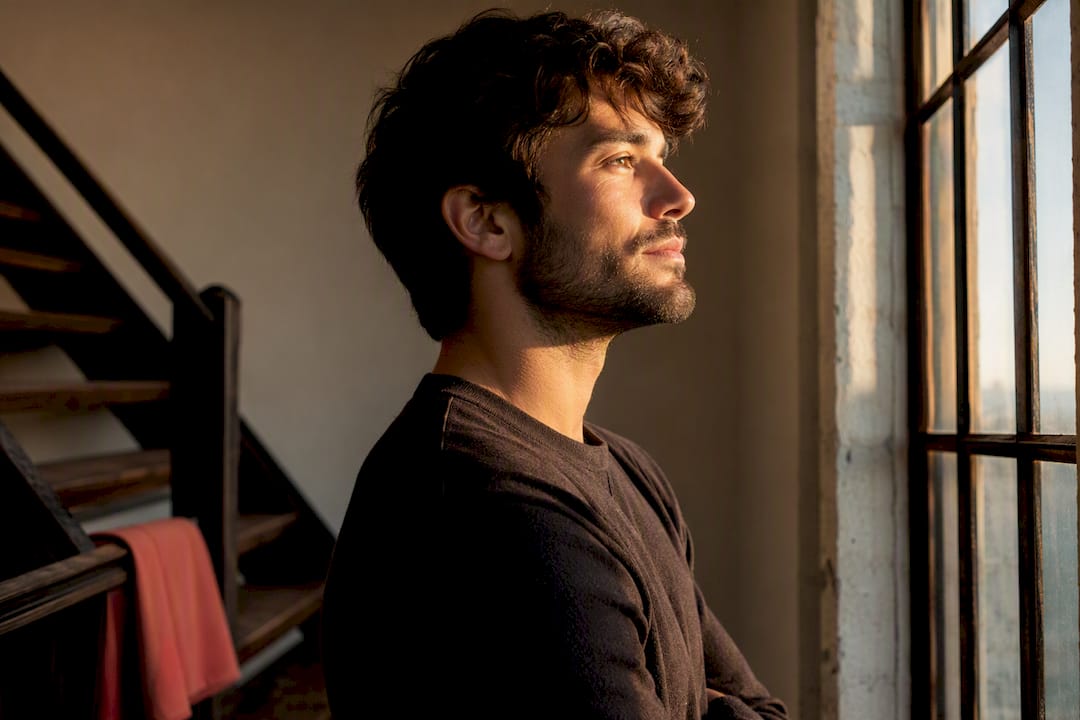
A simple home setup: stand facing a window at roughly 45 degrees rather than dead on, so one side of your face catches more light than the other. If the shadow side looks too dark, hold a white t-shirt or a piece of card just out of frame to bounce some light back in. That's a workable reflector for free.
What to check before you shoot:
- The shadow under your jaw should be visible but not a solid black line
- One cheekbone should catch slightly more light than the other, not identical lighting on both sides
- Avoid overhead lighting, which casts shadows into the eye sockets rather than under the jaw
Pro Tip: If you're editing afterwards, resist the smoothing slider. Skin texture reads as masculine and real; over-smoothed skin looks artificial and works against you. A light touch on contrast and a small amount of selective sharpening on the eyes is usually all you need. Photo quality factors that affect matches go into this in more depth if you want to get technical about exposure.
What facial hair and haircut choices look most masculine?
The research here is more nuanced than "grow a beard." A peer-reviewed study of 8,520 women's preferences found beards and stubble interact with your existing face shape and the context of what you're signalling. Stubble often boosted attractiveness ratings broadly, while a full beard tended to help more specifically for long-term relationship appeal.
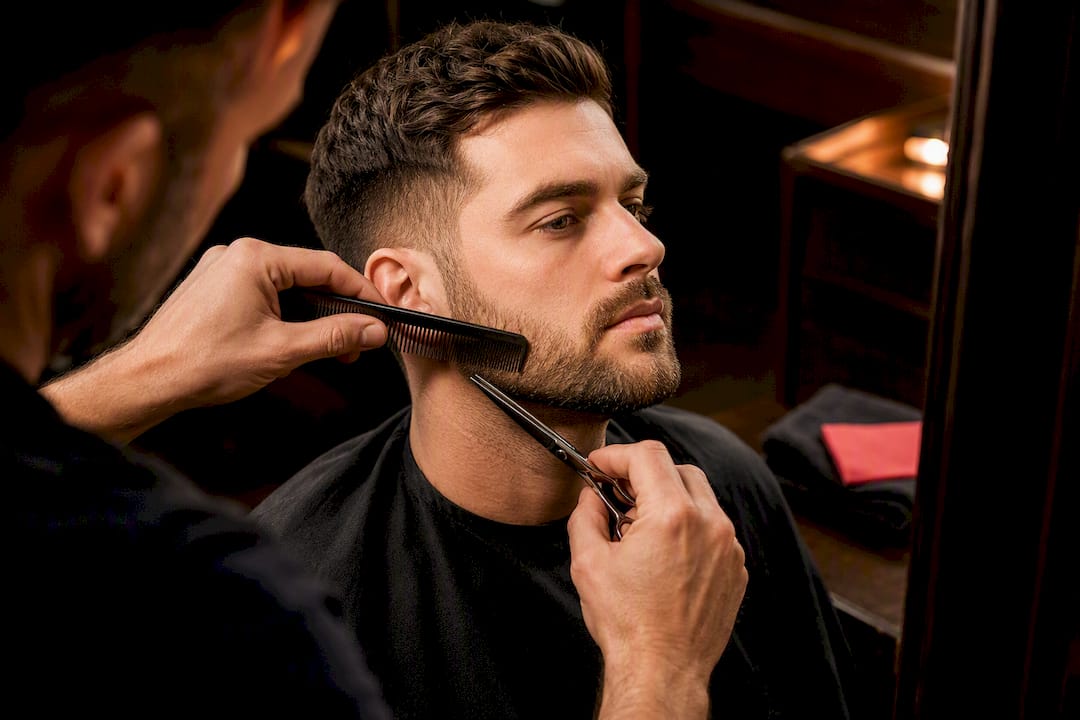
Neat stubble is usually the safest middle ground: masculine without needing daily maintenance decisions.
Practical grooming rules:
- Keep the neckline tidy and clearly defined, not fading into stray neck hair
- Aim for even density across the jaw rather than patchy edges left untrimmed
- If you want a sharper silhouette, keep hair off the face and reduce bulk around the ears and jawline
- Trim eyebrows if they're heavy enough to shadow the eyes in photos
- Basic skin care and clean teeth matter more in close crops than people expect
Whatever you choose, deliberate and tidy always beats "grew it out and forgot about it."
How does clothing fit change your silhouette in photos?
Shoulder fit is the single biggest lever in clothing, and it's the one people check least. A study in the journal Perception found that cues tied to body height and weight influence perceived masculinity independently of your actual face shape, which means what you're wearing genuinely changes how masculine you're read as, not just how you're dressed.
- Check the shoulder seam: it should sit right at the edge of your shoulder bone, not drooping down your arm or pulling tight across it.
- Look at the fabric drape across the chest and back, it should follow your shape without pulling or bunching.
- Add a layer with a defined collar (a jacket, an overskirt) to create a visible line from shoulder to waist.
- Avoid boxy, oversized clothing that hides your actual shape rather than defining it.
A well-fitted jacket can enhance perceived size more effectively than loose clothing. Tailoring around the armhole specifically affects how sharp the shoulder line reads in a still photo, which is worth understanding if you're investing in one good jacket rather than a wardrobe of them.
Pro Tip: Before the shoot, try your outfit under the actual light you'll be using. A jacket that looks sharp under shop lighting can look flat and shapeless under a dim bedroom lamp.
A five-minute self-shoot routine you can repeat
Getting a strong photo rarely comes from one perfect take. It comes from shooting fast, varying small details, and picking the best of many.
- Clean the lens, then stabilise the phone against something solid rather than holding it freehand.
- Step back several paces and set the camera at eye level or very slightly above.
- Set your feet with weight on the back foot, turn your torso 15 to 25 degrees.
- Relax your shoulders down, then push the jaw forward and drop the chin.
- Keep your eyes soft and focused on something just past the lens, not glaring into it.
- Take ten to fifteen variations, changing hand position, head tilt, and expression slightly each time.
What to check before you settle on a shot:
- Compare the same outfit and lighting across three different poses
- Pick the frame where the shoulders look relaxed rather than tense
- Pick the frame where the eyes look engaged rather than glazed or squinting
This mirrors what research into interpersonal distance and photographic perception found: photos taken from a natural conversational distance, rather than arm's length, rated higher for trustworthiness and competence as well as attractiveness. Distance isn't just a masculinity fix; it's a trust fix too.
A quick checklist for testing what actually works for you
Run through this before you call any photo finished:
- Distance and lens: shot from several steps back, not a close selfie
- Jaw and chin: jaw slightly forward, chin dropped, no visible tension
- Shoulders: relaxed and dropped, torso turned 15 to 25 degrees
- Shoulder fit: seam sits at the shoulder bone, no bunching or drooping fabric
- Lighting: visible but soft shadow under the jaw, not flat or harsh
- Grooming: deliberate facial hair edges, tidy neckline
| Element | Quick check | What to compare |
|---|---|---|
| Camera distance | Several steps back, zoomed in | Close shot vs stepped-back shot |
| Jaw and chin | Slightly forward, chin down | Neutral face vs adjusted pose |
| Shoulders | Relaxed, torso angled | Square-on vs 15 to 25 degree turn |
| Lighting | Visible shadow under jaw | Flat light vs angled window light |
That's essentially the same list DoubleMyMatches applies when scoring uploaded photos. The tool looks at lighting, expression, and composition, and photos are analysed and then discarded, never used to train the AI or shown to anyone else.
A short authorial note on masculine presence in photos
Looking masculine in a photo isn't about looking aggressive. It's about composed presence: a body that reads as settled rather than tense, a face that reads as at ease rather than performing.
Everything in this guide is a starting point, not a formula. Test one change at a time, keep what genuinely looks like you, and discard what feels like a costume. These same technical principles, distance, light, fit, apply regardless of how you present; the goal is always a photo that looks intentional rather than accidental.
— The Team @ DoubleMyMatches
Want a second opinion before you post the photo?
You've made the technical changes: stepped back, adjusted the jaw, sorted the lighting, tidied the grooming. The honest question left is whether it actually worked, and that's hard to judge about your own face in your own photo.

DoubleMyMatches scores your photos for lighting, expression, and composition, then ranks them from strongest to weakest for the specific app you're using, whether that's Tinder, Hinge, or Bumble. You get per-photo feedback on what's working and what's quietly working against you, plus a heads-up on any photo that's actively hurting your lineup. Every photo is analysed and then deleted; nothing is published or used to train the model. A Full Report costs $7 one off, and if you want to test a revised shot after making changes, a Retest & Lock In runs $17. If you're weighing this against a manual dating profile review alternative, the difference is speed and privacy: no waiting on strangers, no photos left floating on someone else's server. Upload your strongest new shot and see where it actually lands.
Sources
- Focal length affects depicted shape and perception of facial images | PLOS ONE
- Medium format portrait photography: a practical shooting guide – Hasselblad
- Facial hair and attractiveness study — PubMed
- PLOS ONE interpersonal distance and photographic perception (printable article)
- Facial cues of height and weight influence perceived masculinity | Perception
FAQ
What makes you look more masculine in photos?
The strongest levers are camera distance, jaw and chin position, shoulder fit, and lighting. Research from PLOS ONE found longer focal lengths and greater shooting distance produced photos rated more masculine than close, wide-angle shots.
Am I prettier in the mirror or on camera?
Mirrors show a flipped, close-up view your brain has adapted to over years, while cameras capture the version everyone else actually sees, often from an unflattering close distance. Neither is more "real"; a photo shot from further back with a longer lens tends to match how you look in person far more closely than a mirror or a close selfie does.
How do you make your face look more masculine in a photo?
Push the jaw slightly forward and drop the chin, which sharpens the jawline without looking forced. Combine that with shooting from further back using zoom rather than a close lens, since close-range shots distort facial proportions in ways that soften masculine features.
Can these techniques work for anyone, not just men?
Yes. The underlying mechanics, camera distance, lighting angle, posture, and fit, are technical, not gendered, and they can be applied by anyone shaping how a specific feature reads in a photo. The jaw and chin adjustment, body angle, and lighting setup described here work the same way regardless of who's using them.
What does DoubleMyMatches actually check in a photo?
DoubleMyMatches scores each photo for lighting, expression, and composition, then ranks your full set from strongest to weakest for your chosen dating app. A Full Report is $7 one off, photos are deleted after analysis, and nothing is ever used to train the AI or shown publicly.