
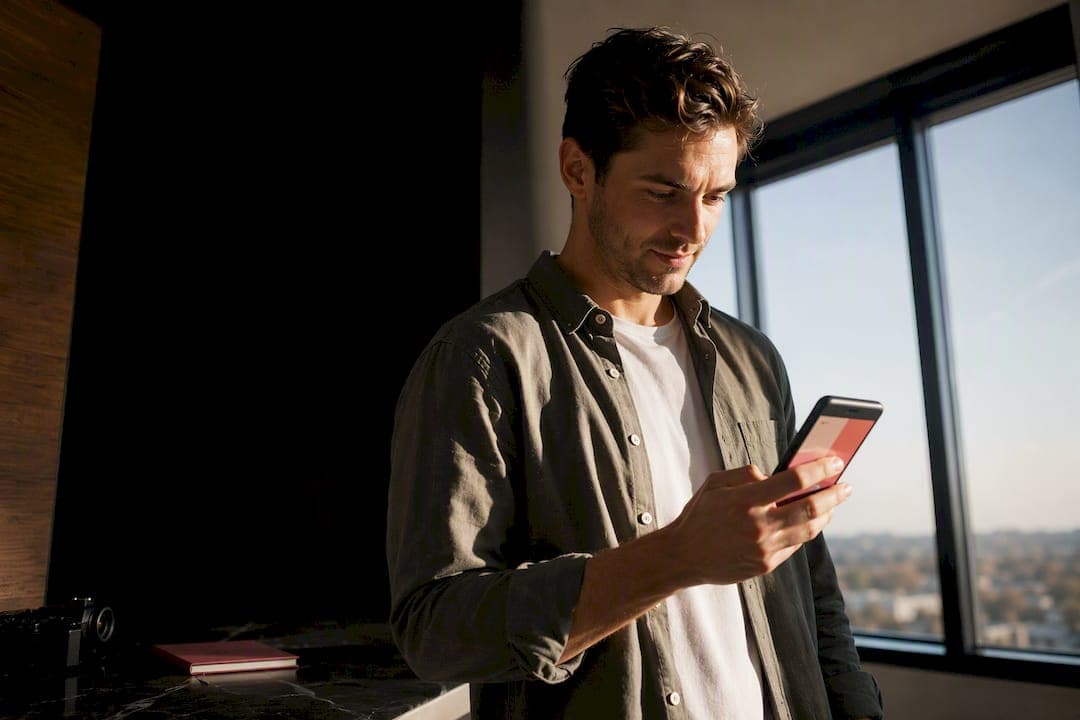
Fix your first photo. A clear, front-lit headshot with genuine eye contact and a real smile is the single highest-leverage change you can make to win more right-swipes. After that, it's about variety and order: five or six photos that show different sides of you, arranged so the strongest ones come first. Alexander Todorov's research on split-second judgement and DoubleMyMatches' own photo analysis both point the same way.
TL;DR:
- A clear, front-lit headshot with genuine eye contact and a natural smile is critical for making a strong first impression on dating apps.
- Using five or six well-structured photos that include a headshot, full-body shot, activity shot, and social proof significantly increases engagement.
- The first three photos in your lineup should feature your strongest, most unambiguous images to maximize attention and interest.
- Small micro-adjustments like genuine smiles and facing the light improve approachability more than professional photography or elaborate editing.
- An AI-powered photo analyzer can objectively rank your photos, identify weak images, and suggest the optimal order to boost your swipe success.
Table of Contents
- What to use as your hero photo (and why it wins)
- The ideal photo lineup: five or six shots that each do a job
- How to order your photos: slot-by-slot guidance
- Expression, framing and light: the micro changes that shift impressions
- Photos that kill matches: what to delete now
- A 10-minute audit checklist you can run right now
- Why this works: evidence and expert findings
- A short note from The Team @ DoubleMyMatches
- Get an objective ranking of your photos in minutes
- Sources
What to use as your hero photo (and why it wins)
Your hero photo is doing almost all the work. Most swipes happen on a phone screen the size of a matchbox, so the first thing to check is simple: shrink the photo down and see if your face still reads clearly. If you can't tell who it is at a glance, neither can a stranger deciding in half a second.
Split-second impressions are surprisingly durable. Alexander Todorov's research at Chicago Booth found that tiny variations between photos of the same person change how intelligent, trustworthy, and attractive they appear. That's not a minor detail. It means the difference between two photos of you, taken minutes apart, can be the difference between a swipe right and a swipe left.
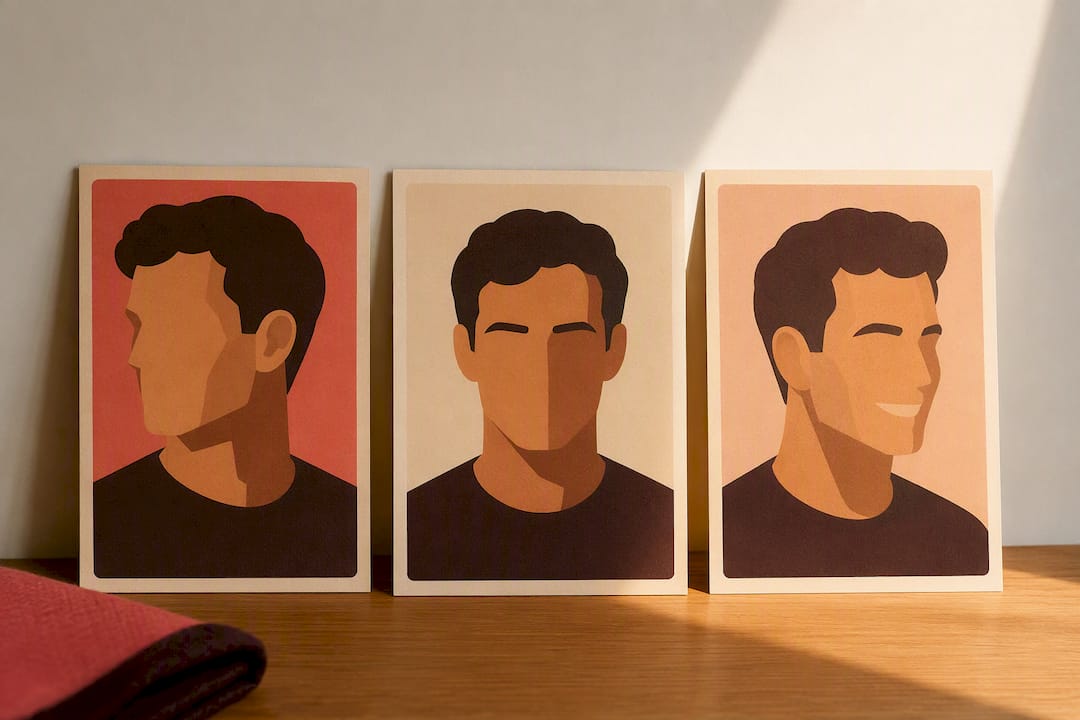
Sample data backs this up directly: Magnt's review of 500 right-swiped photos found that faces readable at thumbnail size consistently beat distant, full-body-only shots for early engagement.
To get your hero photo right:
- Frame from the chin to mid-chest, not a distant full-body shot.
- Look directly at the camera. Eye contact reads as confidence.
- Aim for a genuine smile with your eyes, not a tight-lipped pose.
- Use soft, front-facing natural light. Skip sunglasses entirely.
- Keep the background plain. No clutter, no crowd behind you.
Pro Tip: Hand your phone to a friend and ask for a two-minute headshot near a window. Natural light does more for your face than any filter ever will.
The ideal photo lineup: five or six shots that each do a job
One great photo isn't enough. SwipeStats' analysis of dating profile performance found that a structured five to six photo lineup consistently beats a random scattering of shots, because each photo answers a different question in the viewer's head.
Here's the mix that works, and what each shot is actually for:
- The headshot — proves you're real and sets first impressions.
- A full-body shot — answers the "what do they actually look like" question honestly.
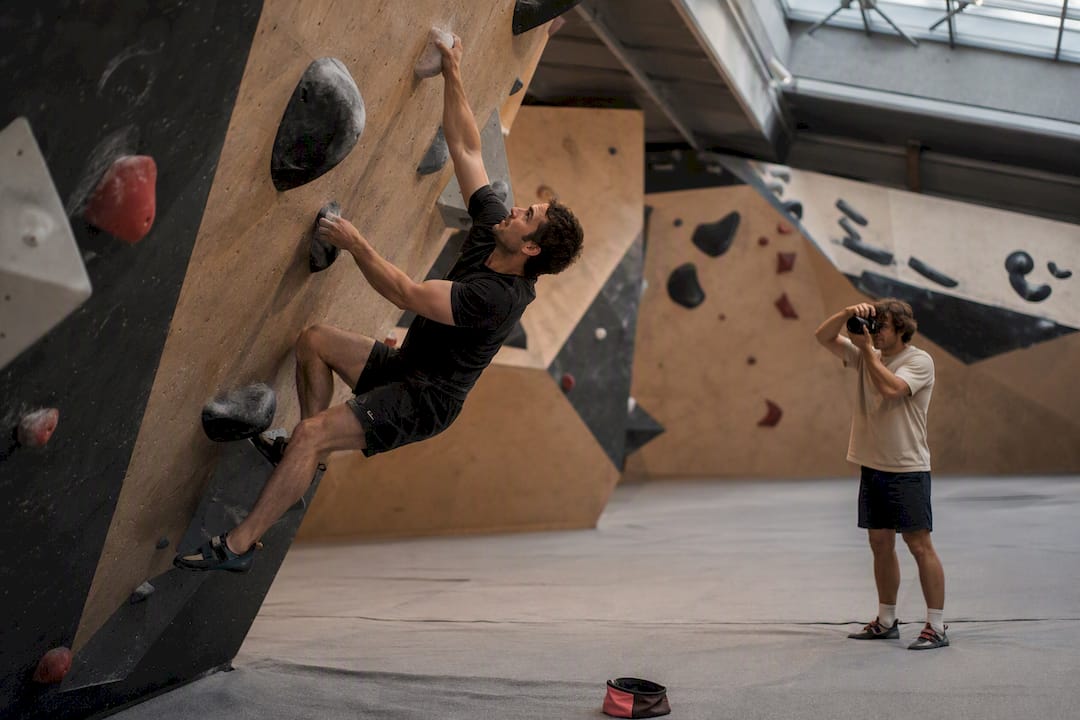
- An activity or hobby shot — shows a lifestyle, not just a face.
- A smiling or laughing shot — adds warmth and approachability.
- A social or pet photo — one group shot maximum, for social proof.
- A date-preview shot — travel, a nice meal, something that invites imagination.
Beyond six photos, returns flatten out fast. Nobody swipes further because you added a seventh gym selfie.
If you're missing a category, don't panic. Borrow a friend for ten minutes at the park, a climbing wall, or a coffee shop. One decent activity photo beats three more headshots.
How to order your photos: slot-by-slot guidance
Order changes outcomes as much as content does. The first three photos in your lineup get the overwhelming share of attention, so they need to be sharp, solo, and unambiguous.
- Slot 1: your strongest headshot, alone, clear at thumbnail size.
- Slot 2: a full-body shot that confirms slot one wasn't misleading.
- Slots 3 and 4: activity, hobby, or genuine laughing shots that add personality.
- Slot 5: your one social or pet photo, for warmth and social proof.
- Slot 6: a date-preview or travel shot that plants a "what if" idea.
Some apps offer automatic photo-ordering features. Treat them as a starting point, not a verdict. Automated sorting doesn't know your context the way you do, so review any suggested order before trusting it fully.
Expression, framing and light: the micro changes that shift impressions
Small adjustments move the needle more than most people expect. A Duchenne smile, the genuine kind where your eyes crinkle, reads as far warmer than a posed smirk. Forbes' coverage of profile photo research found that genuine smiles and front-facing poses measurably lift approachability and match rates compared with neutral expressions.
A slight head tilt and relaxed shoulders read as engaged rather than stiff. Keep these checks in mind:
- Face the light, don't stand with it behind you.
- Avoid car interiors and overhead lighting. Both cast unflattering shadows.
- Skip wide-angle lenses close up. They distort your face.
- Let your hands show occasionally. Visible hands read as more trustworthy than a tight crop that hides them.
None of this requires professional photography. It requires paying attention to where the light is coming from.
Photos that kill matches: what to delete now
Some photos actively cost you swipes, and they're easy to spot once you know what to look for.
- Group photos in slot one. Nobody knows which person is you, so they guess wrong or move on.
- Bathroom mirror or car selfies. Cluttered, poorly lit, and instantly recognisable as low effort.
- Sunglasses in every shot. If nobody can see your eyes, trust drops fast.
- Fish, weapons, or trophy shots. Niche appeal at best, off-putting at worst.
- Heavy Snapchat filters. They read as insecurity, not enhancement.
Swap each one for something simple: a solo shot in daylight, or a candid taken while you're actually doing something. That alone fixes most profiles.
A 10-minute audit checklist you can run right now
Run through your current lineup with this sequence and be honest about what fails.
- Thumbnail test: shrink each photo. Can you recognise the face instantly?
- Eye contact and smile check: are you looking at the camera with a genuine smile?
- Lighting and background check: is the light on your face, and is the background clean?
- Variety audit: do you have a headshot, full-body, activity, and social shot?
- Final order: are your three strongest, clearest photos in slots one to three?
If a photo fails even one of these, swap it. For quick replacements, ask a friend for a natural-light shoot and prompt a real laugh by talking, not posing. Our step-by-step photo selection guide walks through this in more detail if you want a longer read.
Why this works: evidence and expert findings
The advice above isn't guesswork. It's built on how people actually judge faces and how profiles actually perform.
Minor variations in a single photograph can shift how intelligent, trustworthy, and attractive someone appears, because viewers form these judgements in a fraction of a second, long before conscious reasoning kicks in.
That finding from Todorov's research is why the hero photo matters more than any other single decision you'll make on your profile. Sample data adds the practical layer on top:
- Thumbnail-readable faces outperform distant shots for early engagement.
- Genuine, Duchenne-style smiles beat neutral or forced expressions.
- Structured five to six photo lineups outperform random photo sets.
An AI photo analyser essentially automates this same checklist. It measures lighting, framing, and expression across your existing photos and ranks them, which is useful precisely because you can't always judge your own face the way a stranger swiping in half a second will.
A short note from The Team @ DoubleMyMatches
Small changes carry the most weight here. Fix the hero photo, build a real lineup, get the order right. Your photos are analysed privately and discarded afterwards, never stored or used to train anything. If you want an objective second opinion, run the audit above first, then try a one-time check.
— The Team @ DoubleMyMatches
Get an objective ranking of your photos in minutes
You've done the audit. You know your hero shot needs work, or your lineup is missing an activity photo. What you can't easily do is see your own face the way a stranger swiping at 2am does, and that's exactly the gap DoubleMyMatches closes.
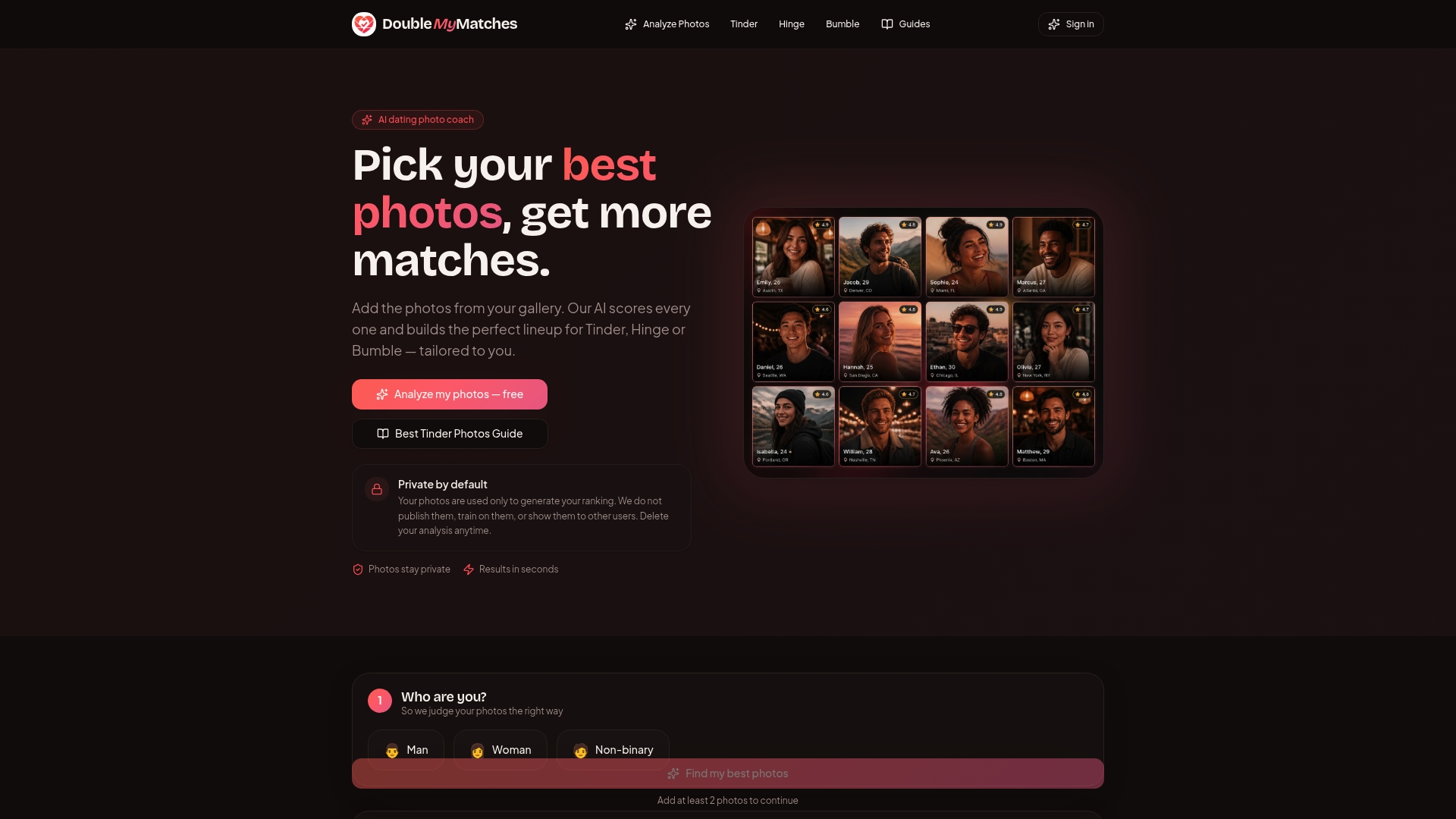
Upload your photos and the AI scores each one on lighting, expression, and composition, then ranks them from strongest to weakest and suggests the best order for your profile. It flags the photos quietly dragging your match rate down, the ones you'd never spot yourself because you're too used to seeing your own face in them. Every analysis is private: your photos are reviewed once and then discarded, never published or used to train the AI. If you've already got good material but aren't sure how to sequence it, this is the fastest way to find out. Try the dating photo analyzer for a full ranked breakdown, or run a single shot through the profile picture tester if you just want a quick gut check on one image before you commit.
Sources
For more detail, see how profile photos influence swipe rates, the role of expression in dating photos, and Pew Research's overview of online dating behaviour.
- Think better with Alexander Todorov — Chicago Booth
- What 500 right-swiped dating photos have in common — Magnt
- Best Dating Profile Photos: 6 shots you need — SwipeStats
- Should you smile in your profile photo? — Forbes