

BLUF: for most people, a fish photo is more likely to hurt your Tinder results than help them. It won't sink every profile, but it's a risky bet when better options exist. The evidence comes from several places worth knowing about:
- Consumer surveys reported by outlets covering Fishbrain data on angling habits
- Platform commentary, including a widely shared Tinder pressroom post
- Interviews with real users explaining why they post these photos in the first place
- Objective photo testing from tools like DoubleMyMatches, which scores images without any human bias
The short version: a fish photo can work in the right context, for the right audience. For most profiles, it doesn't.
Key Takeaways
Fish photos usually reduce perceived attractiveness on Tinder, but context, placement, and audience can shift that outcome dramatically.
| Point | Details |
|---|---|
| Attractiveness impact | Surveys reported by Slate found 85% of women rated men holding fish as less attractive. |
| Prevalence varies by place | Fish photo rates ranged from roughly 1 in 5 in Florida to 1 in 20 in New York in earlier samples. |
| Motivation isn't malicious | Men typically post fish photos for pride, photo scarcity, or deliberate hobby signalling. |
| Placement matters | Keep fish photos secondary, behind clear face shots and social or candid images. |
| Test, don't guess | Use objective photo scoring to check whether a specific fish photo helps or hurts your lineup. |
Table of Contents
- How common is the fish photos Tinder trend, really?
- Why do men post fish photos on their dating profiles?
- What do people actually think when they see a fish photo?
- How have Tinder and the media responded to fish pics?
- Should you keep your fish photo? A quick decision checklist
- Let DoubleMyMatches settle the fish photo question for you
- Fishing for better matches: what The Team @ DoubleMyMatches thinks
- Sources
How common is the fish photos Tinder trend, really?
Fish photos aren't a fringe habit. They're common enough to have earned their own name in dating app culture, but "common" doesn't mean "universal," and the numbers shift a lot depending on where you look.
Statistic callout: Prevalence varies enormously by location. Greatist's summary of Fishbrain and related survey data found roughly 1 in 5 men in Florida included a fish photo, compared with 1 in 10 in San Francisco and 1 in 20 in New York in earlier samples.
That's a four-fold difference between cities. A few things explain the gap:
- Coastal and lake-heavy regions naturally produce more anglers with fish photos to share
- Age skews matter, since older users on some apps post fish photos more than younger ones
- Sample sizes behind these figures are often small and self-selected, which inflates or shrinks headline numbers
Treat any single statistic on this topic as a snapshot, not a universal law. A trend that's a talking point in Tampa might barely register in Tokyo.
Why do men post fish photos on their dating profiles?
Ask the men who post them, and the answers rarely involve trying to repel matches. The Cut's interviews with dating app users turned up a few recurring reasons that make the trend easier to understand, even if you don't love the result.
- Pride in the catch. Landing a decent fish is a genuine achievement for anglers, and they want to show it off.
- Photo scarcity. Many men simply don't have many good photos of themselves, and a fishing trip produced a rare high-quality shot with decent lighting and a natural smile.
- Signalling. A fish photo implies patience, an outdoorsy lifestyle, and sometimes a "provider" image, whether or not that's a conscious choice.
- Weed-out tactics. Some men use the photo deliberately, betting that anyone put off by fishing wasn't a match worth pursuing anyway.
That last point is worth sitting with. It's a filtering strategy, not an accident.
Pro Tip: If your fish photo is really about pride in the hobby, keep it, but make sure it's not the first thing a potential match sees. First impressions carry more weight than any individual interest.
What do people actually think when they see a fish photo?
Here's where intention and perception part ways. Posters usually see a fish photo as a flex or a filter.
A Slate-reported analysis found that 85% of women in the sample said seeing a man holding any kind of fish made him less attractive overall, regardless of the size of the catch.
That's a striking number, though it's worth remembering the caveat behind it: smaller or self-selected survey samples can produce eye-catching statistics that don't necessarily generalise to every dating app user everywhere. Still, the direction of the finding lines up with a lot of anecdotal reporting.
Common negative reads include:
- A perception of performative masculinity, sometimes labelled "toxic" by critics
- Assumptions about time and money spent on a niche hobby the viewer doesn't share
- A sense that the photo shows a lack of self-awareness about how it lands
It's not all downside, though. Elite Daily's interviews with men who use fish photos found real cases where the photo attracted like-minded partners who fish themselves or simply appreciate the outdoors. Shared hobbies can turn a divisive photo into a genuine icebreaker, just not for most viewers.
How have Tinder and the media responded to fish pics?
Fish photos have become popular enough to prompt platform commentary and full-blown satire, which tells you something about how deep the meme runs. Tinder's pressroom published an item announcing it would remove all fish pics from member profiles, dated close to April Fools' Day and widely read as tongue-in-cheek rather than an actual policy change.
The joke landed because the trope was already well established. The New Yorker ran a humour piece written from the perspective of a "Tinder guy holding a fish," lampooning the provider signalling angle. Explainers from outlets like Slate and The Cut turned casual observation into a recognised cultural pattern.
- Satire and press releases amplify a trend's visibility well beyond its actual prevalence
- Media coverage shapes how new users interpret the photo before they've even swiped on one
- Platform-level jokes still influence norms, even when nobody actually enforces them
Should you keep your fish photo? A quick decision checklist
Before you delete anything, run through this checklist. It takes two minutes and settles most of the uncertainty.
- Is fishing a real, regular part of your life? If you fish once a year on a work trip, the photo is misleading. If it's a genuine hobby, that's a different conversation.
- Who's your target audience? If you're specifically hoping to match with other anglers or outdoors types, a fish photo does useful signalling work.
- Is the photo actually good? Squinting into the sun with a dead fish held at chest height rarely photographs well. Good lighting and a real smile matter more than the size of the catch.
- Where does it sit in your lineup? A fish photo as your only or first image reads very differently to one buried third or fourth, surrounded by shots that show other sides of you.
If you decide to keep it, a few adjustments help:
- Smile naturally rather than posing stiffly
- Show context, like the water or the boat, rather than just a close-up trophy shot
- Avoid holding the fish at arm's length toward the camera, which reads as the classic "trophy flex"
- Pair it with candid, social, or clear face shots elsewhere in your lineup
On priority order, put clear face shots and social or activity photos first, and treat the fish photo as a supporting image at best, based on practitioner guidance from Greatist. If you're unsure which of your photos actually deserves the top spot, our Tinder photo examples for men gallery shows what higher-performing alternatives tend to look like.
Pro Tip: Think like a scientist, not a gambler. Swap one photo at a time and track your match rate over a week or two rather than changing your whole profile at once.
Let DoubleMyMatches settle the fish photo question for you
Guessing whether your fish photo helps or hurts is exactly the kind of decision that benefits from an outside, unbiased read. That's what DoubleMyMatches was built for.
- The AI scores each of your photos on lighting, expression and composition, then ranks them from strongest to weakest
- You get a clear answer on whether your fish photo belongs in your top lineup, further down, or nowhere at all
- Every photo is analysed once and then discarded. Nothing is published or used to train the model, so your privacy stays intact
- You receive per-photo feedback explaining exactly why one image outperforms another, which removes the guesswork this whole debate is built on
Objective testing beats a group chat vote or your own gut feeling, mainly because it removes personal bias from the equation entirely.
Fishing for better matches: what The Team @ DoubleMyMatches thinks
The conventional advice on this topic tends to be a flat "never post a fish photo," and that's too simplistic.
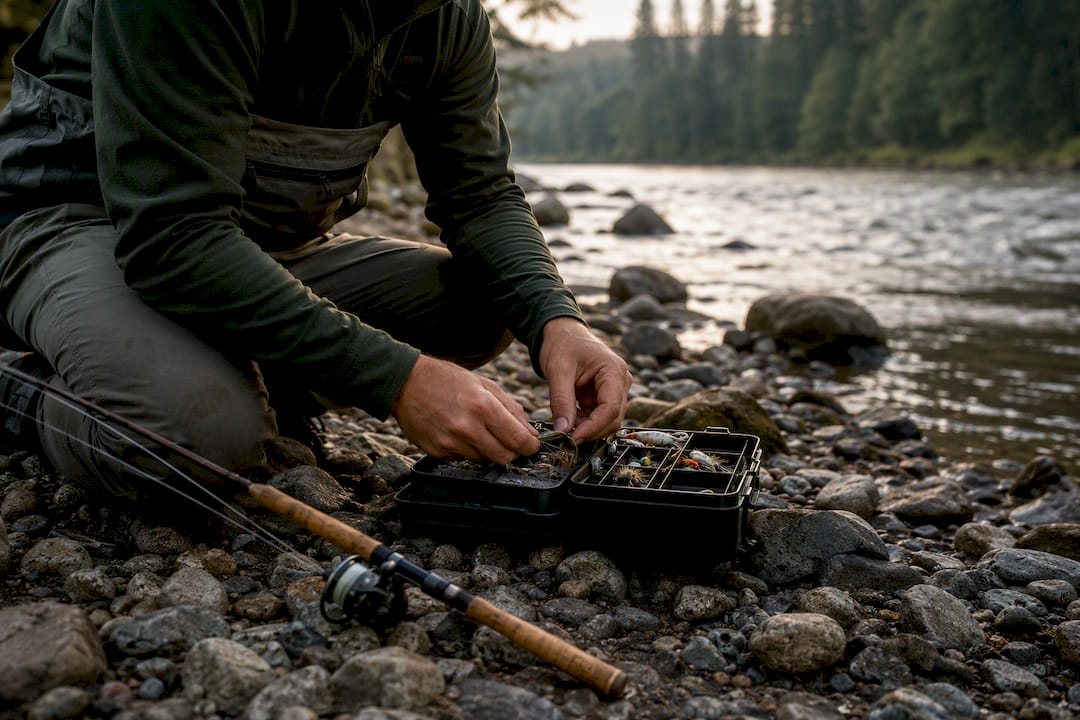
What gets overlooked is context. A fish photo aimed at a broad, generic audience is a liability. The same photo, placed third in a lineup and aimed at someone who genuinely fishes, can do real work. The mistake isn't owning a fishing hobby. It's assuming a niche interest photo should lead your profile, or that instinct alone tells you how a stranger will read it.
Prioritise your face, your smile, and photos showing you in social settings first. Test everything else. If you're unsure where a specific photo lands, don't debate it with friends. Score it.
— The Team @ DoubleMyMatches
Sources
- If you must pose with a fish in your dating app profile, pick this one. — Slate
- Why guys holding fish in dating profiles might be a trend — Greatist
- Why dating apps are full of guys with fish photos — The Cut
- Tinder announces it will immediately remove all fish pics from member profiles — Tinder pressroom