
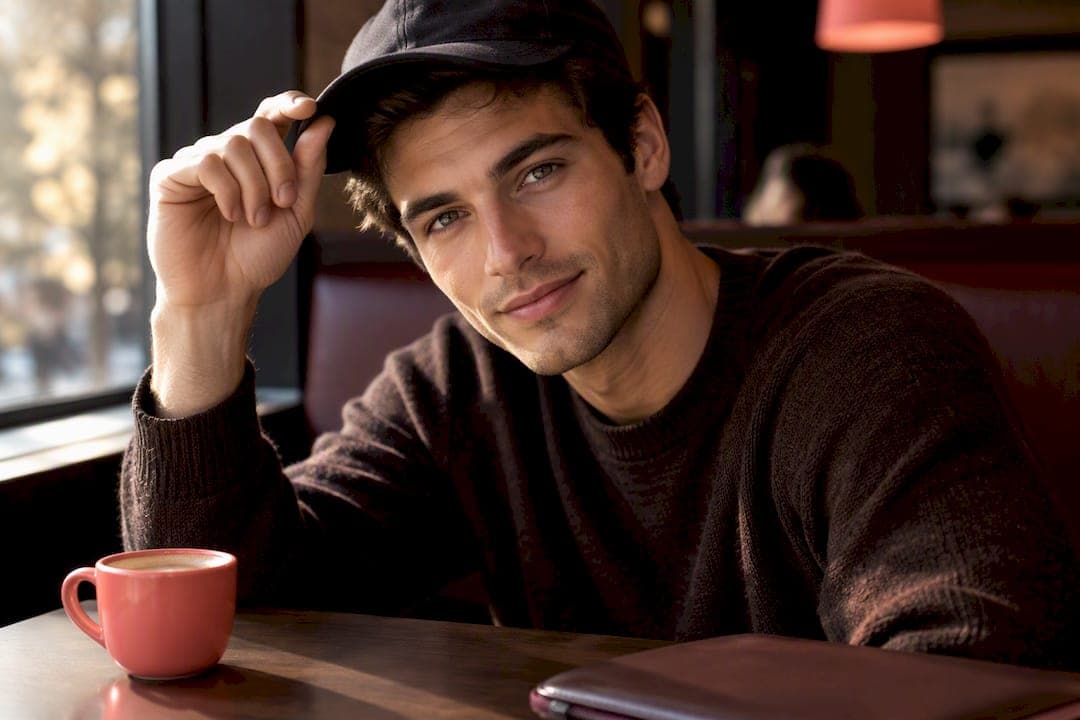
For most people: no, avoid wearing a hat in your main Tinder photo. Hats cover part of your face and reduce the visual cues that help someone decide, in a split second, whether to swipe right. There are exceptions worth knowing, and a simple test can tell you exactly what works for your profile.
TL;DR:
- Wearing a hat in your primary photo generally reduces your chances of getting a swipe right, especially for male users competing in a crowded market.
- A clear, forward-facing headshot without a hat highlights facial cues that communicate warmth and confidence, increasing emotional clarity and trust.
- Hats that lack context or explanation tend to block facial expressions and make it harder for others to engage with your profile quickly.
- Using a hat in a supporting photo or scene-specific shot, such as outdoors or in uniform, is acceptable but should never replace your main headshot.
- Testing different photos by swapping hats in your main image and tracking results over two weeks offers the most reliable way to find what works for your profile.
Table of Contents
- Why hats change how others judge your profile photo
- What the evidence says: relevant statistics and scholarly findings
- Practical checklist: when to wear a hat and how to take better hat or no-hat photos
- How to test hat vs no-hat photos quickly and cheaply
- How hat photos are treated by the AI photo analysis service
- Try a private AI photo check to settle hat vs no-hat for your profile
- Sources
- FAQ
Why hats change how others judge your profile photo
A quick glance is all most people give a dating profile. In that glance, your eyes, eyebrows and forehead do a lot of the work. They signal warmth, confidence and openness before anyone reads a single word of your bio. Cover them with a cap or a beanie and you strip away the cues that help a stranger build quick trust in your photo.
Style also plays a part. A subtle hat can look relaxed and natural. A statement hat, especially one that draws more attention than your face, can come across as trying too hard, a form of peacocking that distracts rather than flatters.
That said, hats are not always the enemy. They're genuinely useful in a handful of situations:
- Sport or activity photos: a cap on a hiking trail or a helmet mid-ski run adds context and story.
- Sun protection: a hat in a beach or festival photo reads as practical, not evasive.
- Uniform or workwear: a hat that's part of your job (a chef's toque, a firefighter's helmet) can show identity and pride.
- Weather-appropriate shots: a beanie in the snow feels honest rather than hidden.
The line is context. A hat that explains itself works. A hat with no explanation just gets in the way.
What the evidence says: relevant statistics and scholarly findings
Tinder's user base skews heavily towards men, which means competition for attention is fierce and every photo choice carries more weight for male users trying to stand out, according to Tinder statistics compiled by Business of Apps.

Wearing a hat in your main photo tends to lower your swipe-right likelihood noticeably, according to reporting on Tinder's internal data. The same reporting found that smiling and facing the camera directly are both linked to noticeably higher swipe rates, the opposite effect of a hidden or obscured face.
Academic research backs this up from a different angle:
Clear, individual-focused images and genuine smiles increase positive engagement, while ambiguous or obscured visual cues reduce emotional clarity and can harm matching decisions.
This comes from a research report on visual cues in online dating, which found that smiles communicate approachability quickly, while blocked faces and heavy headwear slow that process down. Put simply: your face is doing the talking, and a hat can mute it before it says anything.
Practical checklist: when to wear a hat and how to take better hat or no-hat photos
Your main photo has one job: make people want to know more. Here's how to set it up properly, hat or no hat.
- Start hat-free for your primary photo. Choose a forward-facing, well-lit head-and-shoulders shot with your eyes clearly visible, guided by expert advice on AI ready outfits for professional photos to enhance your look.
- Limit hats to one supporting photo. If you love a certain cap, save it for a context-driven shot further down your profile, not the first thing people see.
- Check your lighting. Natural daylight, ideally facing a window or shooting outdoors in soft light, avoids the harsh shadows a hat brim can cast across your eyes.
- Get the crop right. Head and shoulders, camera at eye level or slightly above, works better than a distant full-body shot for your opener.
- Watch for backlight. Shooting with the sun or a bright window behind you darkens your face and hides exactly the cues you want visible.
A sensible photo order looks like this: a hat-free main headshot, followed by one or two activity shots where a hat fits the scene naturally, then a candid or social photo that shows you with other people or doing something you enjoy.
Pro Tip: If you're unsure whether a hat photo works, put it third or fourth in your lineup rather than first. It adds context without carrying the weight of the first impression.

For more on composition and framing, our guide on selfies for Tinder covers eye contact and lighting in more depth.
How to test hat vs no-hat photos quickly and cheaply
You don't need to guess. A simple swap test tells you what actually works for your profile.
- Run a two-photo swap. Replace your current main photo with a no-hat version, then track matches over 7 to 14 days before drawing conclusions.
- Track the right numbers. Watch matches per day and message rate rather than just raw swipe counts, since small samples can be noisy.
- Ask for a second opinion carefully. Friends often say what they think you want to hear, so ask them to rank photos blind, without telling them which one you prefer.
- Consider an AI photo check for speed. A private, AI-based analysis can score your photos on lighting, expression and composition in minutes, without waiting weeks for real-world swipe data.
Our piece on how profile photos influence swipe rates goes deeper into what to measure and how to avoid reading too much into a small sample.
How hat photos are treated by the AI photo analysis service
The photo analysis process looks at lighting, expression, composition and the order photos appear in, because all four affect how quickly someone decides to swipe. It generally favours a hat-free primary image, since it gives the clearest read on your face, and treats hat photos as secondary, context-driven additions worth testing rather than automatic exclusions.
Photos uploaded for analysis are processed once and then discarded. Nothing is published, and nothing is used to train the AI.
— The Team @ DoubleMyMatches
Try a private AI photo check to settle hat vs no-hat for your profile
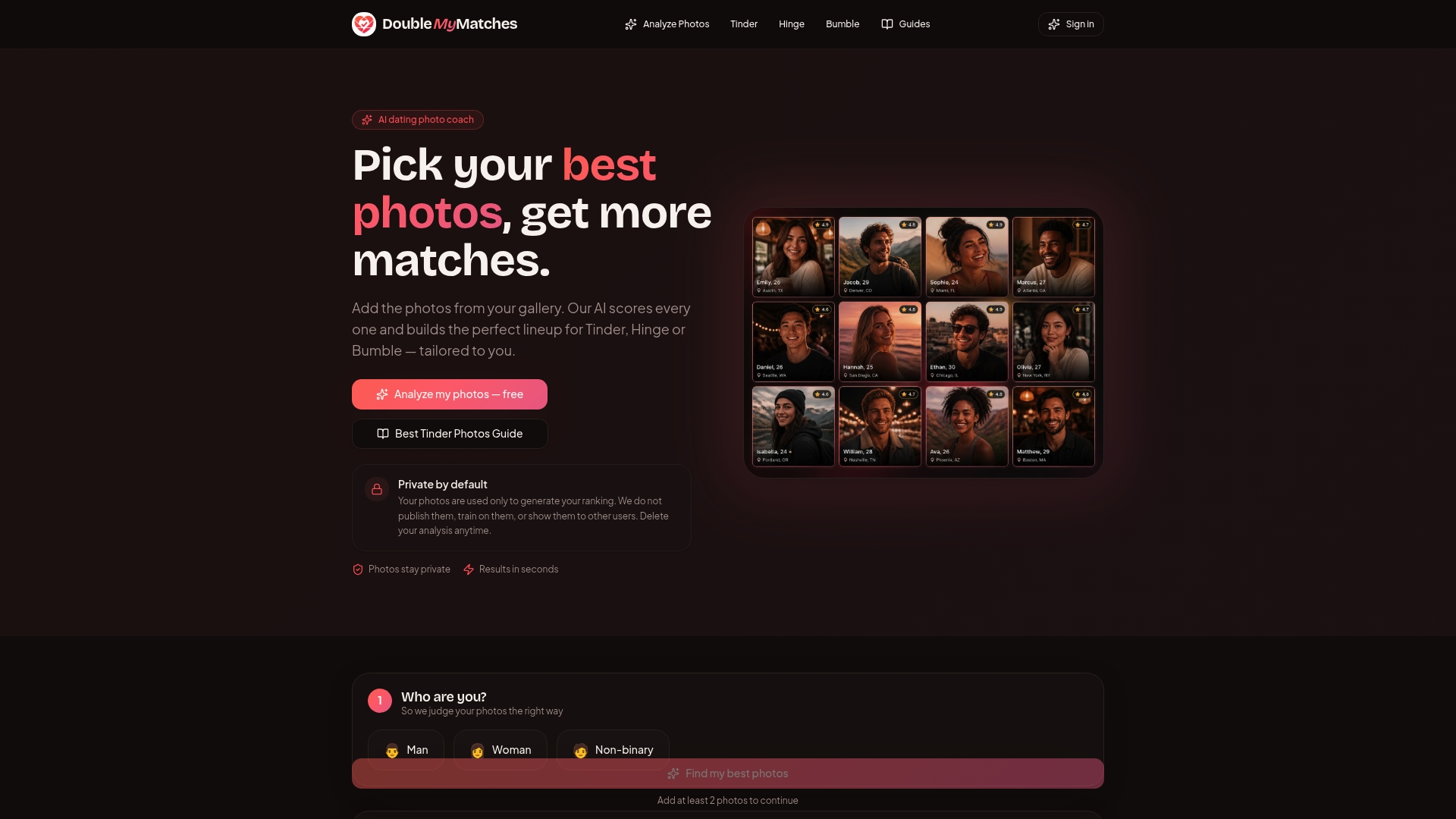
If you're still not sure whether that hat photo helps or hurts, skip the guesswork. Our Tinder Photo Analyzer ranks your photos from strongest to weakest and gives you personalised feedback on each one, so you can see exactly where a hat photo lands in your lineup.
Here's what you get:
- A best-to-worst ranking of your uploaded photos, based on lighting, expression and composition.
- Per-photo feedback that flags weak or harmful choices, including obscured faces.
- A one-off, private analysis: your photos are reviewed and then discarded, never published or used for training.
Start with a Full Report for $7, or add a Retest & Lock In for $17 once you've made changes and want a fresh score.
Sources
The figures above come from Business of Apps, BuzzFeed News and an academic study on visual cues in online dating. See our guide on photos to avoid on Tinder for more practical examples.
- Tinder statistics (Business of Apps)
- Cracking the Tinder code: love in the age of algorithms (BuzzFeed News)
- Eyes on the price: how visual cues influence users' matching decision in online dating (research report / academic PDF)
FAQ
Is it true that most Tinder users are men?
Yes, Tinder's user base skews male, according to Tinder statistics from Business of Apps. This makes photo quality especially important for male users, since competition for attention is higher.
What does a Tinder notification icon look like?
Tinder's notification icon typically appears as the app's flame logo, shown as a badge or banner alert on your phone when you get a new match or message. The exact appearance can vary slightly by phone operating system and Tinder app version.
Which photo does Tinder show first?
Tinder shows the photo you've set as your primary or first image in your profile's photo order. This is why your main photo should be a clear, forward-facing, hat-free shot that shows your face plainly, since it's the one people judge first.
What picture should I use for Tinder?
Use a well-lit, forward-facing head-and-shoulders shot where your face is clearly visible and you're smiling naturally. Smiling and facing the camera are both linked to higher swipe rates, according to reporting on Tinder's data, so save hats, sunglasses and group shots for later in your lineup.