
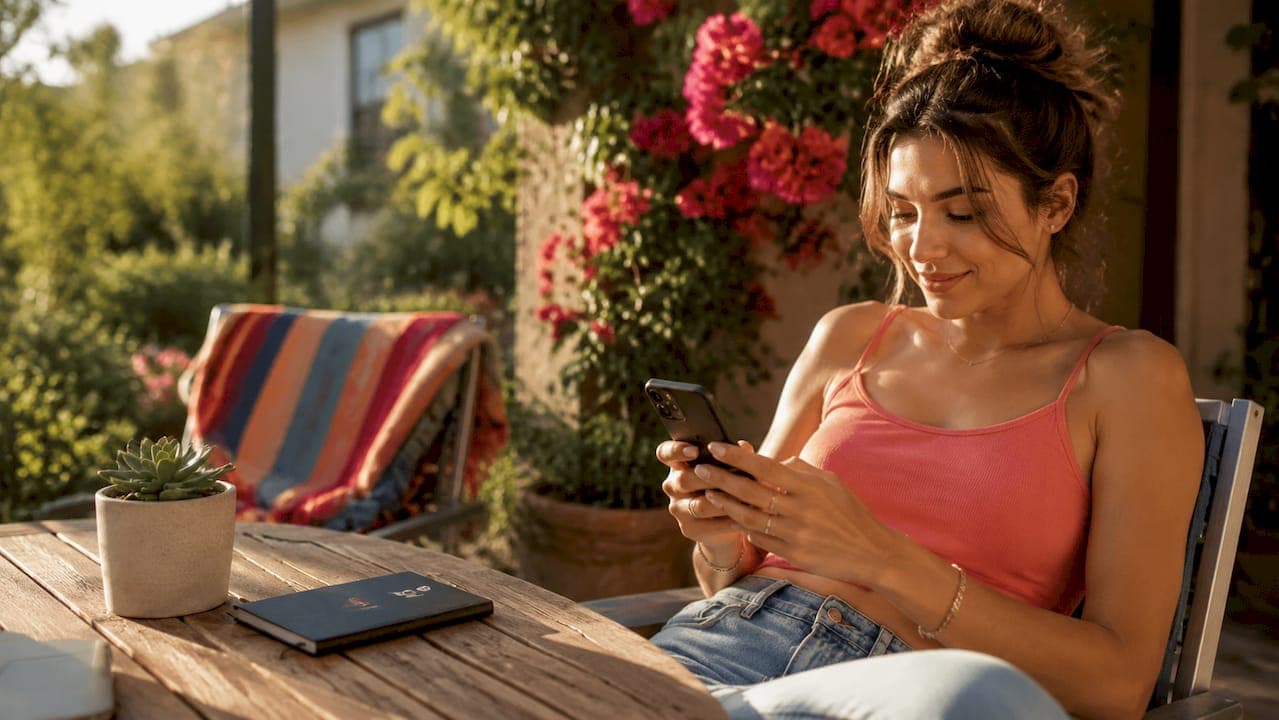
AI optimises Bumble photo sets by automatically selecting, testing, and ranking your photos to show the ones most likely to earn right-swipes. Since February 2026, Bumble has used biometric AI models to verify authenticity and runs a built-in feature called Best Photo that A/B tests your top profile images without any input from you. Photo quality accounts for roughly 40% of your Bumble visibility score, making it around ten times more influential than your bio. Improving your photo attractiveness by one standard deviation can increase match rates by 25–43%. That is not a small gain. Getting your photo set right is the single highest-return action you can take on Bumble.
How AI optimises Bumble photo sets through A/B testing
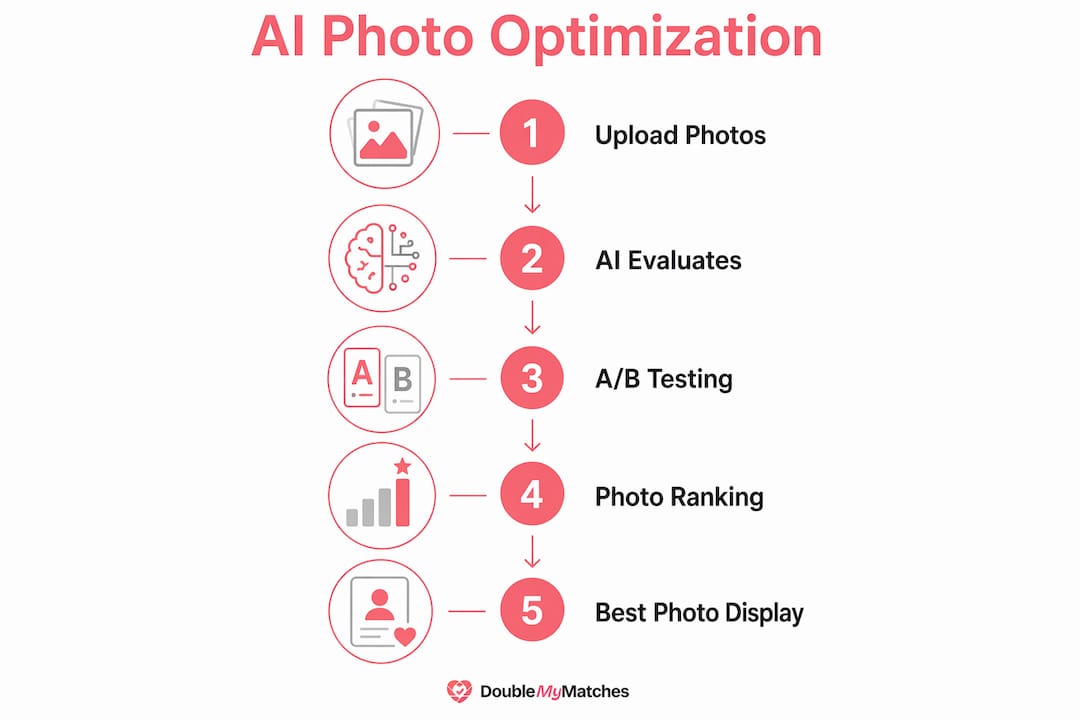
Bumble's Best Photo feature is the core of how AI optimises Bumble photo sets. It automatically rotates your first three photo slots and measures which image generates the most right-swipes. The algorithm then locks in your top performer as the lead photo. You do not need to guess which picture works best. The AI does the testing for you.
The process works best when you give it variety to test. Best Photo requires diverse photo contexts to function effectively. Without variety, the algorithm has nothing meaningful to compare, and its conclusions are less reliable.
Here is how to set up your photo set so Best Photo can do its job properly:
- Upload a clear headshot as your starting point. Good lighting, no sunglasses, and a genuine smile are non-negotiable here.
- Add an outdoor or action photo. This shows energy and context. A shot at the beach, on a hike, or at a sporting event works well.
- Include a social photo. A candid image with friends signals that you are sociable and likeable.
- Add a lifestyle photo. This could be cooking, travelling, or playing an instrument. It gives people a reason to message you.
- Upload at least six distinct photos. Uploading six distinct photos speeds up AI learning and can improve match results within 48–72 hours.
- Keep your photos current. Outdated images confuse the algorithm and mislead potential matches.
The more distinct your photos are from each other, the faster Best Photo identifies your strongest opener. Think of it as giving the AI a proper sample size rather than six near-identical selfies.
Pro Tip: After uploading a new set, give Best Photo at least 48 hours before drawing conclusions. The algorithm needs real swipe data to make a reliable call.
What does AI actually look at in your photos?
AI photo analysis on Bumble focuses on specific, measurable attributes. The algorithm evaluates lighting quality, image sharpness, colour balance, and face-to-frame ratio. It does not redesign your face or alter your bone structure. It reads signals that predict engagement.
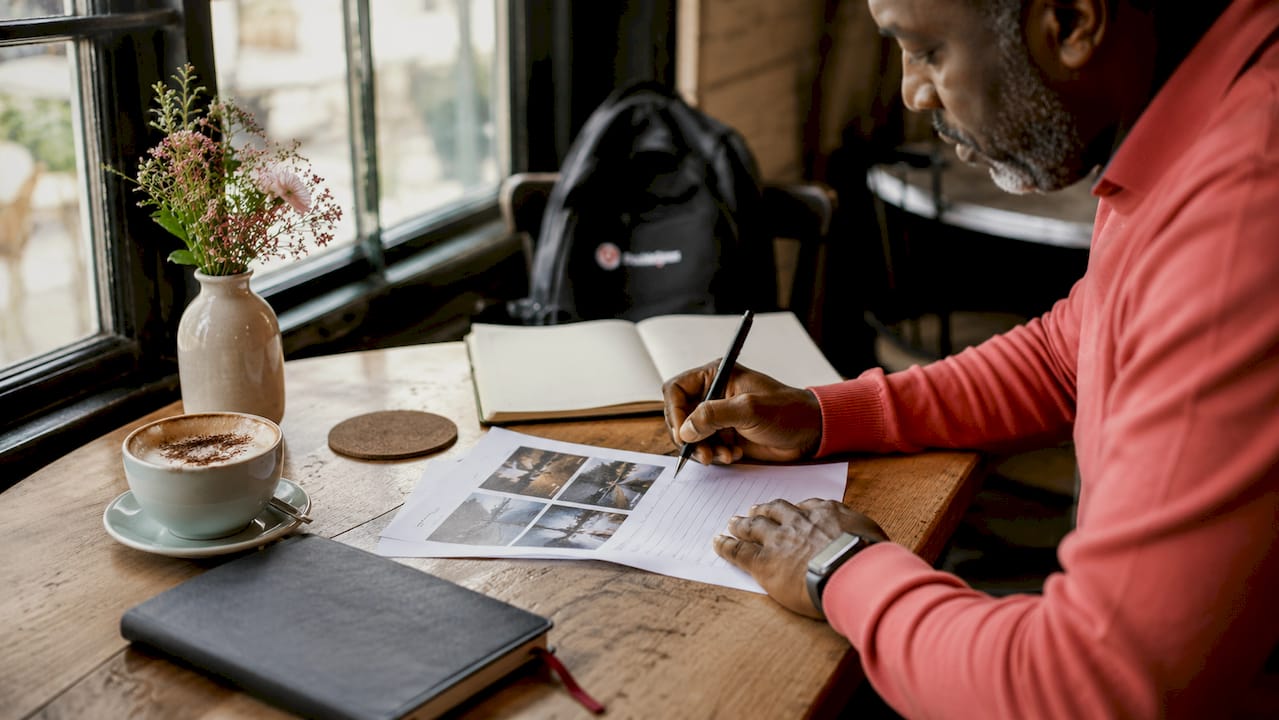
Photo quality drives roughly 40% of your visibility score on Bumble. That means a blurry, poorly lit photo actively suppresses how often your profile appears to other users. A well-lit, sharp image does the opposite.
Bumble's AI also checks for authenticity. The Deception Detector, part of Bumble's biometric verification system, blocks up to 95% of detected spam and fake accounts as of Q3 2025. This system compares your profile photos against live verification checks. If your images look too different from your real face, the system flags your account.
Key photo attributes the AI rewards:
- Natural lighting. Outdoor or window light produces the most flattering and authentic results.
- High face-to-frame ratio. Your face should fill at least a third of the frame in your lead photo.
- Genuine expression. Users who smile in their main photo are statistically more likely to receive right-swipes than those with neutral or brooding expressions.
- No sunglasses in the lead photo. Sunglasses in the main photo reduce match odds by 12%. They obscure your face and reduce the AI's ability to verify your identity.
- Sharp focus. Blurry photos score poorly in automated quality assessments.
Pro Tip: Use a Bumble photo analyser to get an objective score on each image before uploading. Knowing which photos score highest removes the guesswork entirely.
Best practices for building a photo set that works with AI
Building a photo set that works well with Bumble's AI is less about having professional photos and more about giving the algorithm the right signals. A 2025 photo audit found that the average profile scored 4.85 out of 10, with 64% of profiles scoring below 5. Most people are leaving significant match potential on the table.
The good news is that the fixes are straightforward.
| Photo type | Why it matters |
|---|---|
| Clear headshot | Establishes identity and passes biometric checks |
| Outdoor or action shot | Shows energy and lifestyle context |
| Social photo with friends | Signals warmth and social confidence |
| Lifestyle or hobby photo | Gives matches a conversation starter |
| Full-body photo | Builds trust and sets accurate expectations |
Beyond photo type, profile completeness also matters. Profiles with more complete information, including badges, interests, and verified status, receive better algorithmic placement. Better placement means more people see your photos in the first place.
Photo verification is one of the easiest wins available. Completing it lifts match rates by 10–15%. Bumble prioritises verified profiles in its algorithm, so the blue tick does real work beyond just signalling trustworthiness to other users.
Avoid these common mistakes that suppress your photo performance:
- Uploading group photos as your lead image
- Using heavily filtered or edited images that alter your appearance
- Relying on selfies taken in poor light
- Posting photos where your face is partially obscured
The AI-driven photo review process rewards authenticity. Your photos should look like you on a good day, not a version of you that requires significant suspension of disbelief.
Common pitfalls and misconceptions about AI photo tools
AI photo tools are not magic. They cannot turn a poor photo into a great one, and they cannot make Bumble's algorithm ignore a fundamentally weak photo set. The misconception that any AI tool can "fix" your profile with a single upload is widespread and damaging.
The biggest risk is over-editing. AI enhancements should focus on lighting, sharpness, and colour correction only. Altering facial structure, smoothing skin to an unrealistic degree, or reshaping your jawline creates images that fail Bumble's biometric liveness verification. The result is an account flag or outright ban.
"Heavily altered AI photos risk failing Bumble's biometric live-verification. AI use should focus on subtle improvements only. The goal is to look like your best self, not a different person entirely."
Bumble's detection systems are improving rapidly. The Deception Detector already blocks the vast majority of fake accounts, and its ability to identify AI-generated or heavily manipulated images is growing. Profiles that pass today may not pass tomorrow if the editing is significant.
A few myths worth clearing up:
- "More photos always means better results." Quality matters more than quantity. Six strong, varied photos outperform ten mediocre ones.
- "AI will pick my best photo automatically, so I do not need to think about it." Best Photo needs good inputs. If all your photos are similar or low quality, the algorithm cannot find a clear winner.
- "Professional photos always perform best." Candid, natural shots often outperform studio portraits because they look more genuine and approachable.
The safest and most effective approach is to use AI for analysis and modest enhancement, then let Bumble's own Best Photo feature handle the selection. That combination gives you the benefits of AI photo optimisation without the risks of over-editing.
Key takeaways
AI optimises Bumble photo sets most effectively when you provide a varied, high-quality selection and let Bumble's Best Photo feature test them against real swipe data.
| Point | Details |
|---|---|
| Photo quality drives visibility | Photo quality accounts for roughly 40% of your Bumble visibility score, far outweighing bio quality. |
| Variety powers Best Photo | Upload at least six distinct photo types so the AI has meaningful differences to test and rank. |
| Avoid over-editing | AI enhancements should cover lighting and sharpness only; altering facial features risks account flags. |
| Verification boosts match rates | Completing photo verification lifts match rates by 10–15% and improves algorithmic placement. |
| Smiling and no sunglasses matter | Smiling in your lead photo increases right-swipes; sunglasses reduce match odds by 12%. |
Our take on AI photo optimisation for Bumble
We have reviewed thousands of Bumble profiles through DoubleMyMatches, and the pattern is consistent. The people who get the best results from AI photo optimisation are not the ones with the most polished photos. They are the ones who treat their photo set as something to test and update regularly, not a one-time upload.
The biggest mistake we see is treating Best Photo as a passive fix. People upload six similar photos, wait a week, and wonder why their match rate has not changed. Best Photo needs contrast. It needs a headshot, an action shot, a social shot, and a lifestyle shot. Without that variety, the algorithm is comparing near-identical signals and learning very little.
The second mistake is chasing perfection through editing. We have seen profiles get flagged after users ran their photos through aggressive AI enhancement tools. Bumble's biometric checks are not forgiving. A subtly brightened, sharpened photo is fine. A restructured face is not.
Our honest advice: use AI to identify which of your existing photos are strongest, make modest technical improvements to lighting and sharpness, and then let Bumble's own algorithm do the selection work. Combine that with a complete profile, a verified badge, and regular photo updates every few months. That approach consistently outperforms any shortcut.
— The Team @ DoubleMyMatches
How DoubleMyMatches can sharpen your Bumble photo set
Getting honest, objective feedback on your photos is harder than it sounds. Friends are kind. Strangers on Bumble are silent. DoubleMyMatches sits in the middle: an AI photo coach that scores your images on lighting, expression, composition, and overall appeal, then tells you exactly which ones to lead with.
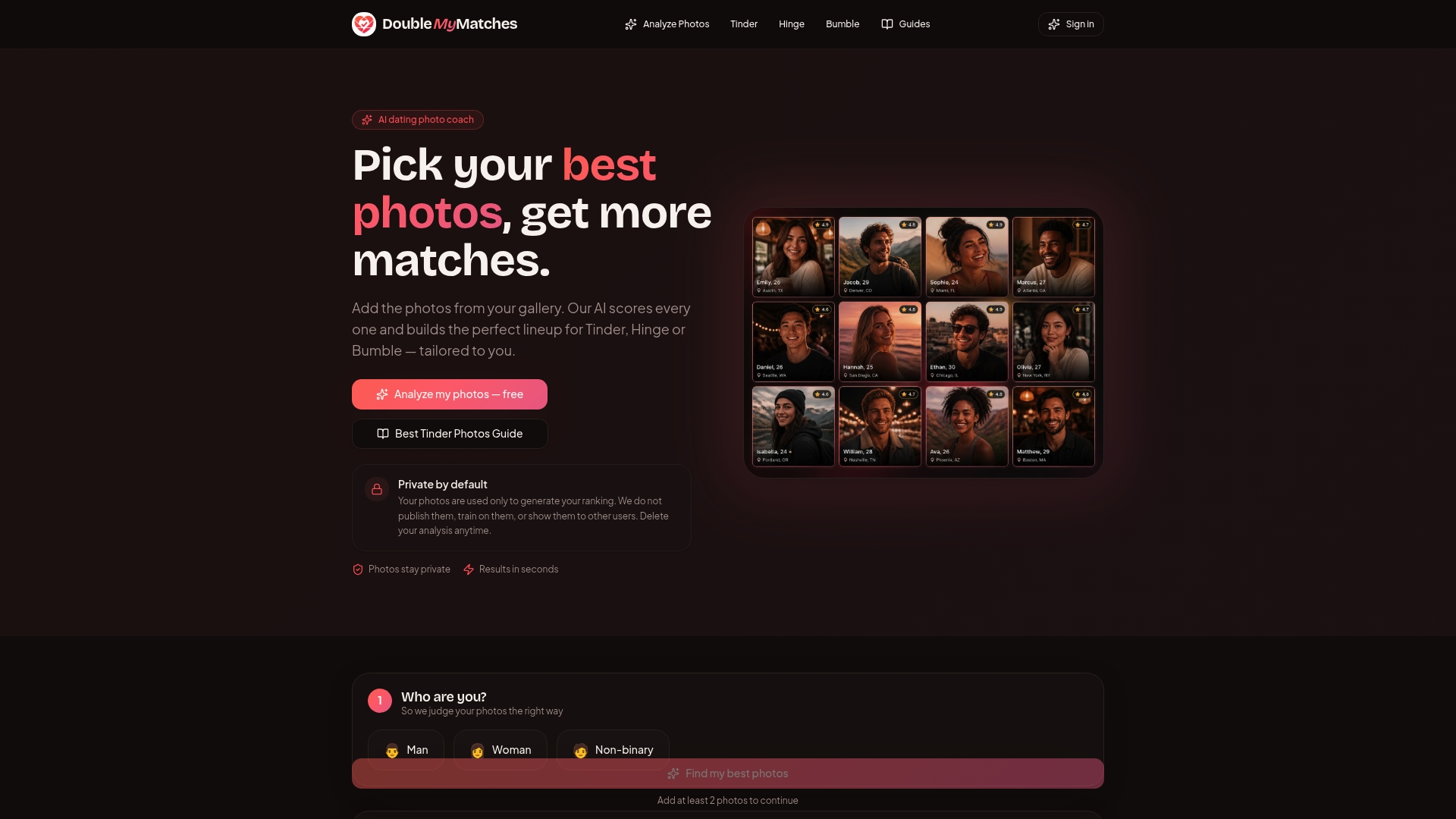
The profile picture tester gives you instant, ranked feedback on your full photo set so you know which images to upload and in what order. Your photos are analysed and then discarded. They are never published or used to train the AI. If you want to see how your current Bumble photos stack up before Best Photo starts testing them, the DoubleMyMatches photo review takes less than two minutes and gives you a clear starting point.
FAQ
What is Bumble's Best Photo feature?
Best Photo is Bumble's built-in AI tool that automatically A/B tests your first three profile photos and promotes the highest-performing image to the lead slot based on real swipe data.
How many photos should I upload to Bumble for best results?
Upload at least six distinct photos covering different contexts, such as a headshot, outdoor shot, social photo, and lifestyle image. Six varied photos give the AI enough contrast to identify your strongest performer within 48–72 hours.
Can AI editing tools get my Bumble account banned?
Yes, if the editing alters your facial features significantly. Bumble's biometric verification compares your profile photos to a live check, and heavily modified images can trigger a flag or ban. Stick to lighting, sharpness, and colour corrections only.
Does photo verification actually improve match rates on Bumble?
Completing photo verification lifts match rates by 10–15% and improves your algorithmic placement. Bumble prioritises verified profiles, so the badge does more than signal trustworthiness to other users.
Why does my lead photo matter more than the others?
Your lead photo is the first thing potential matches see and the image Best Photo tests most heavily. A clear headshot with good lighting, a genuine smile, and no sunglasses consistently outperforms other photo types as a lead image.